Coral

Coral collection in the Lanka Mangrove Museum

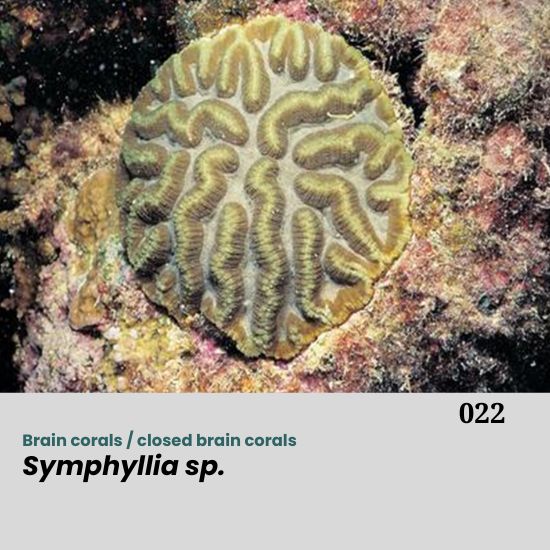
Symphyllia spp., commonly referred to as brain corals or closed brain corals, belong to the family Merulinidae. They are widely distributed across the Indo-Pacific region and are typically found on reef slopes, reef flats, and lagoonal areas. Colonies are generally massive, dome-shaped, or sub-massive, with a distinctive meandroid or maze-like corallite arrangement, which gives them a characteristic brain-like appearance.

Symphyllia sp.

Symphyllia sp. Brain corals or closed brain corals Kingdom: Animalia Phylum: Cnidaria Class: Anthozoa Order: Scleractinia Family: Lobophylliidae Genus: Symphyllia Symphyllia is a genus of large polyp stony corals known for its smooth, fleshy appearance and deep valley-like grooves on the colony surface. It is a massive reef-building coral commonly found in Indo-Pacific reef systems. […]
Symphyllia sp. Read More »

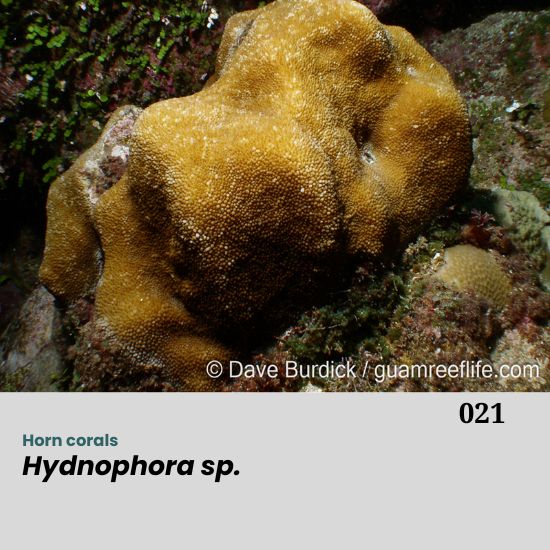
Hydnophora spp., commonly known as horn corals, belong to the family Merulinidae. They are widely distributed in the Indo-Pacific region, typically inhabiting reef slopes, lagoonal areas, and sheltered reef flats. Colonies are massive to sub-massive, sometimes forming irregular mounds, and are characterized by the presence of numerous conical or knob-like projections (tubercles) on the colony surface, giving the coral a rough and spiny appearance.

Hydnophora

Hydnophora spp., commonly known as horn corals, belong to the family Merulinidae. They are widely distributed in the Indo-Pacific region, typically inhabiting reef slopes, lagoonal areas, and sheltered reef flats. Colonies are massive to sub-massive, sometimes forming irregular mounds, and are characterized by the presence of numerous conical or knob-like projections (tubercles) on the colony surface, giving the coral a rough and spiny appearance.

Hydnophora Read More »

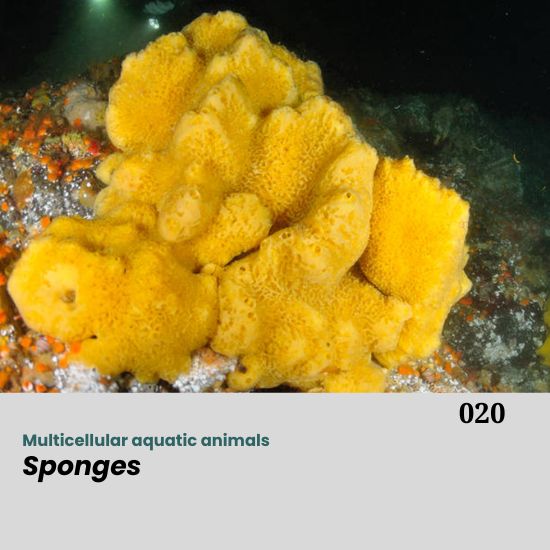
Sponges (Phylum Porifera) are a diverse group of sessile, aquatic invertebrates that are widely distributed in marine and freshwater environments. They are among the earliest-evolved multicellular animals, exhibiting a simple body organization without true tissues or organs. Sponges are characterized by a porous body with numerous ostia (small pores) that allow water to circulate through the body, facilitating filter feeding, respiration, and excretion.

Sponges

Sponges (Phylum Porifera) are a diverse group of sessile, aquatic invertebrates that are widely distributed in marine and freshwater environments. They are among the earliest-evolved multicellular animals, exhibiting a simple body organization without true tissues or organs. Sponges are characterized by a porous body with numerous ostia (small pores) that allow water to circulate through the body, facilitating filter feeding, respiration, and excretion.

Sponges Read More »

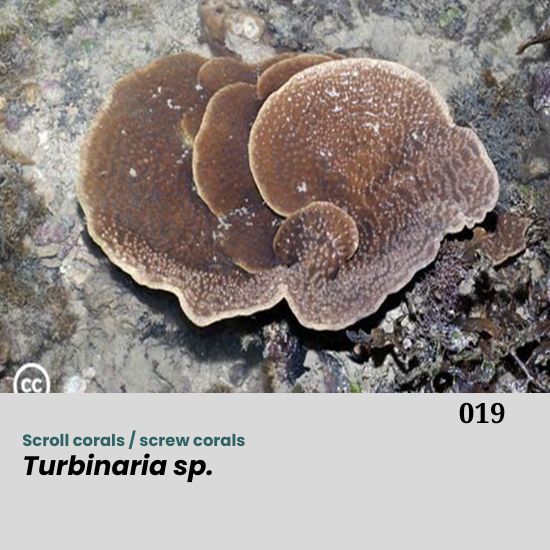
Turbinaria spp., commonly known as scroll corals or screw corals, belong to the family Dendrophylliidae. They are widely distributed across the Indo-Pacific, typically inhabiting reef slopes, lagoonal areas, and turbid coastal environments. Turbinaria is easily recognized by its unique colony morphology, which can be foliose (leaf-like), cup-shaped, or turreted, with broad, vertically or horizontally oriented plates that often resemble stacked discs or spirals.

Turbinaria sp.

Turbinaria spp., commonly known as scroll corals or screw corals, belong to the family Dendrophylliidae. They are widely distributed across the Indo-Pacific, typically inhabiting reef slopes, lagoonal areas, and turbid coastal environments. Turbinaria is easily recognized by its unique colony morphology, which can be foliose (leaf-like), cup-shaped, or turreted, with broad, vertically or horizontally oriented plates that often resemble stacked discs or spirals.

Turbinaria sp. Read More »

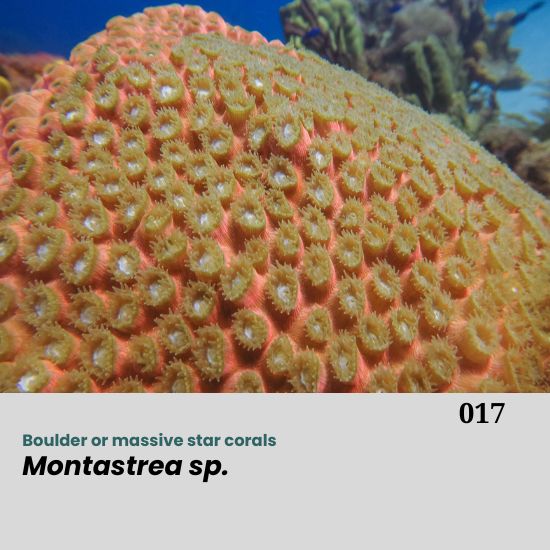
Montastraea spp., commonly referred to as boulder or massive star corals, belong to the family Merulinidae. They are widespread throughout the tropical and subtropical Atlantic and Indo-Pacific reefs, typically inhabiting reef slopes, reef crests, and lagoonal environments. These corals are massive and slow-growing, forming large, dome-shaped, encrusting, or columnar colonies that contribute significantly to reef framework and structural complexity.

Montastrea sp.

Montastraea spp., commonly referred to as boulder or massive star corals, belong to the family Merulinidae. They are widespread throughout the tropical and subtropical Atlantic and Indo-Pacific reefs, typically inhabiting reef slopes, reef crests, and lagoonal environments. These corals are massive and slow-growing, forming large, dome-shaped, encrusting, or columnar colonies that contribute significantly to reef framework and structural complexity.

Montastrea sp. Read More »

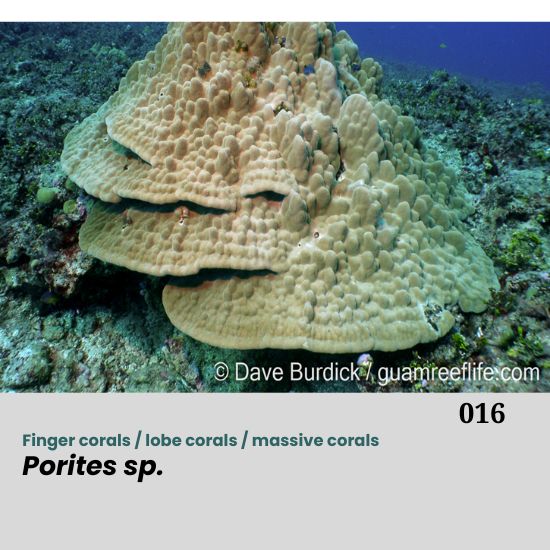
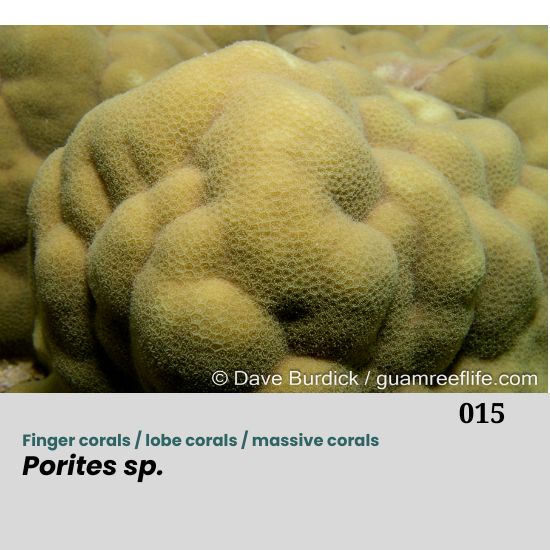
Porites spp., commonly known as finger corals, lobe corals, or massive corals, belong to the family Poritidae and are among the most widespread and ecologically important reef-building corals in the Indo-Pacific. They inhabit a variety of reef habitats, including reef flats, slopes, lagoons, and patch reefs, often in areas with high sedimentation or fluctuating environmental conditions.

Porites sp. 1

Porites spp., commonly known as finger corals, lobe corals, or massive corals, belong to the family Poritidae and are among the most widespread and ecologically important reef-building corals in the Indo-Pacific. They inhabit a variety of reef habitats, including reef flats, slopes, lagoons, and patch reefs, often in areas with high sedimentation or fluctuating environmental conditions.

Porites sp. 1 Read More »

Porites spp., commonly known as finger corals, lobe corals, or massive corals, belong to the family Poritidae and are among the most widespread and ecologically important reef-building corals in the Indo-Pacific. They inhabit a variety of reef habitats, including reef flats, slopes, lagoons, and patch reefs, often in areas with high sedimentation or fluctuating environmental conditions.

Porites sp.

Porites spp., commonly known as finger corals, lobe corals, or massive corals, belong to the family Poritidae and are among the most widespread and ecologically important reef-building corals in the Indo-Pacific. They inhabit a variety of reef habitats, including reef flats, slopes, lagoons, and patch reefs, often in areas with high sedimentation or fluctuating environmental conditions.

Porites sp. Read More »

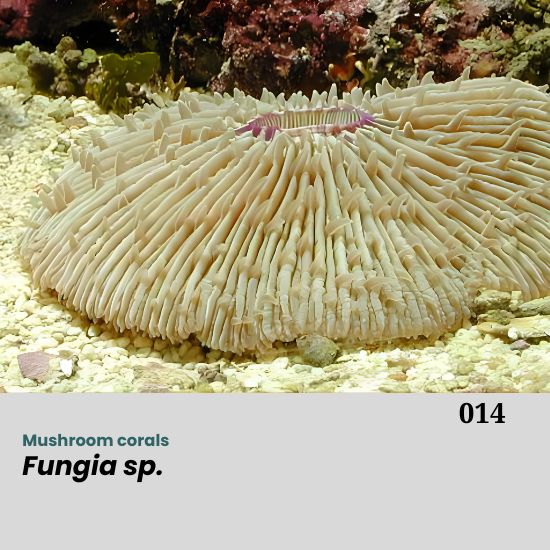
Fungia spp., commonly known as mushroom corals, belong to the family Fungiidae and are widely distributed throughout the tropical Indo-Pacific region. These corals are easily distinguished by their solitary, free-living growth form, which differs from most other scleractinian corals that form colonies. Individuals typically have a flat, circular to oval disc-shaped skeleton, occasionally with slight dome-like elevation. Young specimens may attach to the substrate, but adults are usually completely free-living and capable of moving short distances across the substrate by expanding their tissues or manipulating water pressure.

Fungia sp.

Fungia sp. Mushroom coral / plate coral Kingdom: Animalia Phylum: Cnidaria Class: Anthozoa Subclass: Hexacorallia Order: Scleractinia Family: Fungiidae Genus: Fungia Fungia sp., commonly known as mushroom coral or plate coral, is a solitary stony coral (unlike most corals, it lives as a single individual rather than a colony). General Description Fungia spp., commonly known as

Fungia sp. Read More »

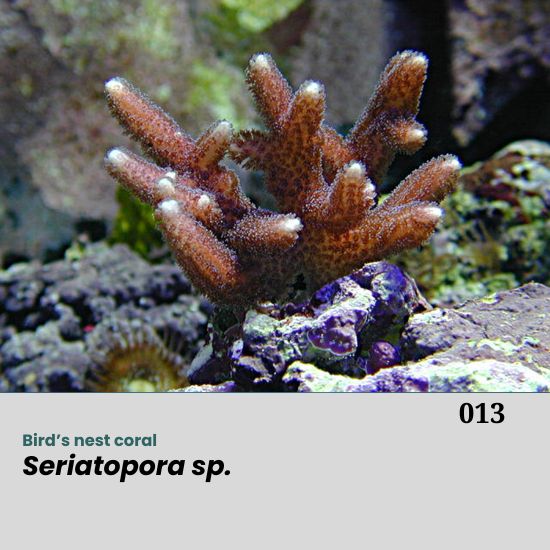
Seriatopora sp., commonly known as bird’s nest coral, is a branching stony coral with delicate, thin branches that form compact, bush-like colonies.

Seriatopora sp.

Seriatopora spp., commonly known as bird’s nest corals, are small-polyp stony corals belonging to the family Pocilloporidae. They are widely distributed throughout the Indo-Pacific and are typically found on shallow reef slopes, reef fronts, and lagoonal environments with moderate to strong water movement. Colonies of Seriatopora are easily recognized by their delicate, highly branched, and often fragile skeletal structure, which forms dense, intricately intertwined “bird’s nest” shapes.

Seriatopora sp. Read More »

Scroll to Top