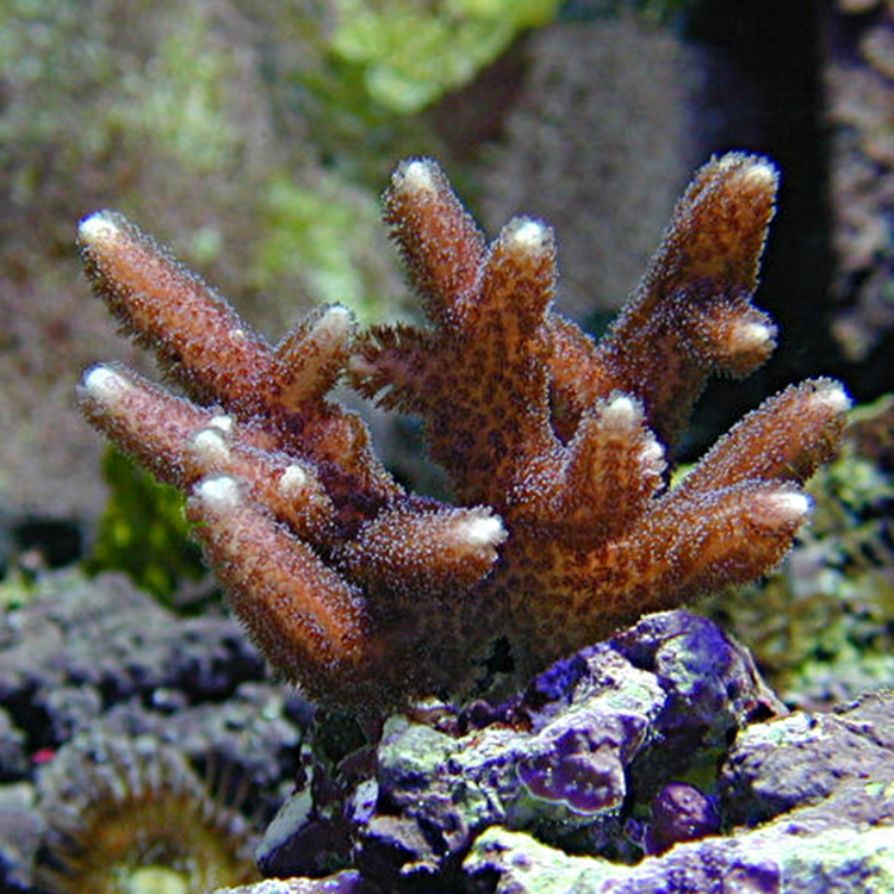
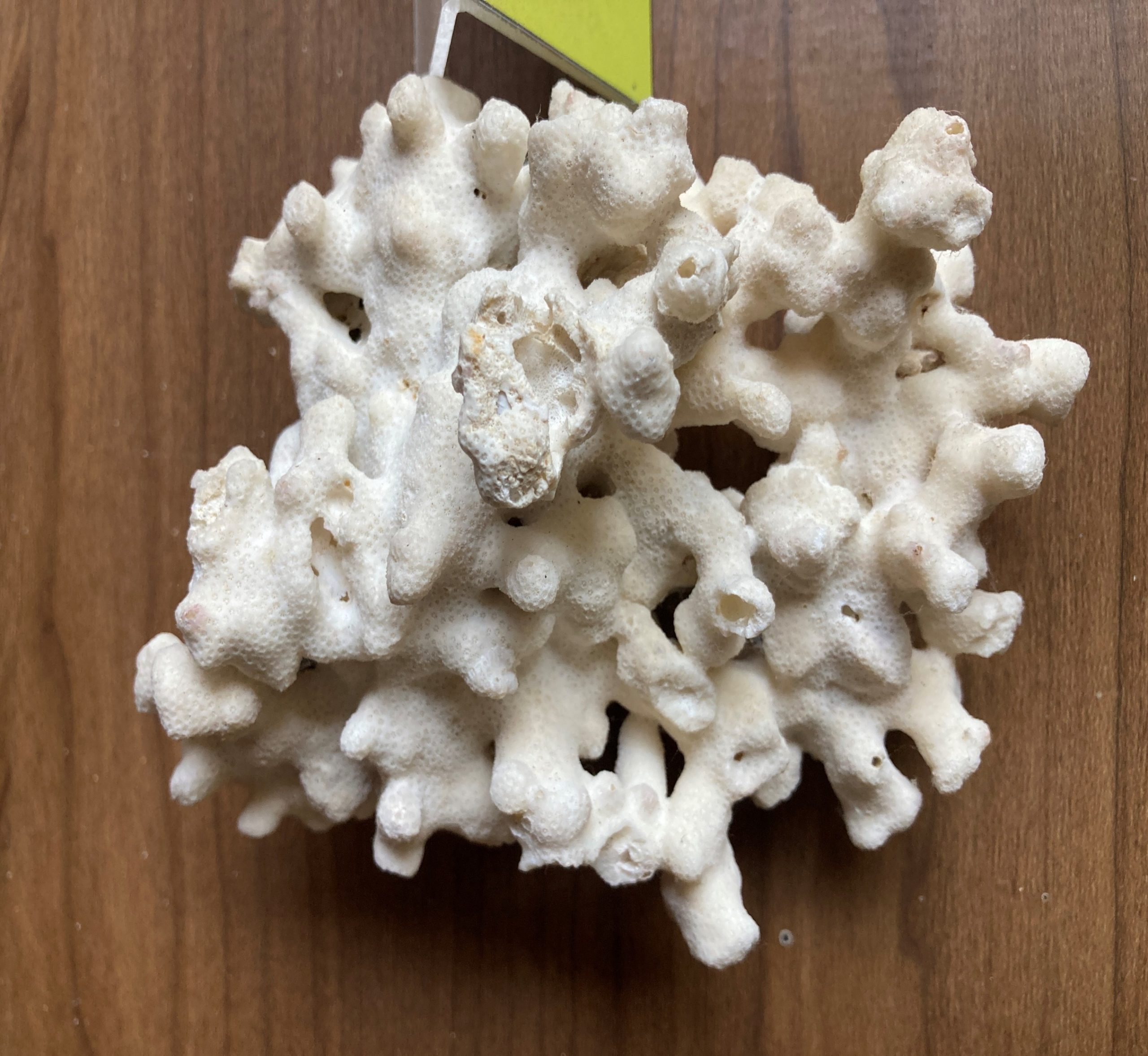
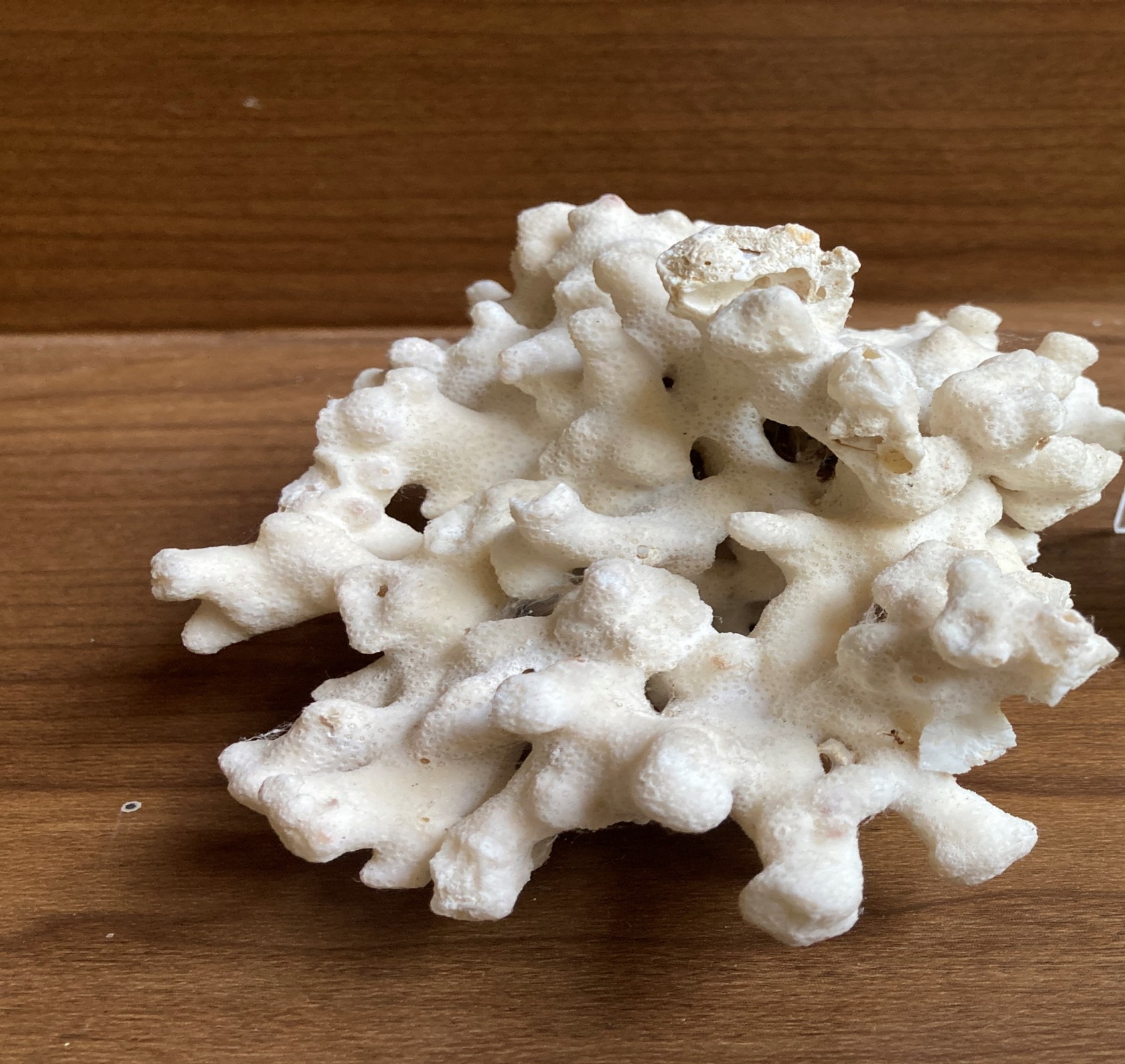
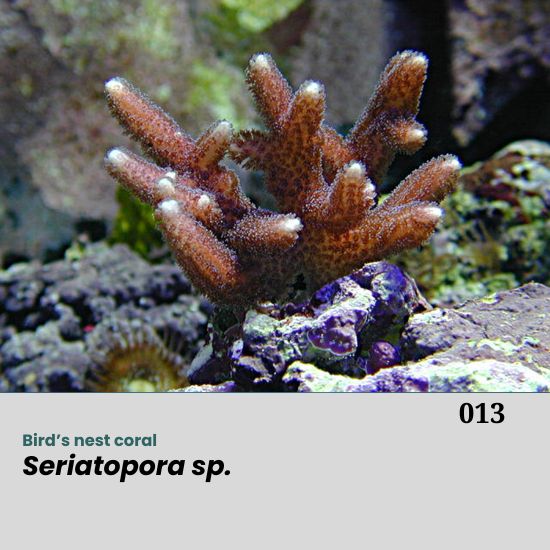
Seriatopora sp., commonly known as bird’s nest coral, is a branching stony coral with delicate, thin branches that form compact, bush-like colonies.
General Description
Seriatopora spp., commonly known as bird’s nest corals, are small-polyp stony corals belonging to the family Pocilloporidae. They are widely distributed throughout the Indo-Pacific and are typically found on shallow reef slopes, reef fronts, and lagoonal environments with moderate to strong water movement. Colonies of Seriatopora are easily recognized by their delicate, highly branched, and often fragile skeletal structure, which forms dense, intricately intertwined “bird’s nest” shapes.
A key diagnostic feature of Seriatopora is the arrangement of corallites in distinct linear (serial) rows, from which the genus name is derived. Corallites are small, shallow, and tubular, usually evenly spaced along the branches. Branch thickness, curvature, and spacing vary widely among species and environments, with finer, more delicate branching forms commonly found in high-flow habitats.
Coloration ranges from pink and yellow to brown and green, sometimes with fluorescent highlights under blue or UV lighting. Like other pocilloporid corals, Seriatopora exhibits considerable morphological plasticity, meaning colony form can vary with depth, light, and wave exposure. This can make species-level identification difficult, often requiring skeletal microstructure analysis or genetic sequencing for accurate classification.
Ecologically, Seriatopora spp. are considered fast-growing reef-builders but are also sensitive to temperature stress, sedimentation, and physical breakage due to their fragile branches. Their rapid growth and complex structure provide important microhabitats for reef fishes and invertebrates.
Key Characteristics
Thin, fragile branches forming dense clusters
Corallites arranged in rows (series) along branches
Surface appears smooth with tiny pores
Colors: pink, green, yellow, or brown
Habitat & Distribution
Found in tropical Indo-Pacific regions, including Sri Lanka
Common in:
Shallow reef slopes
Lagoon reefs
Areas with good water movement
Nutrition
Contributes to reef growth and complexity
Provides shelter for small fish and invertebrates
Sensitive to environmental stress (e.g., bleaching)
Ecological Importance
Does not significantly contribute to reef building
Provides microhabitats for small marine organisms
Some species can spread rapidly and become invasive in non-native regions