Virtual Tour - Section 05 B

Coral Species and Life Cycles of Crabs & Shrimps

There are numerous species of coral, but they are broadly classified into two main categories – hard corals and soft corals. Hard corals have a hard exoskeleton made of calcium carbonate and form the backbone of coral reefs. Some of the common hard coral species include staghorn coral, brain coral, and elkhorn coral. Soft corals do not have a hard exoskeleton and are less structurally complex than hard corals. Some examples of soft coral species include sea fans, sea whips, and sea pens.

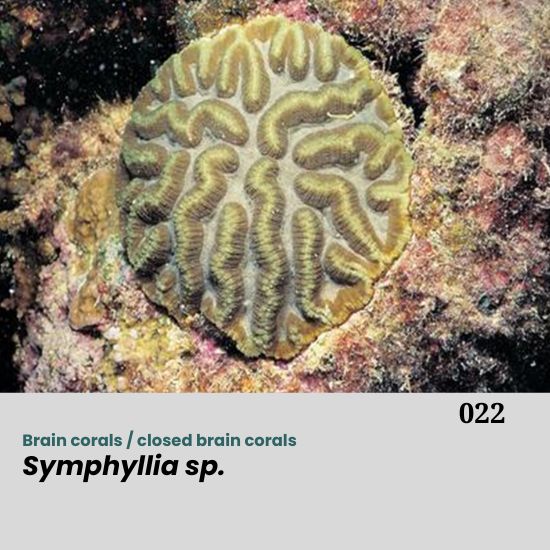
Symphyllia spp., commonly referred to as brain corals or closed brain corals, belong to the family Merulinidae. They are widely distributed across the Indo-Pacific region and are typically found on reef slopes, reef flats, and lagoonal areas. Colonies are generally massive, dome-shaped, or sub-massive, with a distinctive meandroid or maze-like corallite arrangement, which gives them a characteristic brain-like appearance.

Symphyllia sp. Brain corals or closed brain corals Kingdom: Animalia...

Read More
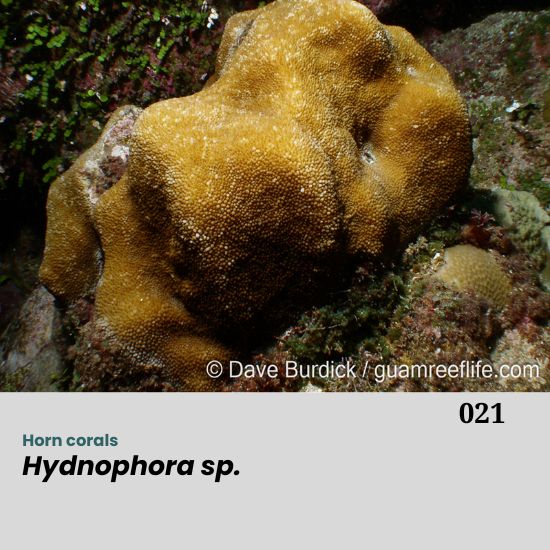
Hydnophora spp., commonly known as horn corals, belong to the family Merulinidae. They are widely distributed in the Indo-Pacific region, typically inhabiting reef slopes, lagoonal areas, and sheltered reef flats. Colonies are massive to sub-massive, sometimes forming irregular mounds, and are characterized by the presence of numerous conical or knob-like projections (tubercles) on the colony surface, giving the coral a rough and spiny appearance.

Hydnophora spp., commonly known as horn corals, belong to the...

Read More
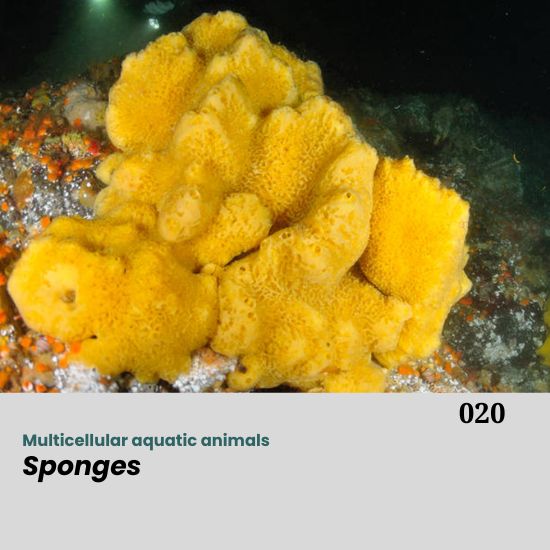
Sponges (Phylum Porifera) are a diverse group of sessile, aquatic invertebrates that are widely distributed in marine and freshwater environments. They are among the earliest-evolved multicellular animals, exhibiting a simple body organization without true tissues or organs. Sponges are characterized by a porous body with numerous ostia (small pores) that allow water to circulate through the body, facilitating filter feeding, respiration, and excretion.

Sponges (Phylum Porifera) are a diverse group of sessile, aquatic...

Read More
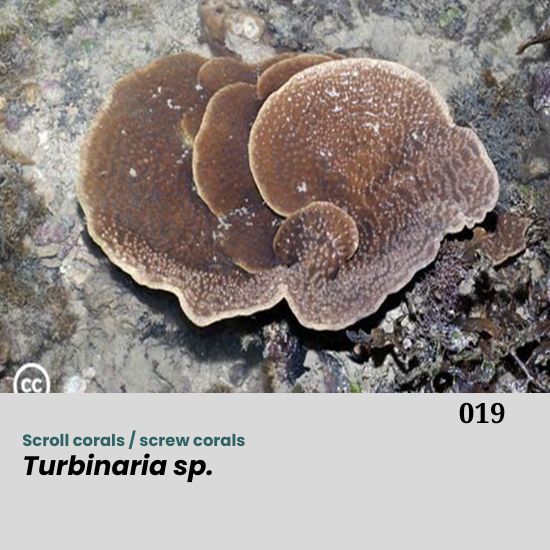
Turbinaria spp., commonly known as scroll corals or screw corals, belong to the family Dendrophylliidae. They are widely distributed across the Indo-Pacific, typically inhabiting reef slopes, lagoonal areas, and turbid coastal environments. Turbinaria is easily recognized by its unique colony morphology, which can be foliose (leaf-like), cup-shaped, or turreted, with broad, vertically or horizontally oriented plates that often resemble stacked discs or spirals.

Turbinaria spp., commonly known as scroll corals or screw corals,...

Read More
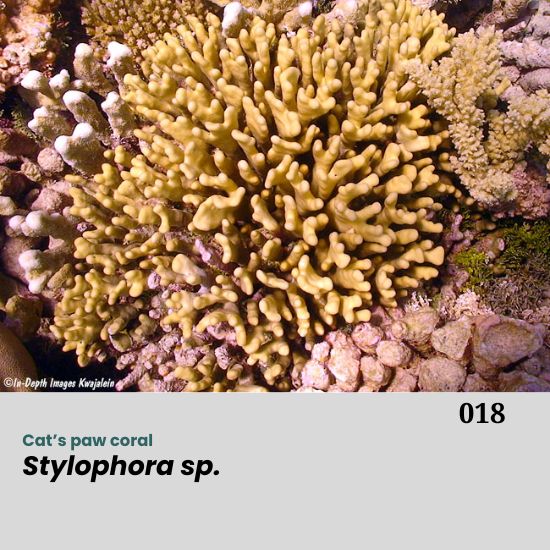
Stylophora sp. is a genus of branching stony corals commonly found in tropical Indo-Pacific reefs. It is well known for its dense, bushy growth and ecological importance in coral reef systems.

Stylophora sp. is a genus of branching stony corals commonly...

Read More
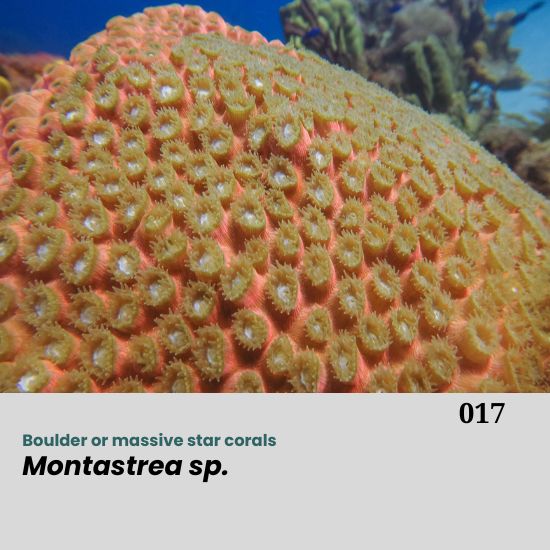
Montastraea spp., commonly referred to as boulder or massive star corals, belong to the family Merulinidae. They are widespread throughout the tropical and subtropical Atlantic and Indo-Pacific reefs, typically inhabiting reef slopes, reef crests, and lagoonal environments. These corals are massive and slow-growing, forming large, dome-shaped, encrusting, or columnar colonies that contribute significantly to reef framework and structural complexity.

Montastraea spp., commonly referred to as boulder or massive star...

Read More
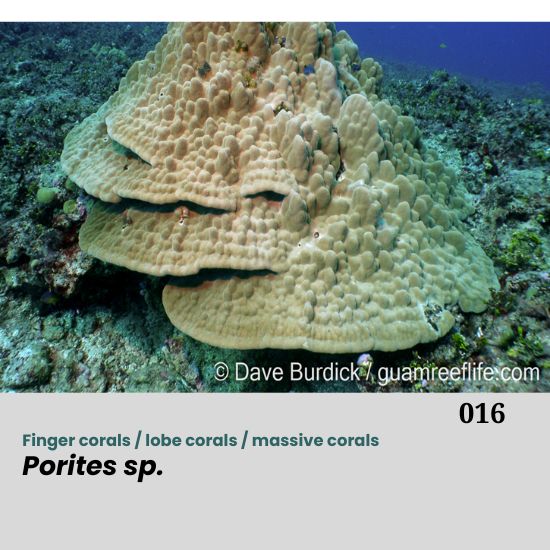
Porites spp., commonly known as finger corals, lobe corals, or massive corals, belong to the family Poritidae and are among the most widespread and ecologically important reef-building corals in the Indo-Pacific. They inhabit a variety of reef habitats, including reef flats, slopes, lagoons, and patch reefs, often in areas with high sedimentation or fluctuating environmental conditions.

Porites spp., commonly known as finger corals, lobe corals, or...

Read More
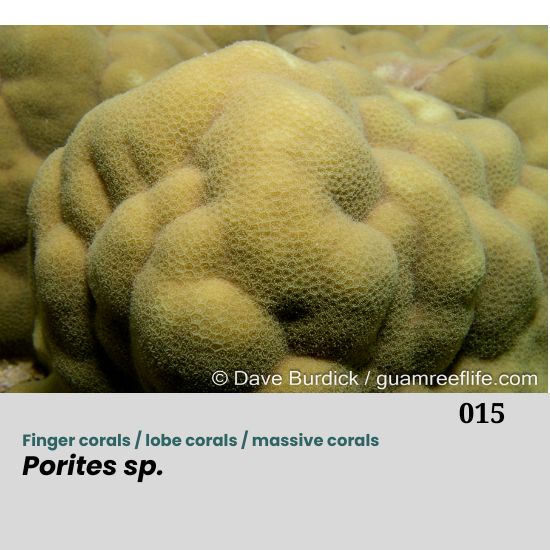
Porites spp., commonly known as finger corals, lobe corals, or massive corals, belong to the family Poritidae and are among the most widespread and ecologically important reef-building corals in the Indo-Pacific. They inhabit a variety of reef habitats, including reef flats, slopes, lagoons, and patch reefs, often in areas with high sedimentation or fluctuating environmental conditions.

Porites spp., commonly known as finger corals, lobe corals, or...

Read More
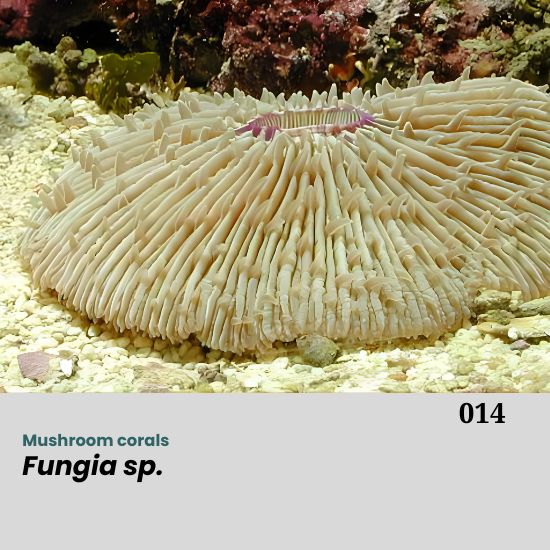
Fungia spp., commonly known as mushroom corals, belong to the family Fungiidae and are widely distributed throughout the tropical Indo-Pacific region. These corals are easily distinguished by their solitary, free-living growth form, which differs from most other scleractinian corals that form colonies. Individuals typically have a flat, circular to oval disc-shaped skeleton, occasionally with slight dome-like elevation. Young specimens may attach to the substrate, but adults are usually completely free-living and capable of moving short distances across the substrate by expanding their tissues or manipulating water pressure.

Fungia sp. Mushroom coral / plate coral Kingdom: Animalia Phylum: Cnidaria...

Read More
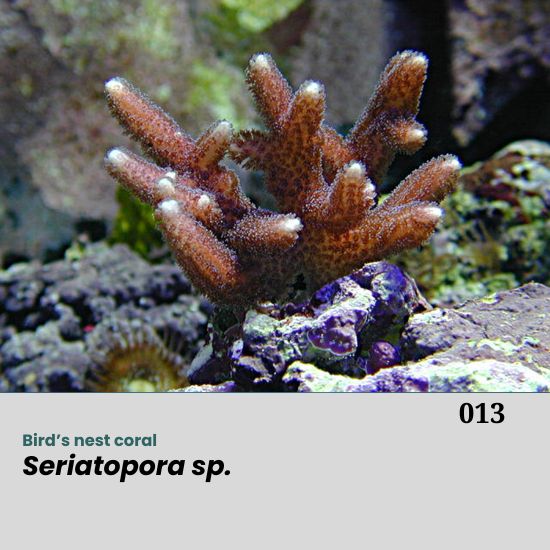
Seriatopora sp., commonly known as bird’s nest coral, is a branching stony coral with delicate, thin branches that form compact, bush-like colonies.

Seriatopora spp., commonly known as bird’s nest corals, are small-polyp...

Read More
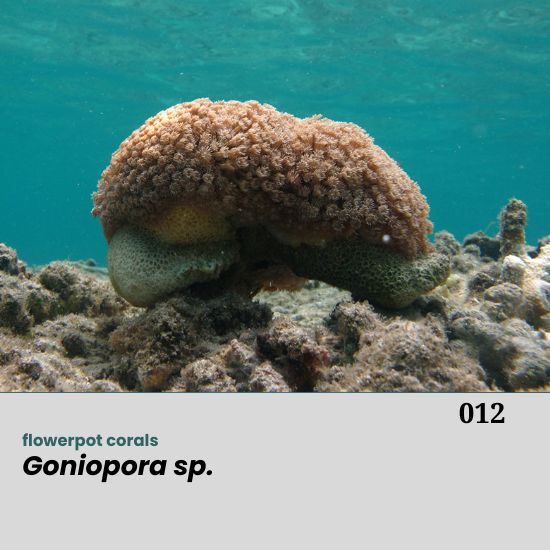
Goniopora spp., commonly referred to as flowerpot corals, are large-polyp stony corals belonging to the family Poritidae. They are widely distributed across the Indo-Pacific region, typically inhabiting sheltered reef slopes, lagoonal environments, turbid coastal waters, and soft-substrate areas. Goniopora colonies are easily recognized by their distinctive long, tubular polyps, each tipped with 24 tentacles, which give the coral its characteristic flower-like appearance when fully extended.

Goniopora spp., commonly referred to as flowerpot corals, are large-polyp...

Read More
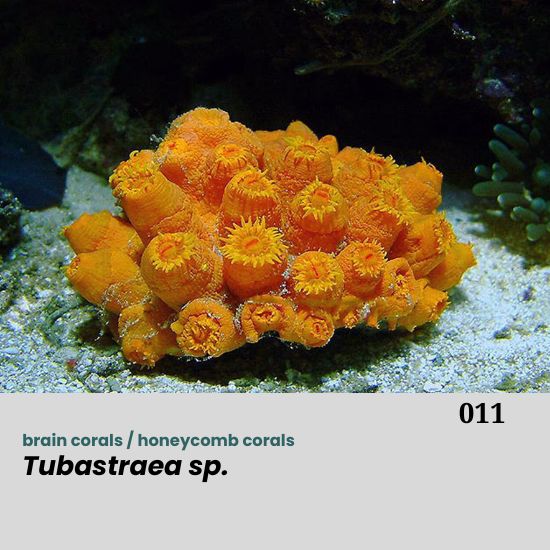
Tubastraea spp., widely known as sun corals or orange cup corals, are members of the family Dendrophylliidae. Unlike most reef-building corals, species of this genus are azooxanthellate, meaning they lack symbiotic zooxanthellae and do not rely on photosynthesis for nutrition. As a result, Tubastraea corals are often found in low-light or shaded habitats, such as caves, overhangs, deep reef slopes, shipwrecks, and artificial structures, where they capture plankton and organic particles with their large, fleshy polyps.

Tubastraea spp., widely known as sun corals or orange cup...

Read More
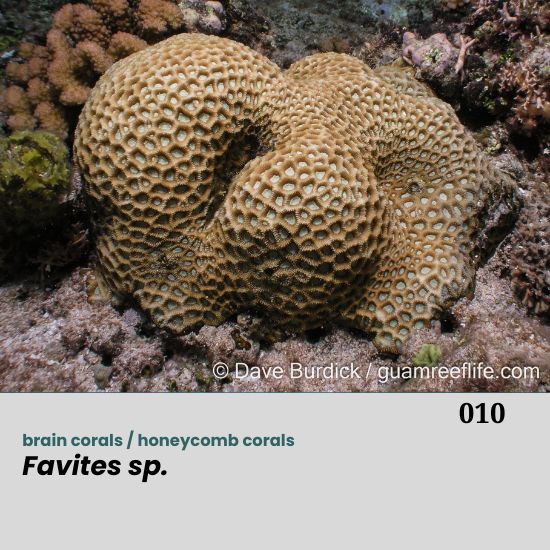
Favites

Favites spp., commonly referred to as brain corals or honeycomb...

Read More
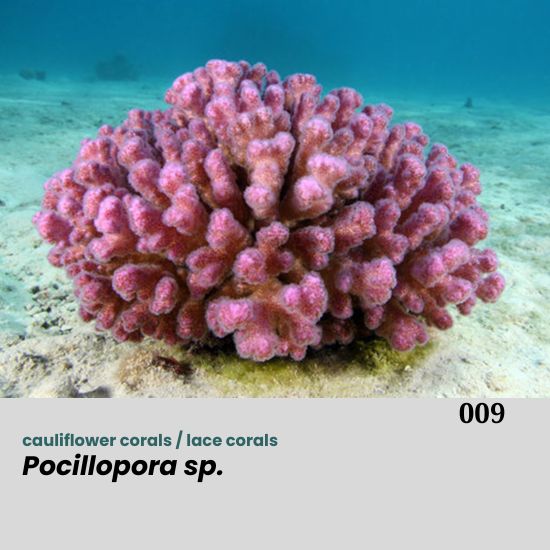
Pocillopora

A key diagnostic feature of Pocillopora is the presence of...

Read More
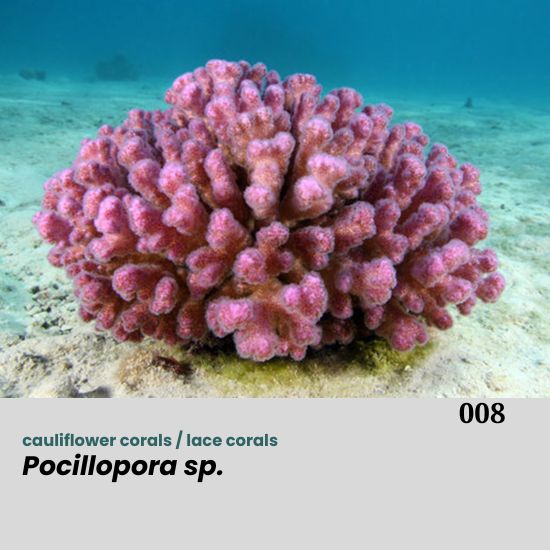
Pocillopora sp

A key diagnostic feature of Pocillopora is the presence of...

Read More
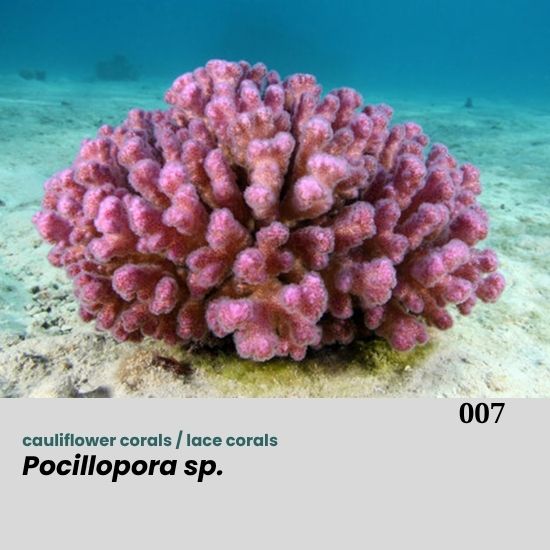
Pocillopora spp., commonly known as cauliflower corals or lace corals, are a genus of small-polyp stony corals belonging to the family Pocilloporidae. They are widely distributed throughout the Indo-Pacific region, particularly abundant on shallow reef crests, reef flats, and high-energy environments. Members of this genus are easily recognized by their distinctive branching morphology, which may range from compact, bushy colonies to more open, irregular structures depending on species and environmental conditions.

A key diagnostic feature of Pocillopora is the presence of...

Read More
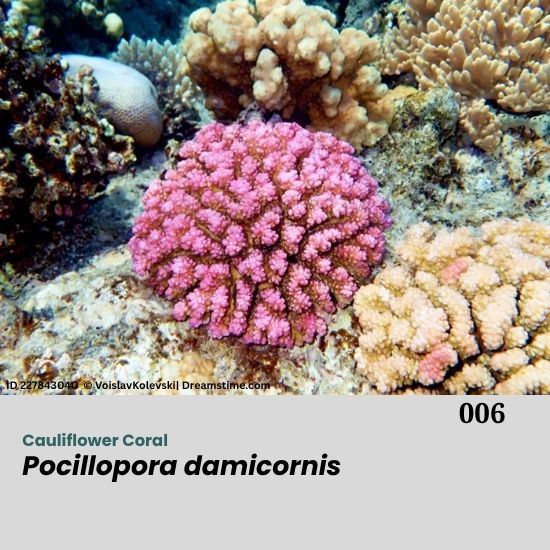
Pocillopora damicornis is a widely distributed reef-building coral found across the Indo-Pacific. It forms bushy, branching colonies that resemble cauliflower, with shapes varying depending on environmental conditions. Its color ranges from cream and pink to brown and green due to symbiotic algae (zooxanthellae). Pocillopora damicornis (Cauliflower Coral)

Pocillopora damicornis is a widely distributed reef-building coral found across...

Read More
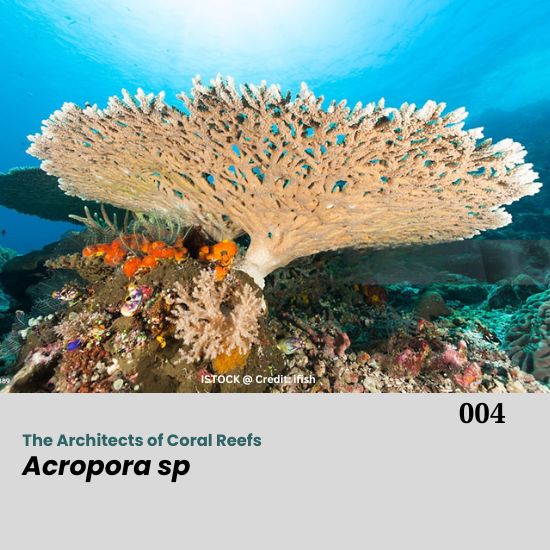
Acropora is a genus of small polyp stony coral in the phylum Cnidaria. Some of its species are known as table coral, elkhorn coral, and staghorn coral. Acropora species are some of the major reef corals responsible for building the immense calcium carbonate substructure that supports the thin living skin of a reef. Acropora sp. is commonly found in shallow reef environments that are bright and have moderate to high water motion. Acropora corals are commonly called "staghorn coral," and some colonies with flat tops are called "table coral." Besides the differences in the overall shape of the colony, the branches are usually cylindrical with corallites surrounding them. A corallite is a tiny cup about 0.5 cm in diameter. A distinctive feature of this species is the axial corallite, which is larger than the other corallites. It grows upward at the tip of the branch, while new corallites bud along its sides. The base of the coral attaches to rock or a plug and encrusts to increase stability. From this base, new branches can also grow outward. Acropora Coral – The Architects of Coral Reefs

Acropora is a genus of small polyp stony coral in...

Read More
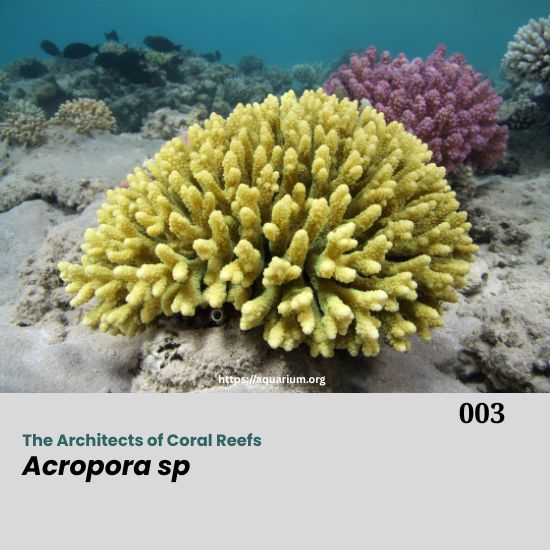
Acropora is a genus of small polyp stony coral in the phylum Cnidaria. Some of its species are known as table coral, elkhorn coral, and staghorn coral. Acropora species are some of the major reef corals responsible for building the immense calcium carbonate substructure that supports the thin living skin of a reef. Acropora sp. is commonly found in shallow reef environments that are bright and have moderate to high water motion. Acropora corals are commonly called "staghorn coral," and some colonies with flat tops are called "table coral." Besides the differences in the overall shape of the colony, the branches are usually cylindrical with corallites surrounding them. A corallite is a tiny cup about 0.5 cm in diameter. A distinctive feature of this species is the axial corallite, which is larger than the other corallites. It grows upward at the tip of the branch, while new corallites bud along its sides. The base of the coral attaches to rock or a plug and encrusts to increase stability. From this base, new branches can also grow outward. Acropora Coral – The Architects of Coral Reefs

Acropora is a genus of small polyp stony coral in...

Read More
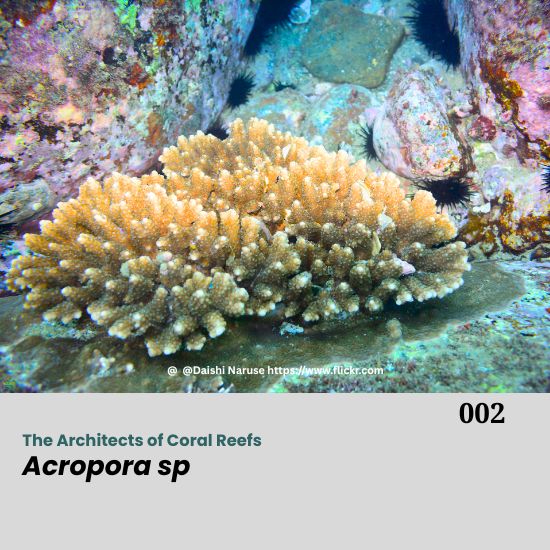
Acropora is a genus of small polyp stony coral in the phylum Cnidaria. Some of its species are known as table coral, elkhorn coral, and staghorn coral. Acropora species are some of the major reef corals responsible for building the immense calcium carbonate substructure that supports the thin living skin of a reef. Acropora sp. is commonly found in shallow reef environments that are bright and have moderate to high water motion. Acropora corals are commonly called "staghorn coral," and some colonies with flat tops are called "table coral." Besides the differences in the overall shape of the colony, the branches are usually cylindrical with corallites surrounding them. A corallite is a tiny cup about 0.5 cm in diameter. A distinctive feature of this species is the axial corallite, which is larger than the other corallites. It grows upward at the tip of the branch, while new corallites bud along its sides. The base of the coral attaches to rock or a plug and encrusts to increase stability. From this base, new branches can also grow outward. Acropora Coral – The Architects of Coral Reefs

Acropora is a genus of small polyp stony coral in...

Read More
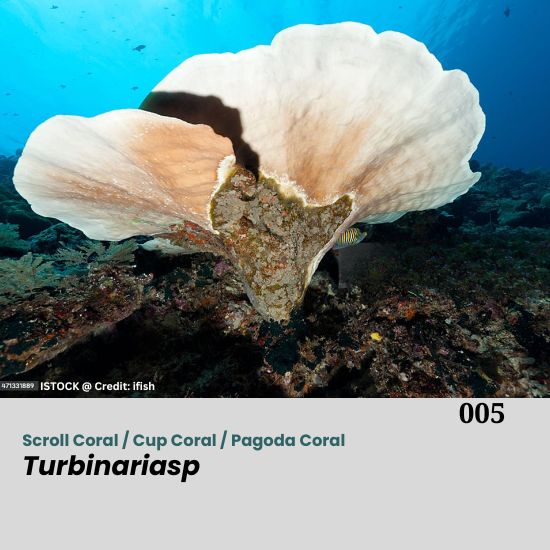
Turbinaria sp., commonly known as scroll coral, cup coral, or pagoda coral, is a genus of colonial stony corals widely distributed across the Indo-Pacific region. These corals are recognized for their unique cup-shaped, scroll-like, or plate-forming structures, which often resemble vases, funnels, or layered formations.

Turbinaria sp., commonly known as scroll coral, cup coral, or...

Read More
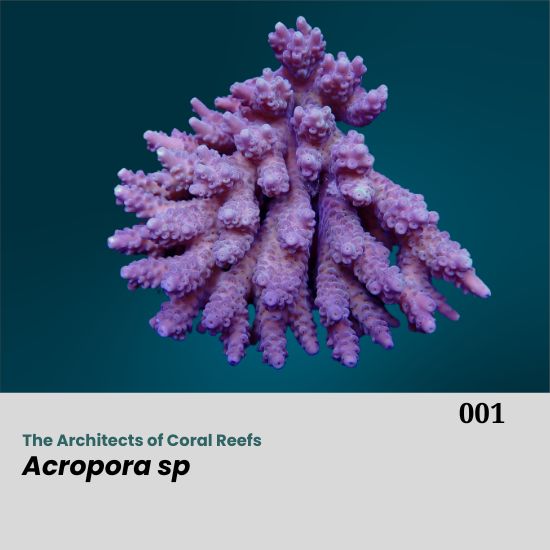
Acropora is a genus of small polyp stony coral in the phylum Cnidaria. Some of its species are known as table coral, elkhorn coral, and staghorn coral. Acropora species are some of the major reef corals responsible for building the immense calcium carbonate substructure that supports the thin living skin of a reef. Acropora sp. is commonly found in shallow reef environments that are bright and have moderate to high water motion. Acropora corals are commonly called "staghorn coral," and some colonies with flat tops are called "table coral." Besides the differences in the overall shape of the colony, the branches are usually cylindrical with corallites surrounding them. A corallite is a tiny cup about 0.5 cm in diameter. A distinctive feature of this species is the axial corallite, which is larger than the other corallites. It grows upward at the tip of the branch, while new corallites bud along its sides. The base of the coral attaches to rock or a plug and encrusts to increase stability. From this base, new branches can also grow outward. Acropora Coral – The Architects of Coral Reefs

Acropora is a genus of small polyp stony coral in...

Read More

Life Cycle of tiger-Prawa

Penaeus monodon

Life Cycle of Mud-Crab

Scylla serrata

Scroll to Top