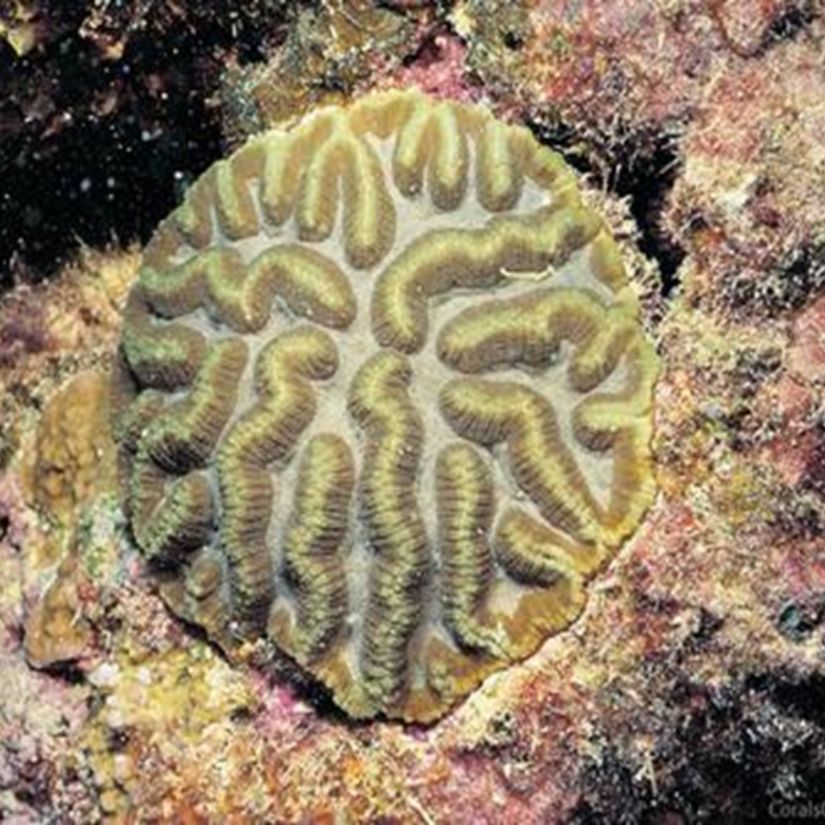
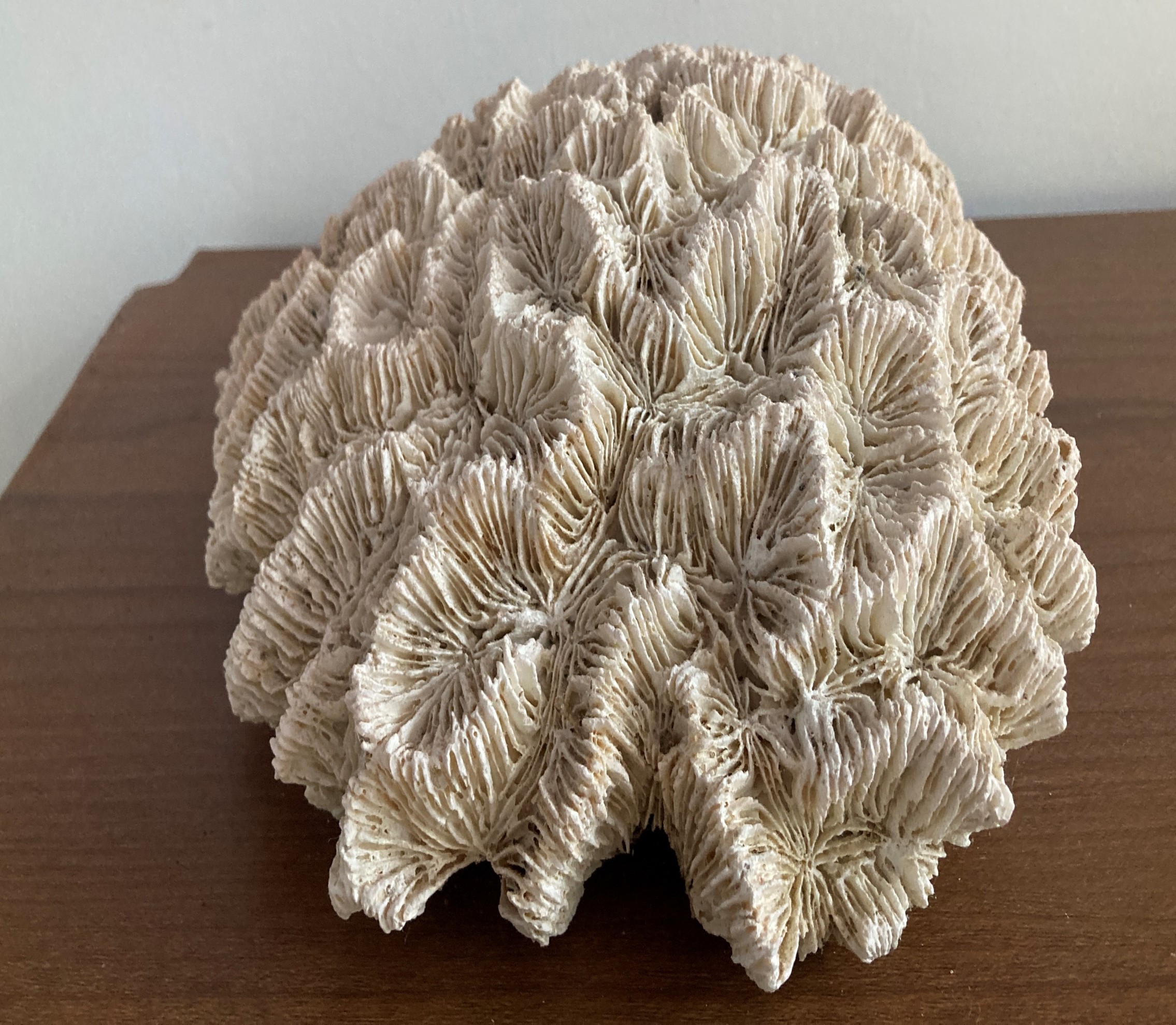
Symphyllia spp., commonly referred to as brain corals or closed brain corals, belong to the family Merulinidae. They are widely distributed across the Indo-Pacific region and are typically found on reef slopes, reef flats, and lagoonal areas. Colonies are generally massive, dome-shaped, or sub-massive, with a distinctive meandroid or maze-like corallite arrangement, which gives them a characteristic brain-like appearance.
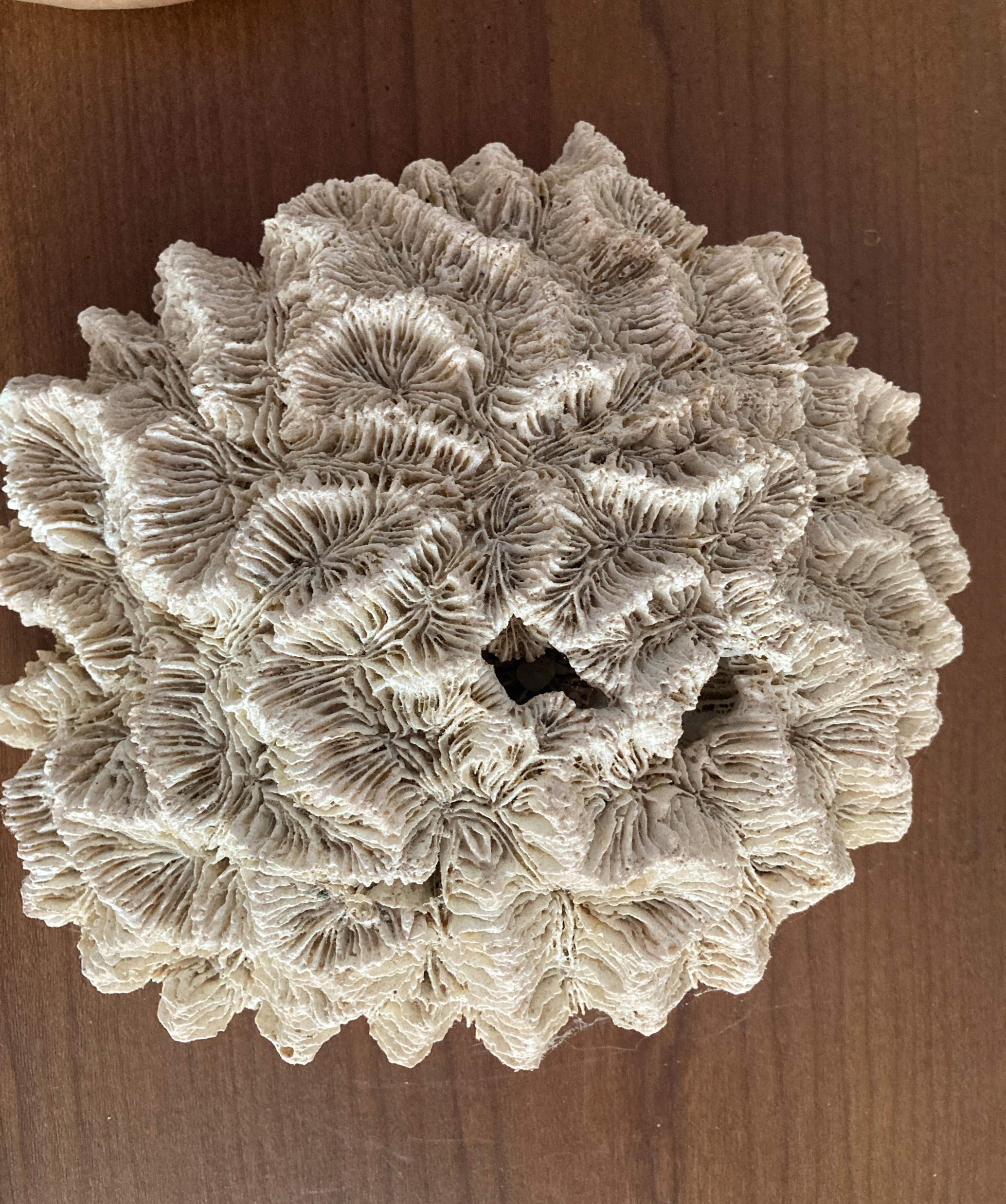
Corallites are large, tubular to subcircular, and share common walls with adjacent corallites (cerioid arrangement). The septa are thick and often exhibit pronounced ridges, while the coenosteum is relatively thin. Colony coloration is variable, ranging from shades of brown, green, and gray to more vibrant tones depending on the density of symbiotic zooxanthellae.
Species-level identification within Symphyllia can be challenging due to morphological plasticity influenced by environmental factors such as water flow, light intensity, and sedimentation. Detailed skeletal analysis, including corallite structure, septal arrangement, and colony morphology, is often necessary for accurate classification. Ecologically, Symphyllia spp. are important reef-builders, contributing to reef framework, structural complexity, and providing habitat for various reef-associated organisms.
- Forms massive, encrusting, or dome-shaped colonies
- Surface has winding valleys and ridges resembling a brain
- Polyps are large and fleshy, often extending during feeding
- Colors include green, brown, cream, and sometimes fluorescent tones