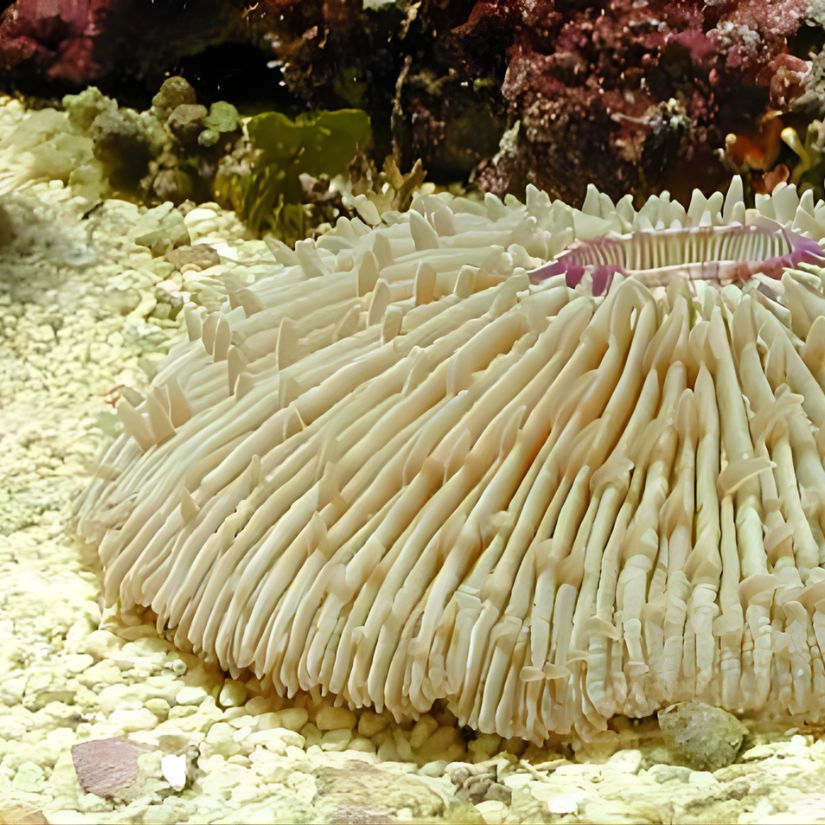
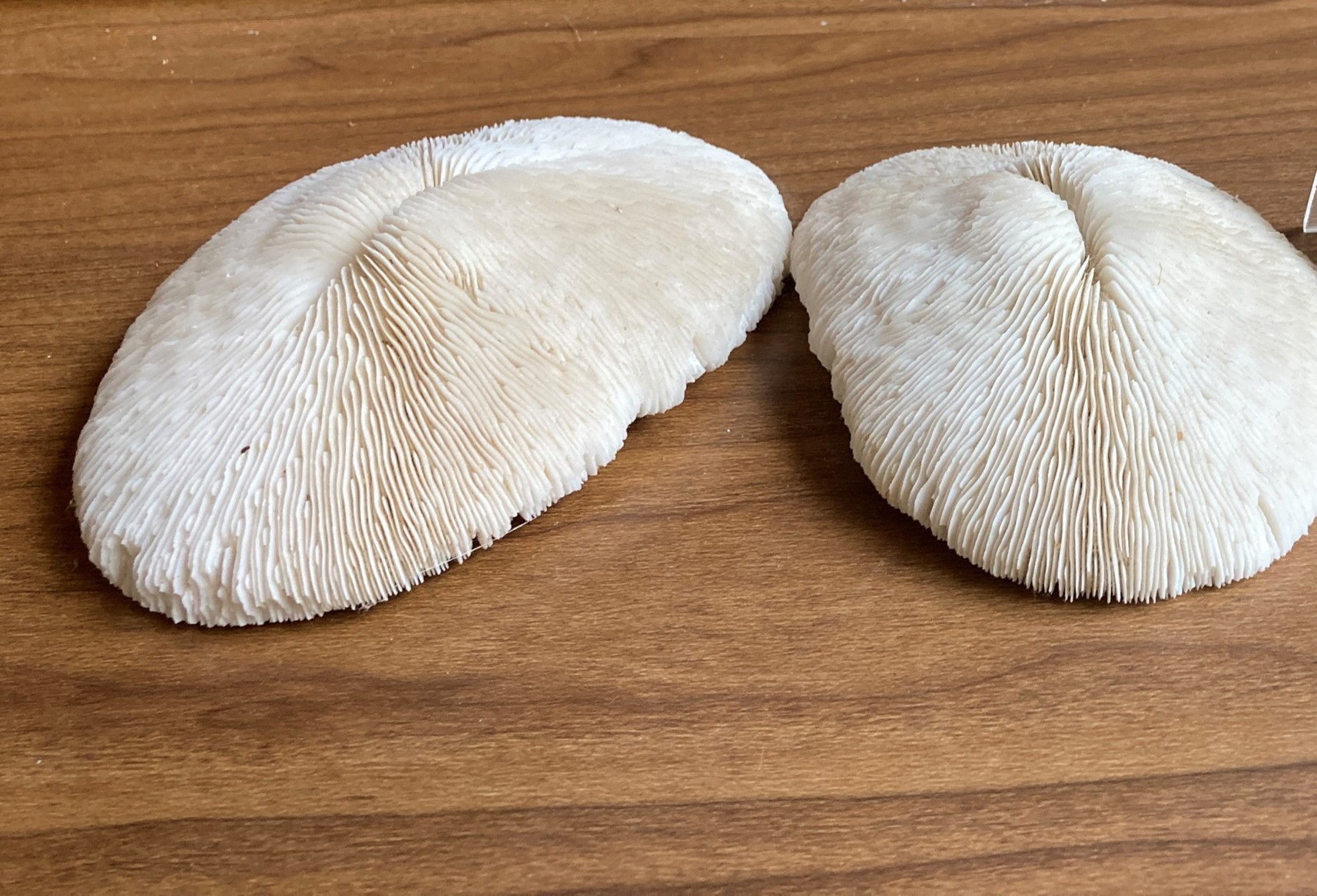
Fungia spp., commonly known as mushroom corals, belong to the family Fungiidae and are widely distributed throughout the tropical Indo-Pacific region. These corals are easily distinguished by their solitary, free-living growth form, which differs from most other scleractinian corals that form colonies. Individuals typically have a flat, circular to oval disc-shaped skeleton, occasionally with slight dome-like elevation. Young specimens may attach to the substrate, but adults are usually completely free-living and capable of moving short distances across the substrate by expanding their tissues or manipulating water pressure.
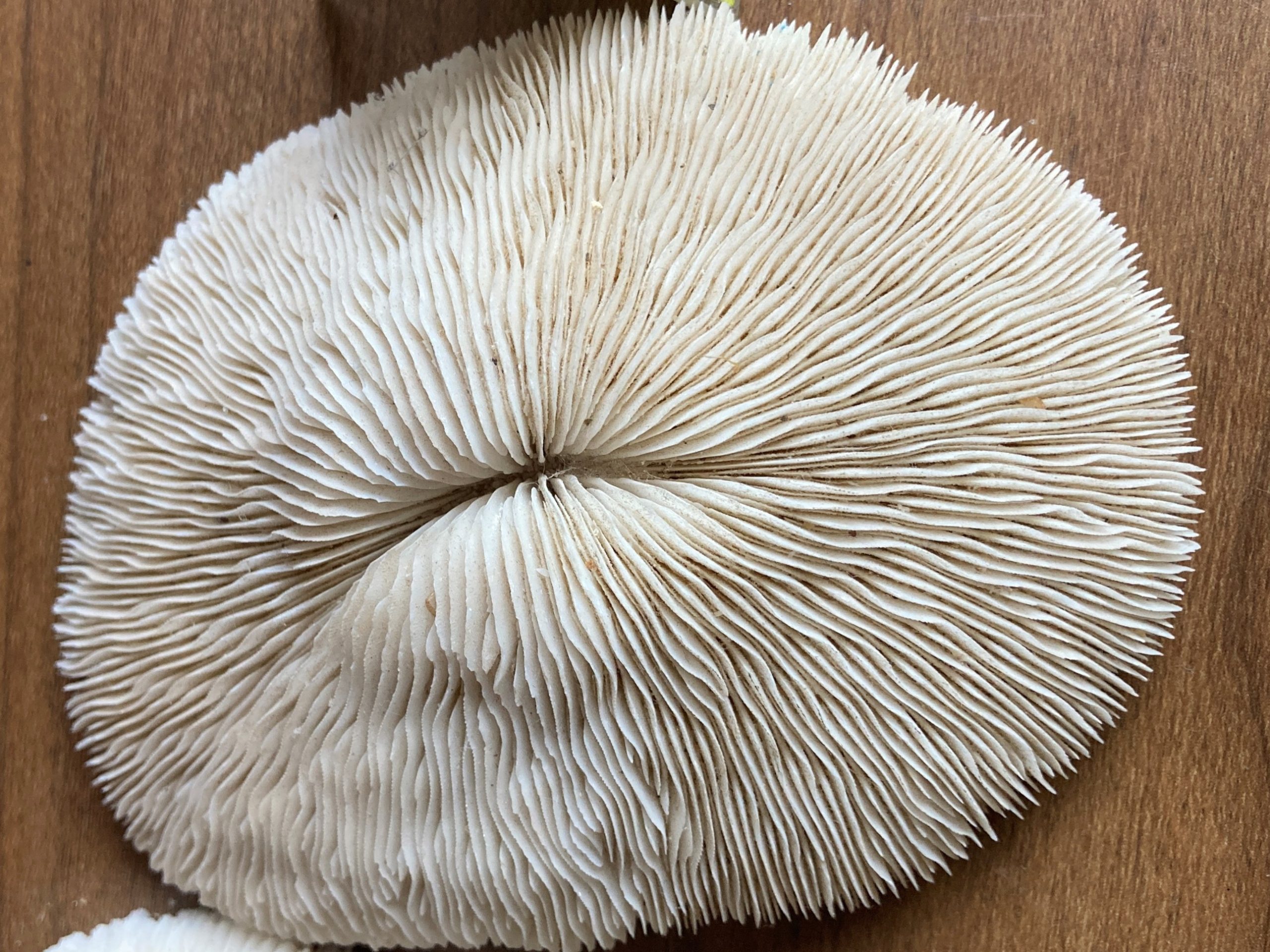
The upper surface of Fungia corals is characterized by radiating septa and costae, which create a prominent ribbed appearance. A central, elongated mouth is located along a central groove or slit. Corallite structures are large and well-developed, with thick septa that can show toothed or serrated margins. Coloration can vary widely, including shades of brown, green, orange, purple, or fluorescent hues, influenced by symbiotic zooxanthellae and environmental factors.
Fungia spp. exhibit notable resilience and regenerative ability. Damaged fragments can sometimes grow into fully functional individuals, and their free-living nature allows them to avoid burial by sediment. However, species-level identification within Fungia can be challenging due to morphological variation driven by habitat, age, and growth conditions. Accurate identification often requires examining skeletal features, septal architecture, and sometimes molecular data.
Ecologically, Fungia corals play an important role in sandy reef flats and lagoonal environments, contributing to benthic diversity and functioning as habitat for small reef organisms.