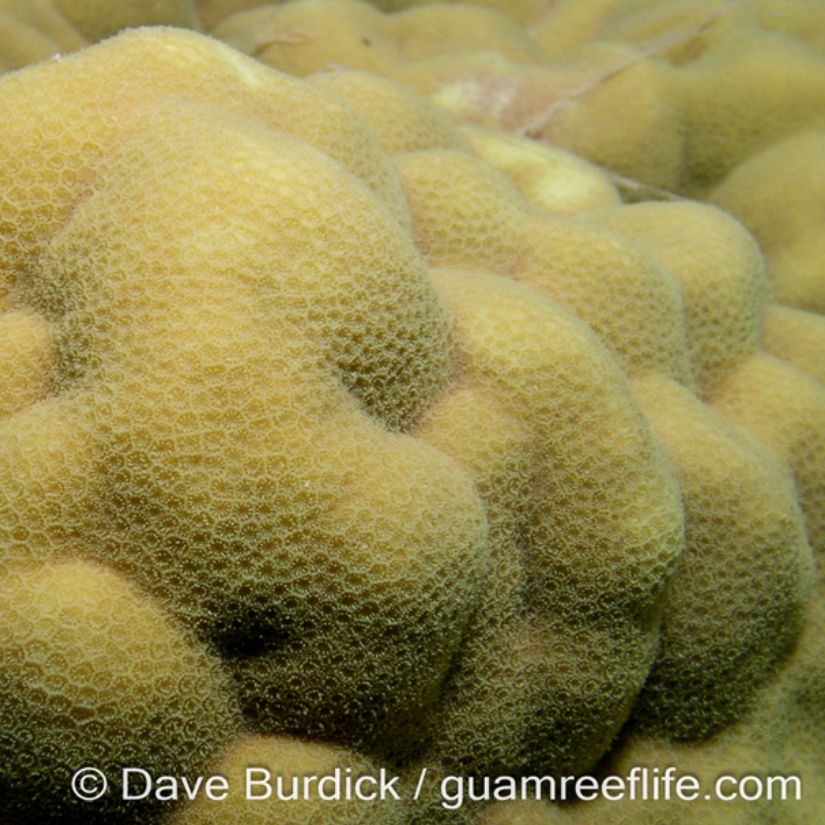
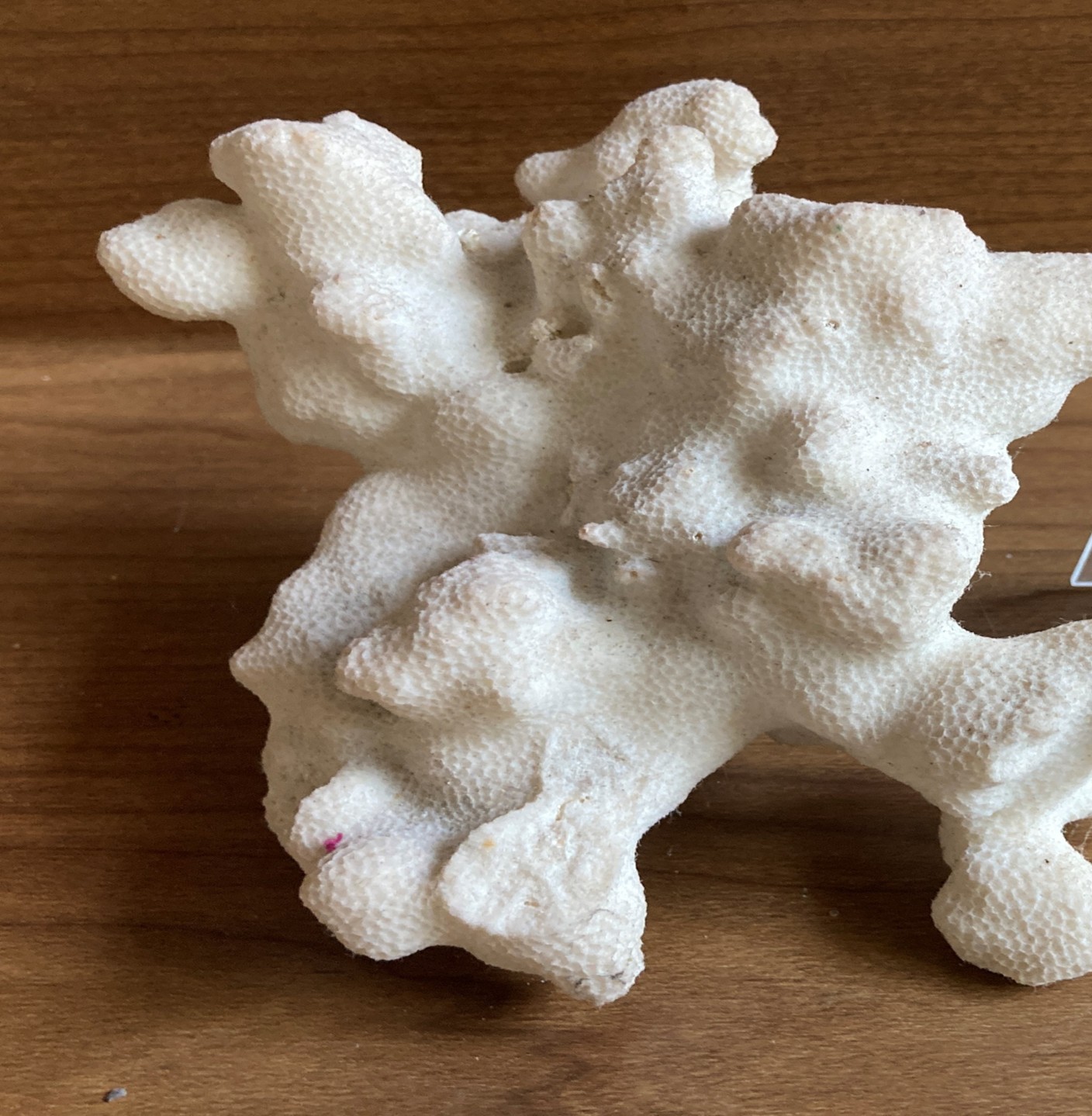
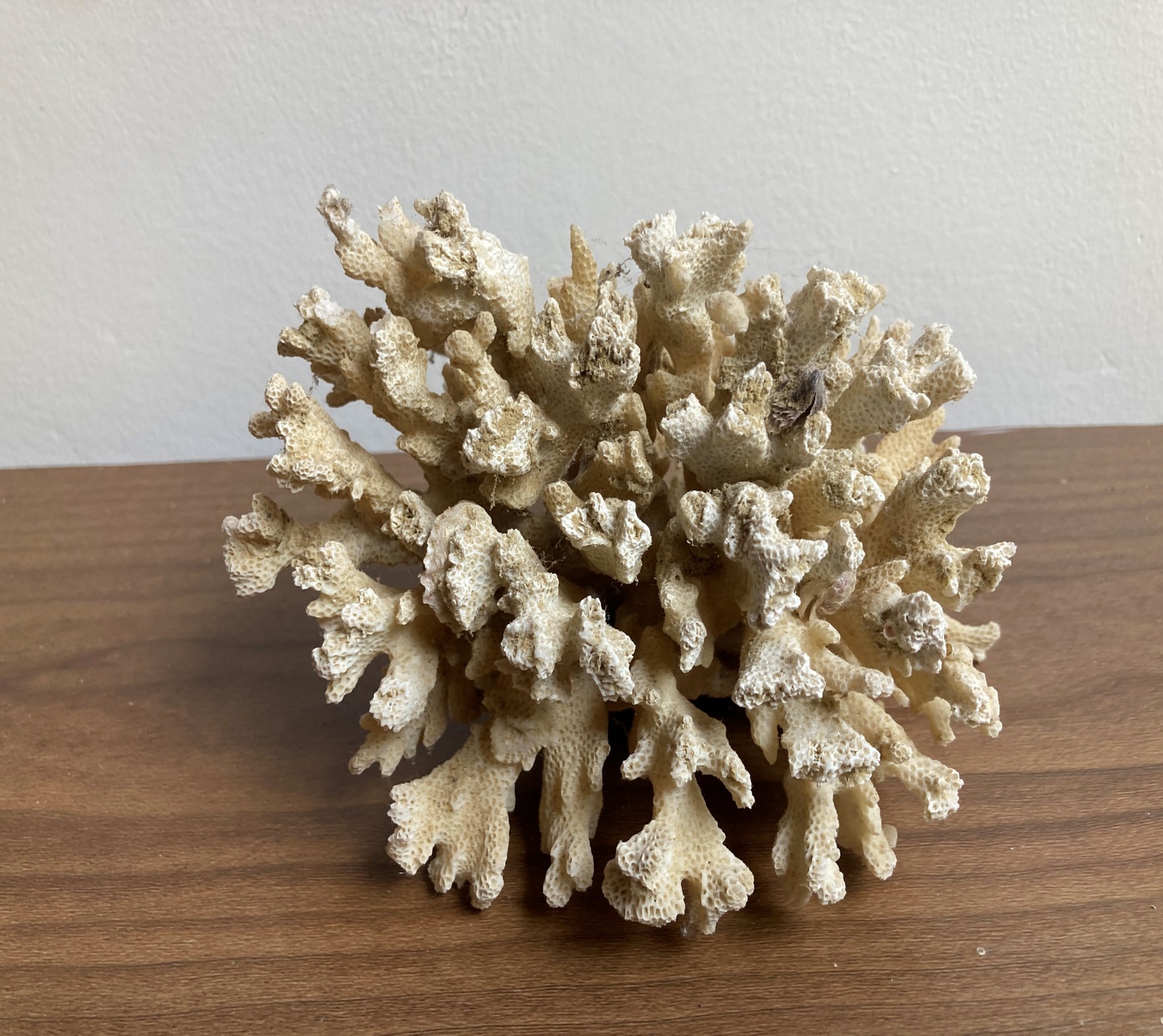
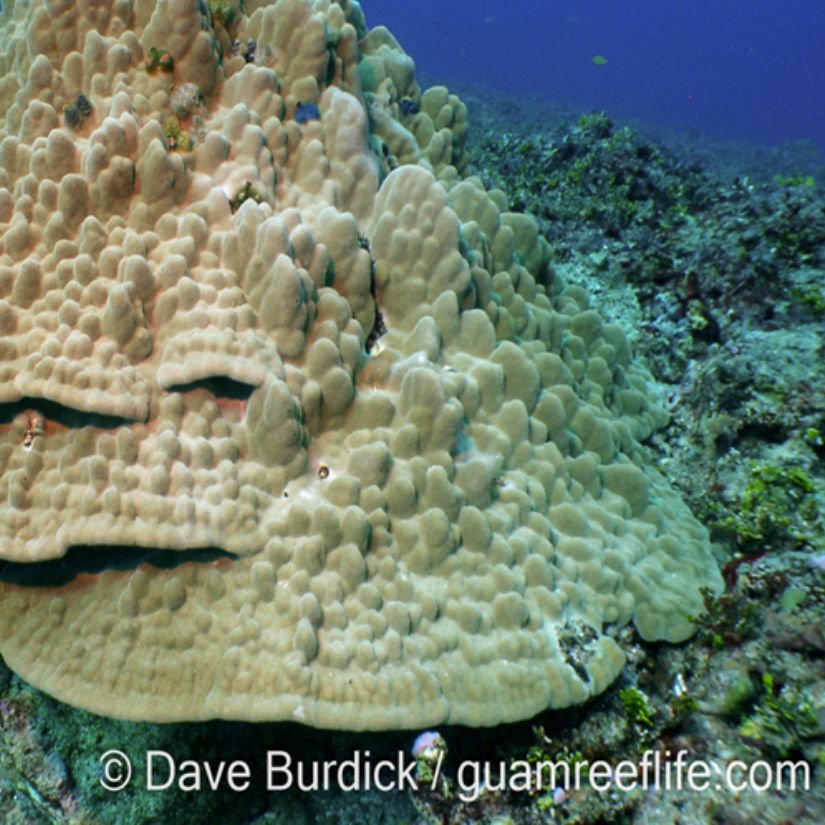
Porites spp., commonly known as finger corals, lobe corals, or massive corals, belong to the family Poritidae and are among the most widespread and ecologically important reef-building corals in the Indo-Pacific. They inhabit a variety of reef habitats, including reef flats, slopes, lagoons, and patch reefs, often in areas with high sedimentation or fluctuating environmental conditions.
Colonies of Porites can be massive, branching, or encrusting, with morphology influenced by environmental factors such as water flow and light availability. The skeletal surface is generally smooth, and the corallites are small, closely packed, and tubular, with thin walls and shallow calices. Unlike some other genera, the polyps of Porites are typically extended only at night, and the colony often appears relatively uniform in color, which ranges from pale brown to green, yellow, or cream.
Porites is characterized by slow growth but high resilience, making it a key contributor to reef framework and structural stability. Species-level identification can be challenging due to morphological plasticity and similarities among species, often requiring detailed skeletal measurements or molecular analysis. Ecologically, Porites corals provide habitat for numerous reef organisms and play a vital role in carbonate production on coral reefs.