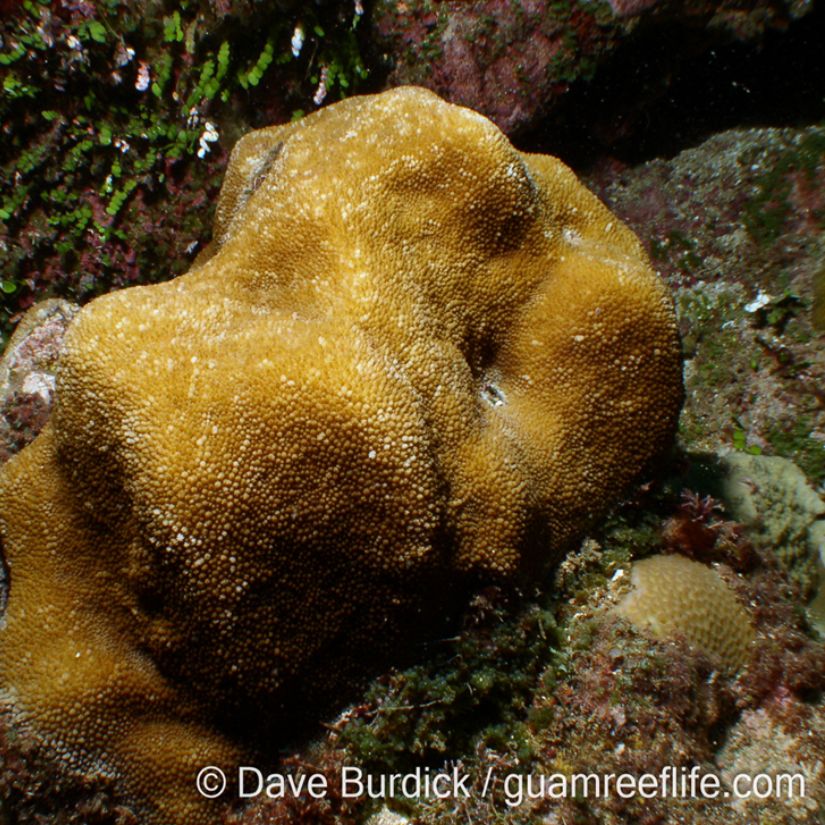
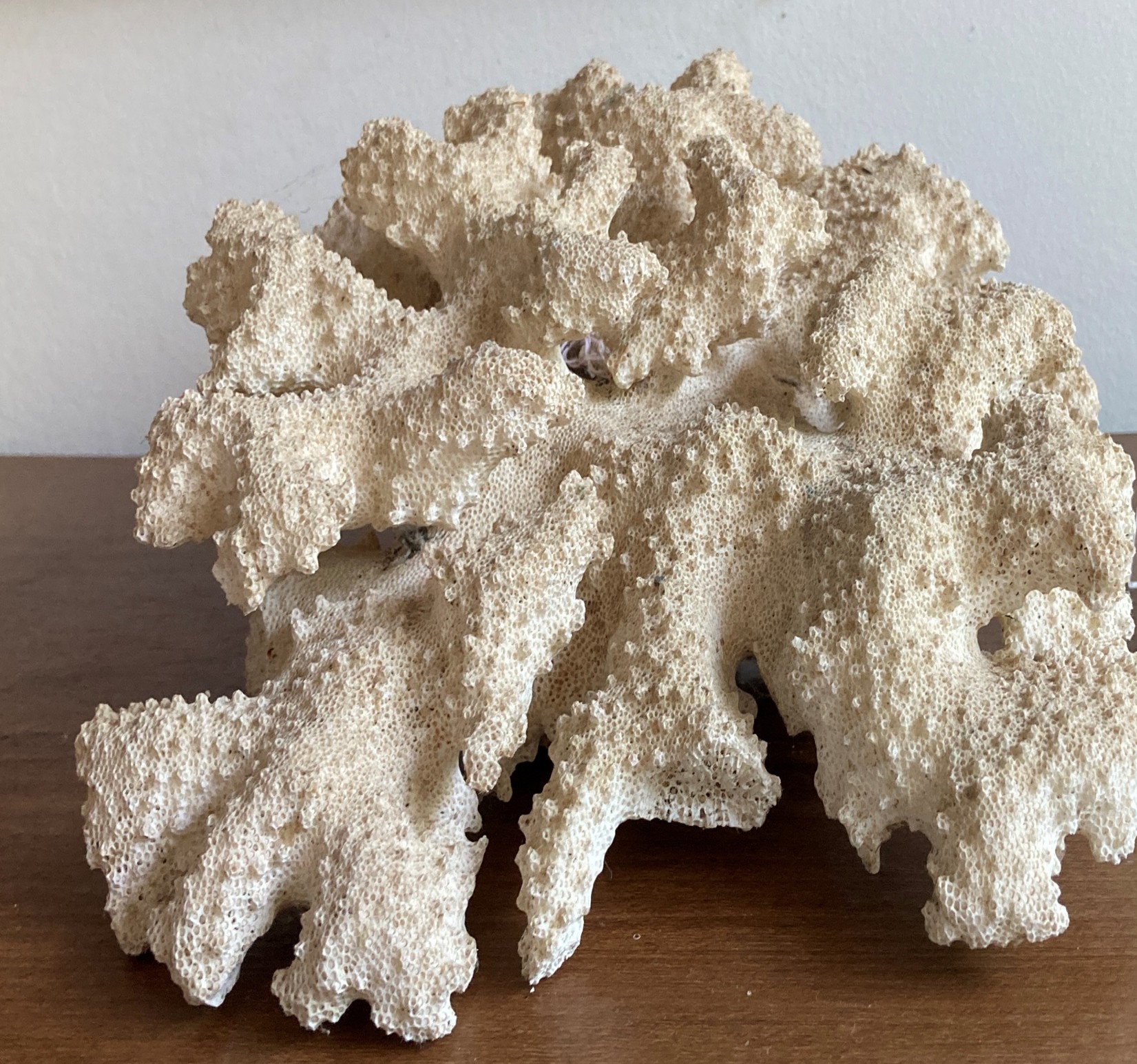
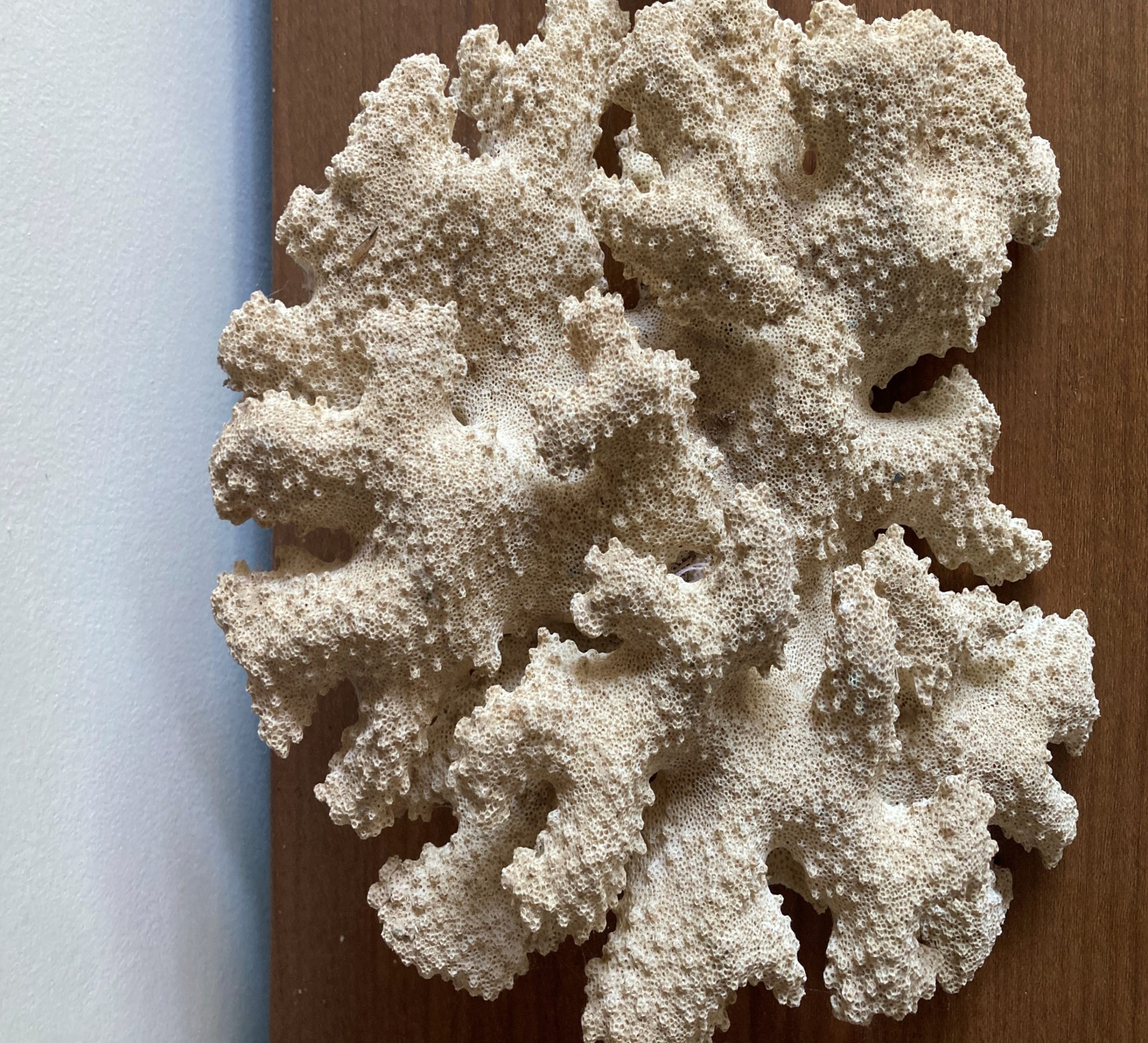
Hydnophora spp., commonly known as horn corals, belong to the family Merulinidae. They are widely distributed in the Indo-Pacific region, typically inhabiting reef slopes, lagoonal areas, and sheltered reef flats. Colonies are massive to sub-massive, sometimes forming irregular mounds, and are characterized by the presence of numerous conical or knob-like projections (tubercles) on the colony surface, giving the coral a rough and spiny appearance.
The corallites of Hydnophora are small, tubular, and closely spaced, often integrated into the tubercle structures. Septa are well-developed, and the coenosteum between corallites is thick and porous. Colony coloration varies, commonly presenting in shades of brown, green, or cream, sometimes with fluorescent highlights depending on light exposure and symbiont density.
Species-level identification within Hydnophora is challenging due to morphological plasticity influenced by water flow, light, and depth. Accurate identification often requires detailed skeletal examination, including tubercle structure and septal arrangement. Ecologically, Hydnophora corals contribute to reef complexity, providing microhabitats for small reef organisms, and are considered important reef-building corals in the Indo-Pacific.