July 2026

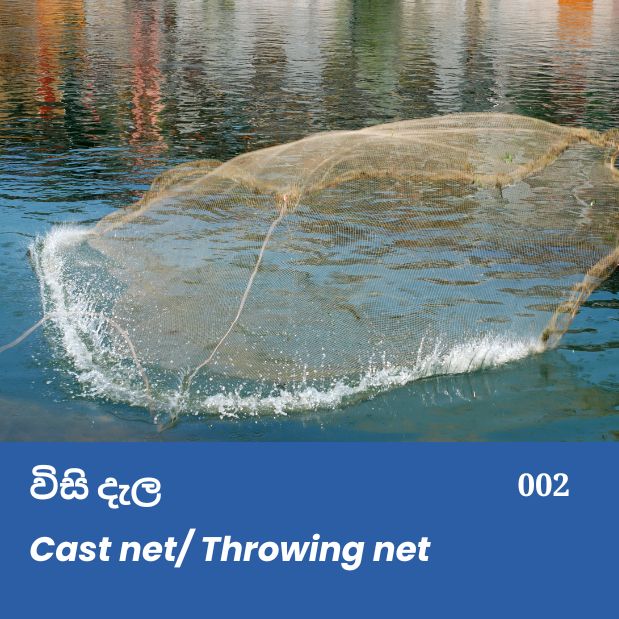
The fishing gear known as the cast net derives its name from its method of operation, as the fisherman throws the circular net over the water by holding it evenly with both hands. Once the net is cast, it spreads out in a circular shape and sinks rapidly, trapping fish or shrimp beneath it. A weighted line attached around the edge of the net helps it close as it is retrieved, preventing the catch from escaping. This traditional fishing method requires considerable skill and experience to ensure that the net opens fully and lands accurately over the target area.

Cast net Throwing net විසි දැල

The fishing gear known as the cast net derives its name from its method of operation, as the fisherman throws the circular net over the water by holding it evenly with both hands. Once the net is cast, it spreads out in a circular shape and sinks rapidly, trapping fish or shrimp beneath it. A weighted line attached around the edge of the net helps it close as it is retrieved, preventing the catch from escaping. This traditional fishing method requires considerable skill and experience to ensure that the net opens fully and lands accurately over the target area.

Cast net Throwing net විසි දැල Read More »
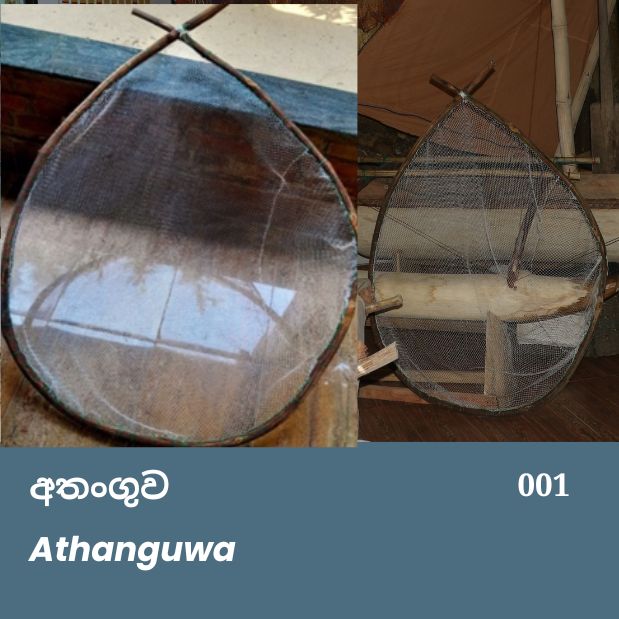
Traditional Athanguwa fish trap, wooden frame with mesh netting, shown indoors.

Athanguwa අතංගුව

During the 1970s and 1980s, the Athanguwa, a traditional lagoon fishing gear, played a significant role in the collection of ornamental fish from Sri Lanka’s coastal lagoons. These fish were primarily harvested for export to the international aquarium trade, providing an important supplementary livelihood for many fishing households. Different species commanded different market prices; for example, Ilatthiya was purchased by exporters for approximately 25 cents per fish, while Kapu Handa was purchased for around 30 cents each.

Athanguwa අතංගුව Read More »

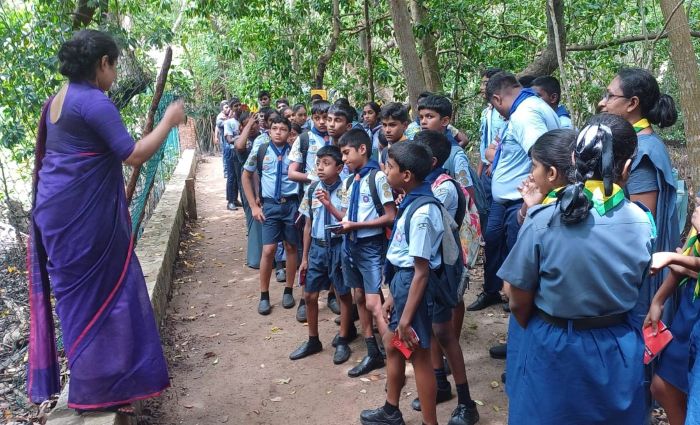
The programme focused on the importance of mangrove ecosystems, their role in protecting coastal environments, conserving biodiversity, and mitigating the impacts of climate change. Through interactive sessions and educational activities, participants gained valuable knowledge on the importance of conserving mangroves and protecting Sri Lanka's coastal ecosystems.

International Mangrove Day Awareness Programme for School Students and Young Scouts

International Mangrove Day Awareness Programme for School Students and Young Scouts

On 18 July 2026, in celebration of International Mangrove Day, the Lanka Mangrove Museum & Learning Center organized an environmental awareness programme for school students and young scouts.

The programme focused on the importance of mangrove ecosystems, their role in protecting coastal environments, conserving biodiversity, and mitigating the impacts of climate change. Through interactive sessions and educational activities, participants gained valuable knowledge on the importance of conserving mangroves and protecting Sri Lanka’s coastal ecosystems.

International Mangrove Day Awareness Programme for School Students and Young Scouts Read More »

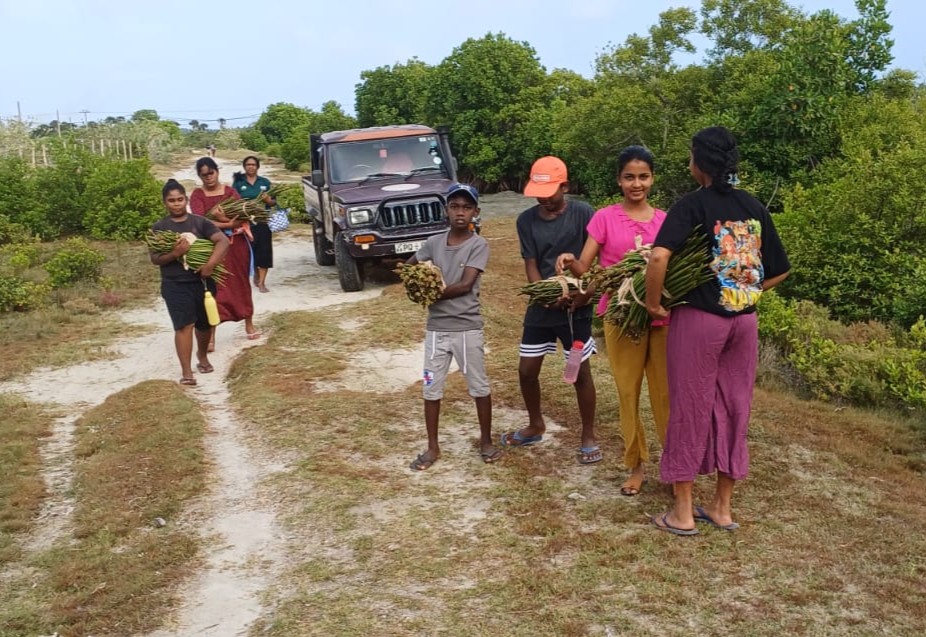
In celebration of International Mangrove Conservation Day, a mangrove restoration programme was successfully carried out today at the Kalpitiya Lagoon, where 960 Red Mangrove (Rhizophora mucronata) saplings were planted.

960 Mangrove Saplings Planted in the Kalpitiya Lagoon to Mark International Mangrove Conservation Day

In celebration of International Mangrove Conservation Day, a mangrove restoration programme was successfully carried out today at the Kalpitiya Lagoon, where 960 Red Mangrove (Rhizophora mucronata) saplings were planted.

960 Mangrove Saplings Planted in the Kalpitiya Lagoon to Mark International Mangrove Conservation Day Read More »

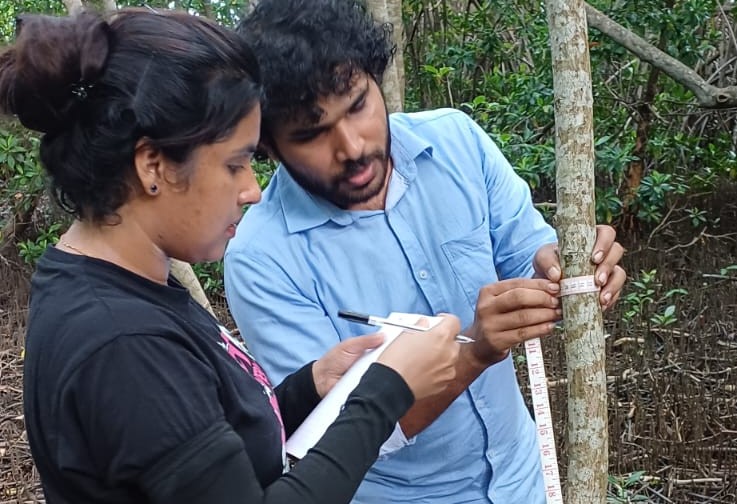
On 09th July 2026, we were pleased to welcome Ms. A.A.M. Anuradha M. Nanayakkara, an MSc student in Environmental Science from the Department of Zoology and Environmental Science, Faculty of Science, University of Colombo, to the Lanka Mangrove Museum & Learning Center, Pambala.

MSc Research Student Visits the Lanka Mangrove Museum & Learning Center

MSc Research Student Visits the Lanka Mangrove Museum & Learning Center On 09th July 2026, we were pleased to welcome Ms. A.A.M. Anuradha M. Nanayakkara, an MSc student in Environmental Science from the Department of Zoology and Environmental Science, Faculty of Science, University of Colombo, to the Lanka Mangrove Museum & Learning Center, Pambala. Ms.

MSc Research Student Visits the Lanka Mangrove Museum & Learning Center Read More »

Scroll to Top