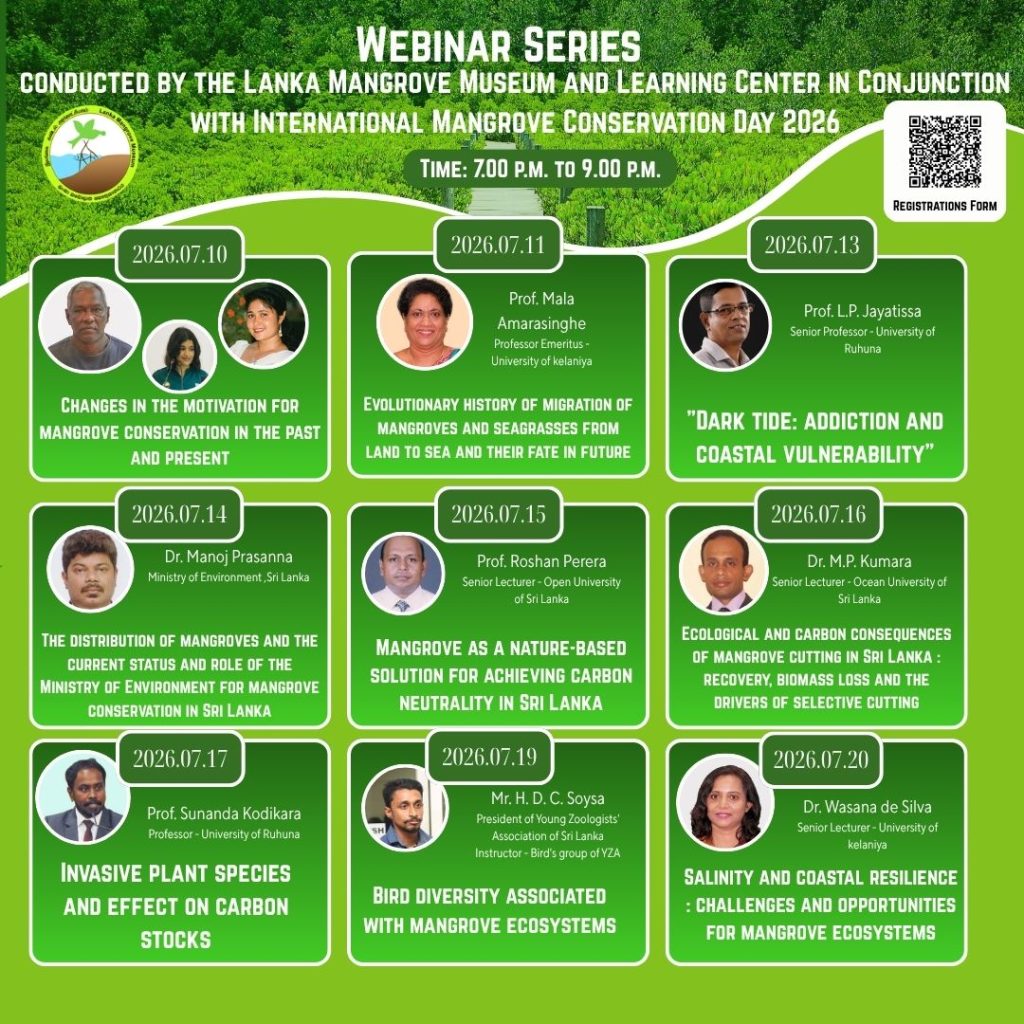
Mangrove Webinar Series 2026 – Advancing Science, Conservation and Community Action for Mangrove Ecosystems
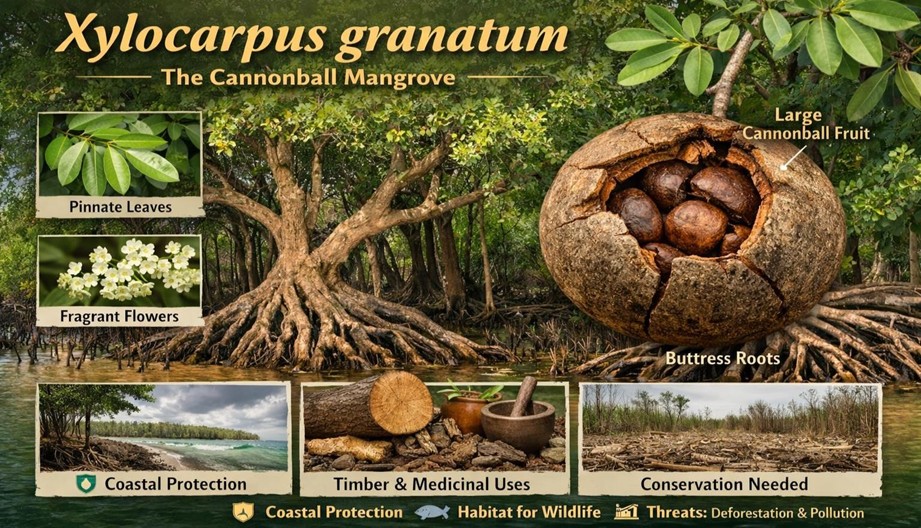
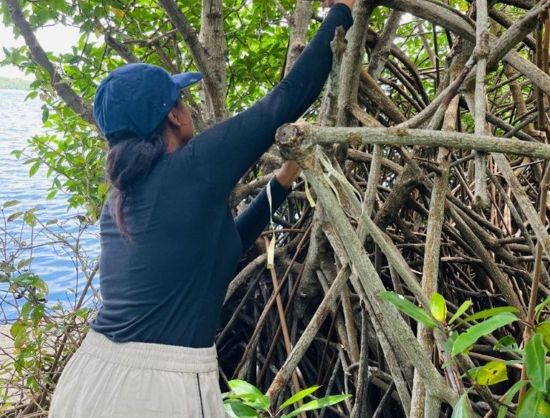
Mangrove ecosystems are among the most productive and ecologically important habitats in the world, providing coastal protection, supporting biodiversity, and sustaining livelihoods. One remarkable species within these ecosystems is Xylocarpus granatum, commonly known as the cannonball mangrove.
Xylocarpus granatum: The Cannonball Mangrove Read More »
A lagoon is a shallow body of water that is partly or completely separated from the sea by obstacles like sand barriers, coral reefs, barrier islands or mangrove belts. Lagoons can be a huge biodiversity hotspot that includes various floral and faunal species. Some of them are mangroves, seagrasses, algae, planktons, fishes, crustateans, molluscs, birds and other fauna like plychaetes and crocodles. As a island country consisting of 14 coastal districts, Sri Lanka provides home for a plenty of lagoons- ex: Chillaw lagoon, Negombo lagoon, Batticolo lagoon, Koggala lagoon, Rekawa lagoon and etc…
An Ecological Stronghold : Mangroves of The Pambala-Chillaw Lagoon Read More »
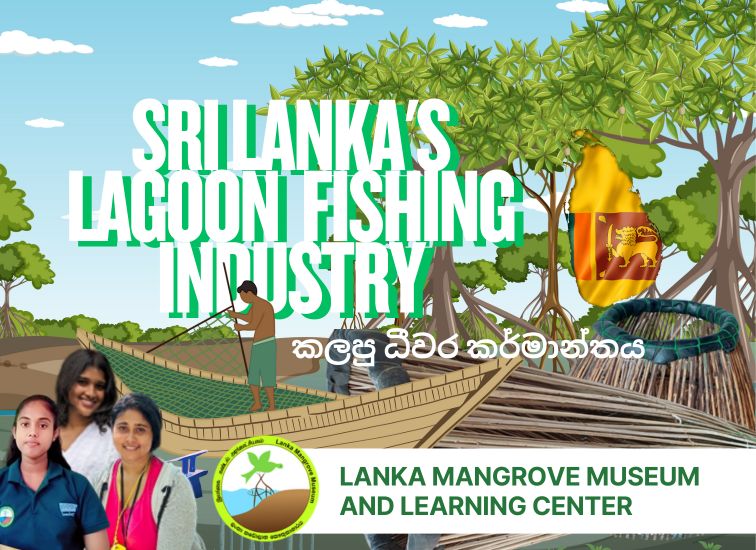
Sri Lanka’s lagoon fishing industry ශ්රීලංකාවේ කලපු ධීවර කර්මාන්තය Mangrove-associated fisheries play a vital role in the livelihood and food security of coastal communities living around lagoon ecosystems. The complex root systems of mangrove trees provide shelter, feeding grounds, and nursery habitats for a wide range of aquatic species, including fish, crabs, and shrimp, making mangrove areas highly productive fishing zones.
In the lagoon environment, fishers harvest a variety of species using traditional and small-scale methods such noodling, traps, kemana, and brush-pile-based techniques. Juvenile and adult fish use the submerged mangrove roots for protection from predators and as feeding grounds, making these areas important locations for artisanal fish catches.
Crabs, especially mangrove and lagoon crab species, thrive among prop roots where they feed, hide, and molt. During low tide, many are caught by hand or using simple traps placed near root clusters. Similarly, shrimp species rely on mangrove detritus and nutrient-rich waters for growth. Their abundance in channels and root zones supports seasonal shrimp collection using nets and traditional gear.
Overall, mangrove-associated fishing forms a tightly linked socio-ecological system where the health of the mangrove habitat directly influences the availability of lagoon fish, crabs, and shrimp. Protecting mangroves ensures the sustainability of these fisheries while supporting the cultural traditions and livelihoods of lagoon-dependent communities.
Sri Lanka’s lagoon fishing industry ශ්රීලංකාවේ කලපු ධීවර කර්මාන්තය Read More »
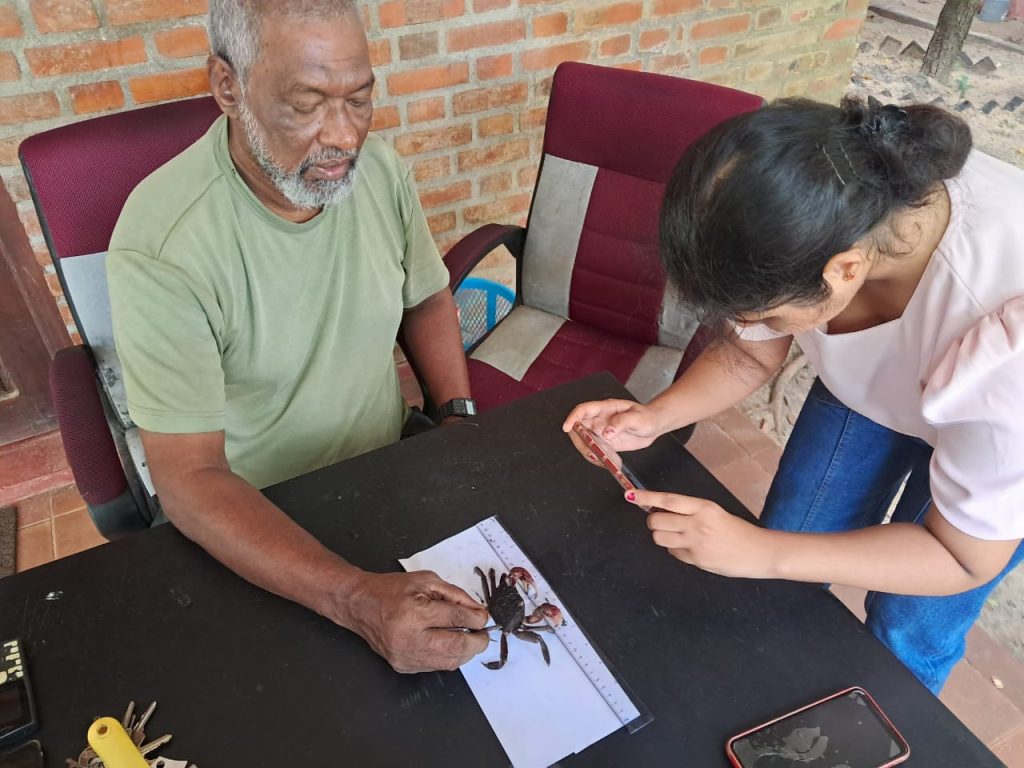
Field Research on Crab Abundance and Density in the Pambala Mangrove Ecosystem On 17 January, the Education Officer of the Lanka Mangrove Museum and Learning Center, with the support of the museum staff and guidance of the Museum Director, conducted an important field research activity at the Chilaw–Pambala mangrove sites. The research focused on the
Field Research on Crab Abundance and Density in the Pambala Mangrove Ecosystem Read More »
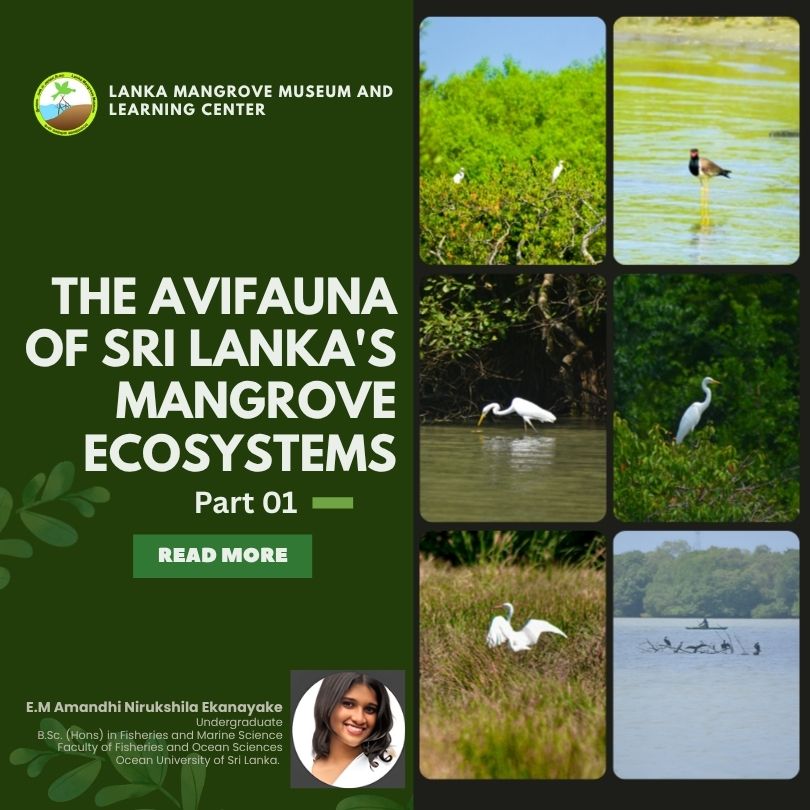
Sri Lanka, a jewel in the Indian Ocean, is recognized as a global biodiversity hotspot, The Avifauna of Sri Lanka’s Mangrove Ecosystems Part 01
The Avifauna of Sri Lanka’s Mangrove Ecosystems Part 01 Read More »
Mangroves are powerful natural carbon sinks, capturing and storing atmospheric carbon in their biomass and soils. The Chilaw Lagoon mangrove ecosystem holds immense untapped potential as a natural carbon sink.
Through the evaluation of aboveground, belowground, and sediment carbon stores, this study provides important new insights into the lagoon’s potential to mitigate climate change. The results of this study may support conservation and restoration initiatives while highlighting the ecological and economic significance of mangroves. In order to improve climate resilience plans and encourage sustainable ecosystem management in coastal communities, this study provides baseline data to stakeholders and policymakers.
Mangroves and Climate Resilience: Carbon Stock Estimation in Chilaw Lagoon Read More »
An understanding of biodiversity, conservation, and the power of nature-based solutions.. As part of the Educating Girls for Climate Action (EGCA) project’s Colombo Showcase, participating Girl Guides explored the Lanka Mangrove Museum — deepening their understanding of biodiversity, conservation, and the power of nature-based solutions.
This immersive visit sparked conversations around community-led climate action and empowered young girls to become climate champions.
Watch our mangrove day video here:
This collaboration between the British Council and Sri Lanka Girl Guides (Official) was funded by the UK’s Ocean Country Partnership Programme (OCPP).
An understanding of biodiversity, conservation, and the power of nature-based solutions. Read More »
Studies have found that 80% of the plastics are land-based. Plastics from landfill enter into the ocean through poor management and improper disposal of sewages and plastic wastes, costal landfill operations and litter carried through streams and rivers 9. Other sources include accidental spillage during handling and other processes 5.
Remaining 20% are the litters generated by ships/boats through recreational activities, discharge of marine litters 9, nautical activities, fishing activities and aquaculture 4. Of which commercial fishing accounts for most of the impacts. This includes discarded fishing items, together with monofilament liens and nylon netting
How Plastics End Up in the Ocean ? Read More »
Engage kids in environmental conservation with this interactive waste-sorting game! Set in a vibrant coastal mangrove area, children can learn to sort waste like plastic, glass, metal, and organic items into the right bins, promoting sustainability and recycling habits
Game play for Waste sorting Read More »