Lagoon Fishing Gear

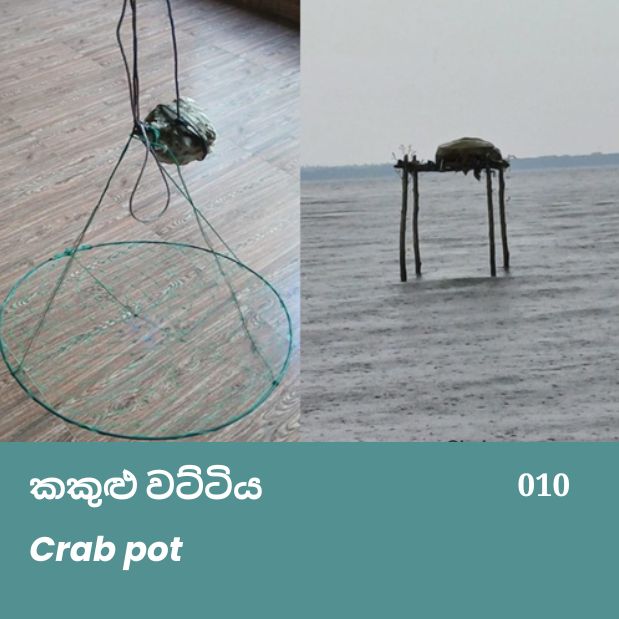
Crab pot කකුළු වට්ටිය

Crab pot කකුළු වට්ටිය

Crab pot, Crab pot The crab trap is a traditional fishing gear that has been used in Sri Lanka’s lagoons since ancient times. It is operated exclusively in lagoon areas where mud crabs are abundant. This simple and effective fishing method has long been practiced by artisanal fishermen to harvest crabs for both household consumption and commercial purposes.

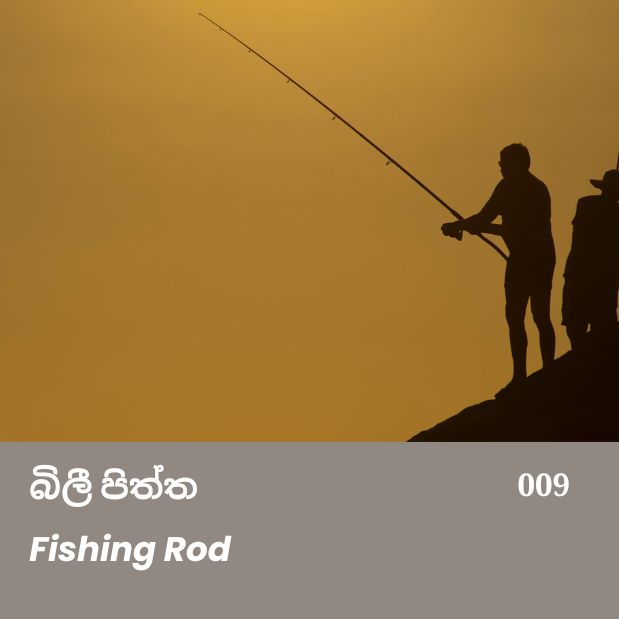
Fishing Rod

Fishing Rod

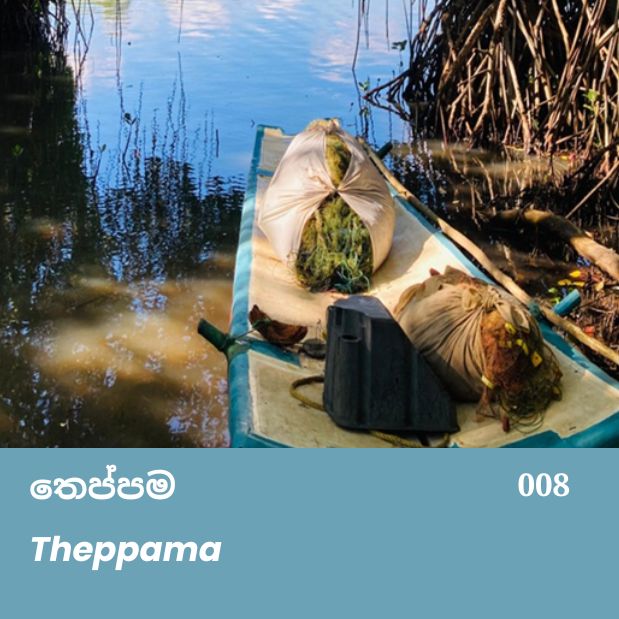
Since ancient times, this type of raft has been widely used for fishing in reservoirs and other inland water bodies in Sri Lanka. Traditionally, it was constructed using about five wooden logs, each measuring approximately 10–12 feet in length. The logs were carefully cleaned, trimmed, and smoothed to reduce their weight and improve buoyancy. Holes were made near both ends of each log, through which two sturdy wooden crossbars were inserted and tightly secured with ropes. These crossbars, locally known as “kombuwa,” held the logs firmly together, creating a stable and durable floating platform suitable for fishing activities.

Theppama  තෙප්පම

Theppama තෙප්පම

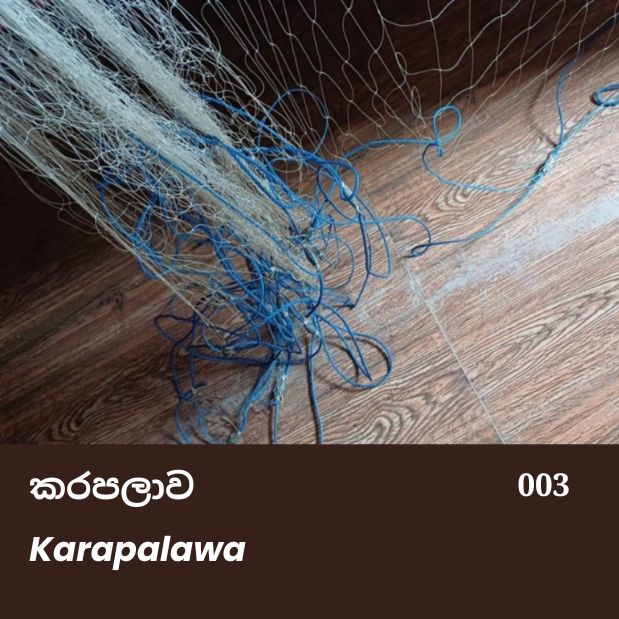
The Karapalawa is a traditional gill net that has been used for fishing in Sri Lanka since ancient times. It is one of the most widely used passive fishing gears and is suitable for capturing a variety of fish species in both inland and coastal waters. The dimensions of the net, including its height and mesh size, are selected according to the depth of the water body and the size of the target fish species.

The upper edge of the net is fitted with a head rope known as the “Udu Manda,” to which floats are attached. These floats keep the net suspended vertically in the water column. The lower edge is attached to a foot rope called the “Yati Manda,” which is fitted with sinkers or weights to keep the net stretched downward. Together, the floats and sinkers ensure that the net remains upright, forming an effective barrier for fish.

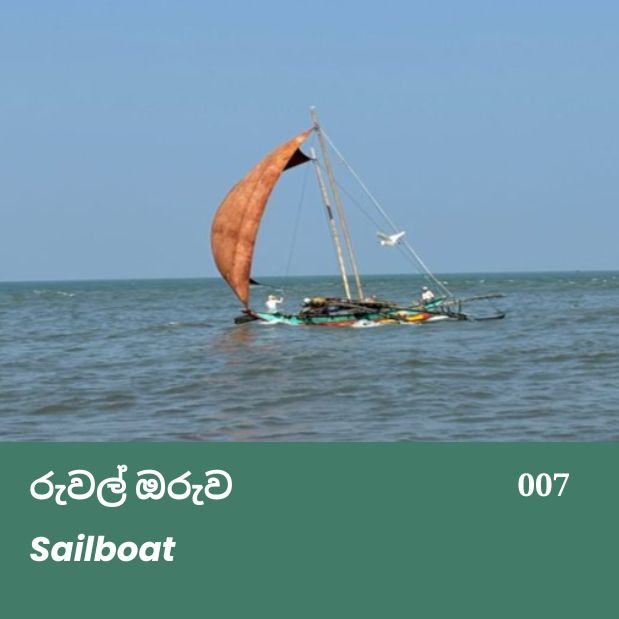
Sailboat රුවල් ඔරුව

Sailboat රුවල් ඔරුව

The sail outrigger canoe is a distinctive traditional fishing craft that has been used for generations in Sri Lanka’s coastal and lagoon fisheries. In the past, fishermen constructed these canoes from large timber logs of durable tree species such as jackfruit (Artocarpus heterophyllus), mango (Mangifera indica), and milla (Berrya cordifolia). A single log was carefully hollowed out to form the main body of the canoe, which typically measured between 25 and 30 feet in length. During the 1970s and 1980s, each sail outrigger canoe operating in the Pambala–Chilaw Lagoon usually carried about six fishermen, enabling them to fish cooperatively over long distances.

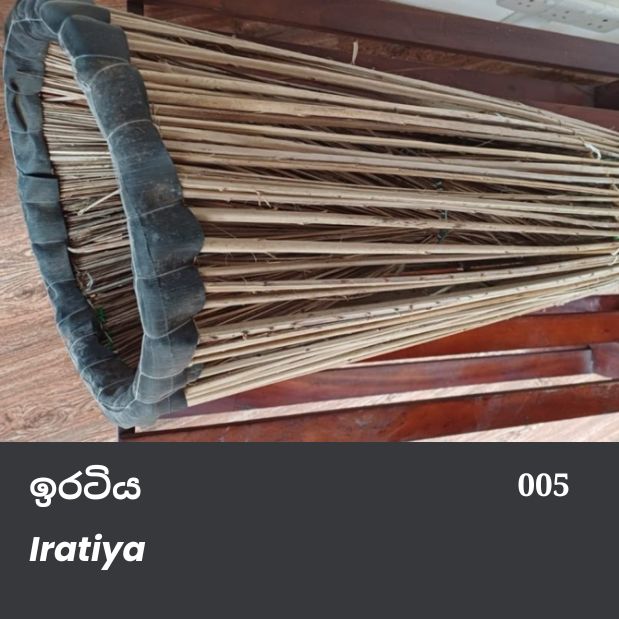
Iratiya ඉරටිය

Iratiya ඉරටිය

This traditional fishing gear is one of the oldest methods used by inland fishing communities in Sri Lanka. It is primarily operated in small watercourses connecting lagoons, tanks, rivers, and marshes, particularly during the rainy season when water levels rise and fish migrate downstream with the flowing water.

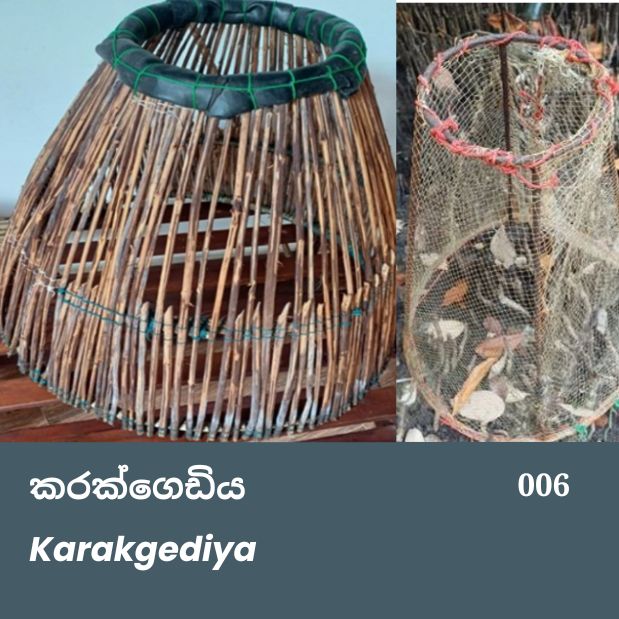
Karakgediya කරක්ගෙඩිය

Karakgediya කරක්ගෙඩිය

Karak Gediya is a traditional fishing device mainly used in the lagoon and reservoir (tank) fisheries of Sri Lanka. It is a simple, low-cost fishing gear that can be made entirely from locally available natural materials, requiring little or no financial investment. In the past, it was widely used by local fishermen to catch both fish and shrimp, particularly in shallow waters around mangrove forests where aquatic organisms are abundant. The device is placed in suitable locations, and fishermen remain nearby while waiting for fish or shrimp to enter or become trapped. Unlike fishing methods that require travelling across large areas of water, the Karak Gediya allows fishermen to fish from a single location. According to local folklore, the name “Karak Gediya” originated because fishermen using this gear stay in one place rather than moving around the lagoon during fishing. This traditional fishing method reflects the indigenous knowledge and sustainable fishing practices of lagoon communities and has been passed down through generations. Today, although modern fishing gear has become more common, the Karak Gediya remains an important part of Sri Lanka’s traditional fishing heritage and cultural identity.

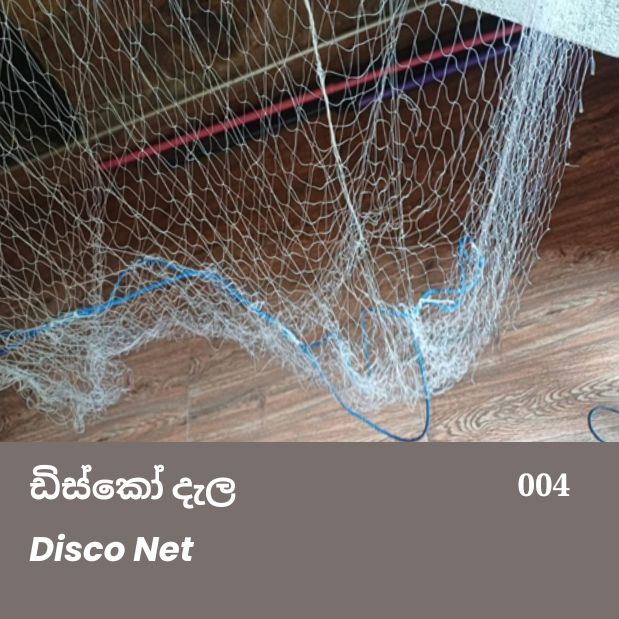
Disco Net  ඩිස්කෝ දැල

Disco Net ඩිස්කෝ දැල

The Disco Net is a modified form of the traditional Karapalawa gill net. It is prepared by joining three layers of netting together, creating a trammel net that is more effective for catching fish, shrimps, and crabs. The mesh sizes of the three layers are selected according to the size of the target species and the fishing environment.

The two outer layers are made with larger mesh openings, while the inner layer consists of a finer mesh. This arrangement is the distinctive feature of the disco net. When a fish, shrimp, or crab attempts to pass through the larger outer mesh, it pushes the fine inner net through the opposite outer layer, forming a pocket in which the animal becomes entangled.

Karapalawa කරපලාව

Karapalawa කරපලාව

Karapalawa කරපලාව The Karapalawa is a traditional gill net that has been used for fishing in Sri Lanka since ancient times. It is one of the most widely used passive fishing gears and is suitable for capturing a variety of fish species in both inland and coastal waters. The dimensions of the net, including its […]

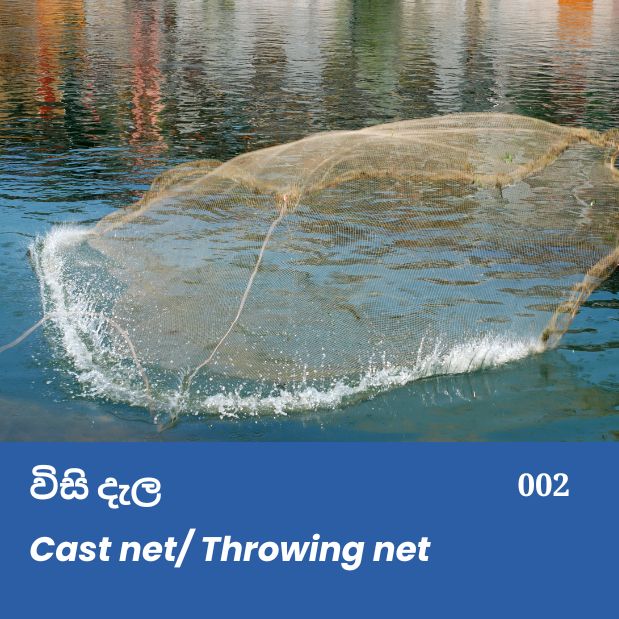
Cast net  Throwing net  විසි දැල

Cast net Throwing net විසි දැල

The fishing gear known as the cast net derives its name from its method of operation, as the fisherman throws the circular net over the water by holding it evenly with both hands. Once the net is cast, it spreads out in a circular shape and sinks rapidly, trapping fish or shrimp beneath it. A weighted line attached around the edge of the net helps it close as it is retrieved, preventing the catch from escaping. This traditional fishing method requires considerable skill and experience to ensure that the net opens fully and lands accurately over the target area.

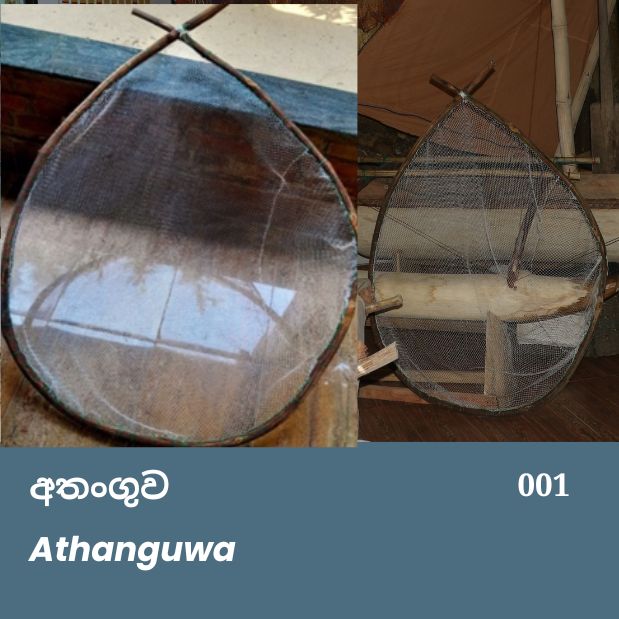
Athanguwa අතංගුව

Athanguwa අතංගුව

During the 1970s and 1980s, the Athanguwa, a traditional lagoon fishing gear, played a significant role in the collection of ornamental fish from Sri Lanka’s coastal lagoons. These fish were primarily harvested for export to the international aquarium trade, providing an important supplementary livelihood for many fishing households. Different species commanded different market prices; for example, Ilatthiya was purchased by exporters for approximately 25 cents per fish, while Kapu Handa was purchased for around 30 cents each.
Scroll to Top