
Sailboat
රුවල් ඔරුව
The sail outrigger canoe is a distinctive traditional fishing craft that has been used for generations in Sri Lanka’s coastal and lagoon fisheries. In the past, fishermen constructed these canoes from large timber logs of durable tree species such as jackfruit (Artocarpus heterophyllus), mango (Mangifera indica), and milla (Berrya cordifolia). A single log was carefully hollowed out to form the main body of the canoe, which typically measured between 25 and 30 feet in length. During the 1970s and 1980s, each sail outrigger canoe operating in the Pambala–Chilaw Lagoon usually carried about six fishermen, enabling them to fish cooperatively over long distances.
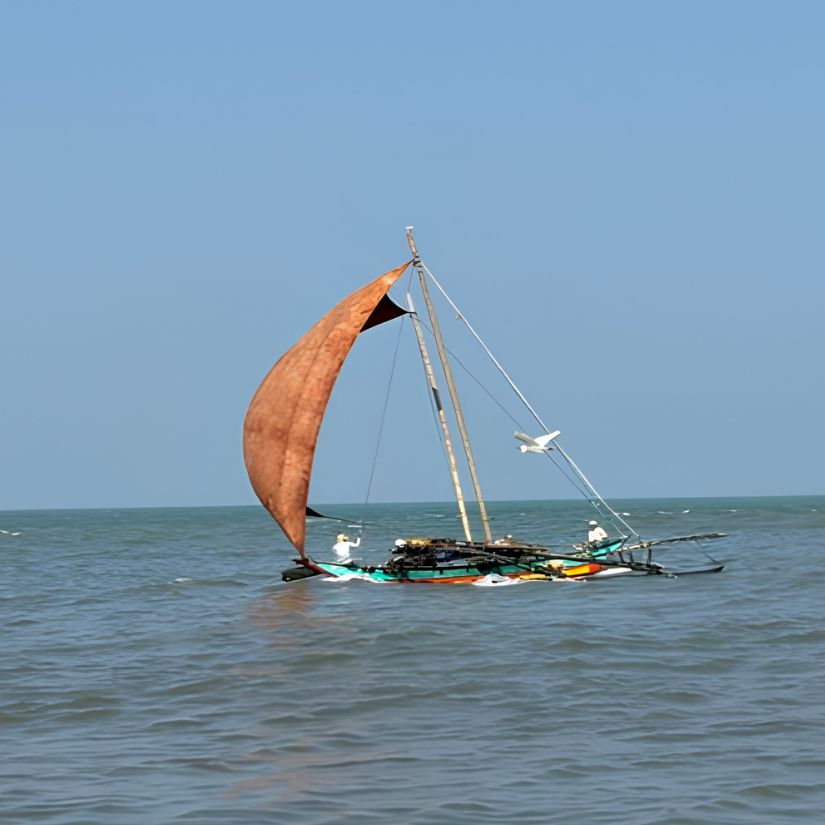
Even today, sail outrigger canoes continue to be used in shallow marine waters, lagoons, and reservoirs. The upper edges of the canoe are extended by attaching wooden planks, a structure locally known as the “patthara.” Stability is provided by an outrigger float, called the “kollewa,” which is made from another wooden log. The main canoe and the outrigger are connected by two strong wooden crossbeams known as “viyal,” which help maintain balance while navigating rough waters and during fishing operations.
The canoe is propelled by both wind and paddles, depending on weather conditions. Its sail is traditionally made by stitching together pieces of cloth and is supported by two bamboo poles known as the “kuda gaha” (mast) and the “thumba gaha” (yard). This simple yet effective sail enables fishermen to travel efficiently with minimal physical effort, making it particularly suitable for long fishing trips.
Sail outrigger canoes are commonly used for operating fishing gears such as gill nets, trammel nets, cast nets, and longlines in coastal and lagoon environments. Although fiberglass and motorized boats have become more common in recent decades, these traditional canoes remain an important part of Sri Lanka’s fishing heritage, reflecting the craftsmanship, indigenous knowledge, and sustainable fishing practices of coastal fishing communities.
රුවල් ඔරුව යනු විශේෂිත යාත්රාවකි. අතීතයේ ධීවරයින් විසින් කොස්, අඹ, ලුණු මිදෙල්ල යන ශාකවල විශාල ලී කඳන් අඩි 25-30 තරම් ඔරු සකස් කිරීම සඳහා යොදා ගන්නා ලදී. 1970-1980 දශකයේ පම්බල හලාවත කලපුවේ එම එක් ඔරුවක ධීවරයින් 6 දෙනෙක් රැකියාව කළේය. තවමත් ධීවර කර්මාන්තයේ යෙදෙන නොගැඹුරු මුහුදේ සහ කලපු වල, වැව්වල රුවල් ඔරු මඟින් ධීවර කර්මාන්තයේ යෙදේ. ඔරුවක් සකස් කරගන්නේ ලී කොටයක් හෑරීමෙනි. එහි ඉහළ කොටසට ලෑලි බැඳීම ” පත්තාර ” යනුවෙන් හඳුන්වන අතර තවත් ලී කොටයක් ගෙන කොල්ලෑව සකස් කරනු ඇත. එම ඔරුව සහ කොල්ලෑව එකතු කිරීම සඳහා ඔරුවට සහ කොල්ලෑවට උඩින් බඳිනු ලබන ලී දෙක ” වියල් ” නමින් හැඳින්වේ. මෙම ඔරුවේ රුවල රෙදි වලින් මසා සකස් ගන්නා අතර එය සවි කිරීම සඳහා උණ බට දෙකක් යොදා ගැනේ. ඒවා “කුඩ ගහ ” සහ ” තුඹ ගහ ” යනුවෙන් හැඳින්වේ.