
Crab pot
කකුළු වට්ටිය
The crab trap is a traditional fishing gear that has been used in Sri Lanka’s lagoons since ancient times. It is operated exclusively in lagoon areas where mud crabs are abundant. This simple and effective fishing method has long been practiced by artisanal fishermen to harvest crabs for both household consumption and commercial purposes.
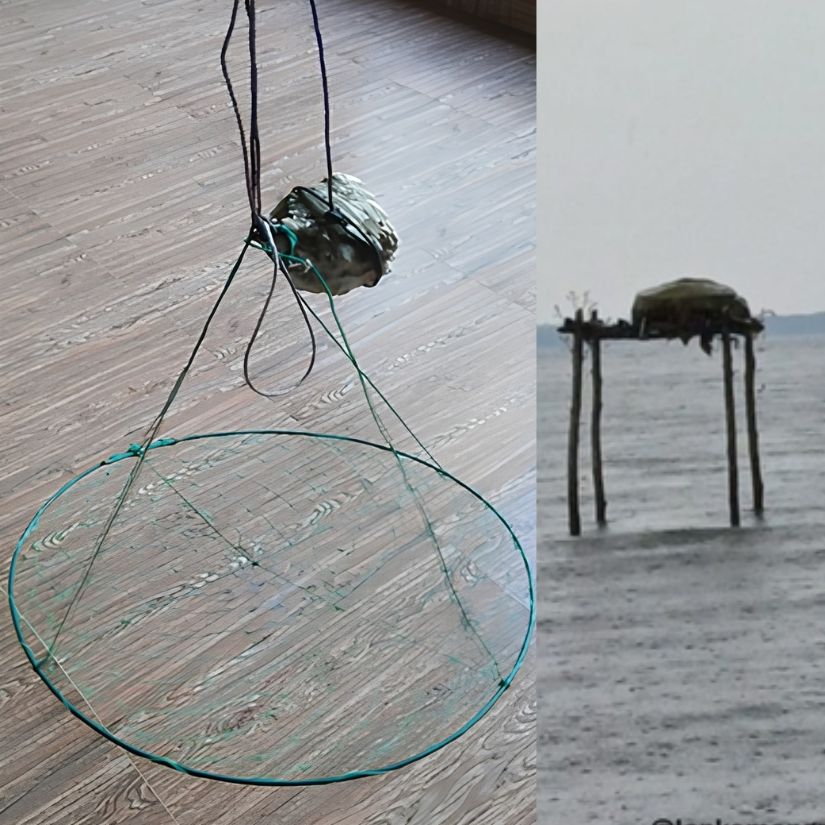
Traditionally, the trap was constructed by bending a flexible forest creeper into a circular frame and securing it firmly with rope or natural fiber. A piece of netting with relatively large mesh openings was attached around the frame to form the body of the trap. Four strings were tied to the frame and connected to a single retrieval line. A small wooden float, locally known as the “ipiyāwa,” was attached to the line so that fishermen could easily locate the trap from the water surface.
To attract crabs, bait such as pieces of cattle hide, catfish, or other animal material was securely tied at the center of the trap. The trap was then lowered onto the lagoon bottom, where the bait attracted nearby crabs. Fishermen typically inspected the trap every one to two hours by lifting it carefully to the surface. Any crabs that had entered the trap to feed on the bait were collected before the trap was reset.
Today, although modern materials such as steel frames and synthetic netting are sometimes used in place of traditional natural materials, the operating principle of the crab trap remains unchanged. Owing to its low cost, simple construction, and selective nature, the crab trap continues to be an important traditional fishing gear in Sri Lanka’s lagoon fisheries, particularly for the sustainable harvesting of mud crabs.
අතීතයේ පටන් කලපුවල මෙම කකුළු වට්ටි යන ධීවර ආම්පන්න ක්රමය භාවිතා කළ අතර මෙය කකුළුවන් සිටින කලපුවල පමණක් භාවිතා කළේය. මුලින්ම මෙම කකුළු වට්ටිය සඳහා යොදා ගත්තේ කැලයෙන් කපාගත් වැලක් රවුමට බැඳ එයට ඇස් ලොකු ප්රමාණයේ දැල් කැබැල්ලක් ද රවුමට බැඳ වට්ටිය සකස් කර එයට නූල් පොටවල් 4ක් බැඳ ජලය මතුපිටට පෙනෙන ආකාරයට පොල්ලෙලි කැබැල්ලක් හෝ ඉපියා බැඳ ගැනීමෙනි. කකුළුවන් එම වට්ටියට ගෙන්වා ගැනීම සඳහා කකුළු වට්ටියේ මැදට සිටින ආකාරයට ඇමක් (හරක් හම් කැබැල්ලක්, මඩු මාළු කැබැල්ලක් හෝ වෙනත්) වට්ටිය මැදට බැඳ ජලයේ දමා තබා පැයකට හෝ පැය දෙකකට වරක් ජලයෙන් මතුපිටට උස්සා බැලීම සිදු කරයි. එම අවස්ථාවේදී ඇම ආහාරයට ගැනීම සඳහා කකුළුවෙක් පැමිණ එම වට්ටියේ සිටියොත් අල්ලා ගනු ලබයි.