
Theppama
තෙප්පම
Since ancient times, this type of raft has been widely used for fishing in reservoirs and other inland water bodies in Sri Lanka. Traditionally, it was constructed using about five wooden logs, each measuring approximately 10–12 feet in length. The logs were carefully cleaned, trimmed, and smoothed to reduce their weight and improve buoyancy. Holes were made near both ends of each log, through which two sturdy wooden crossbars were inserted and tightly secured with ropes. These crossbars, locally known as “kombuwa,” held the logs firmly together, creating a stable and durable floating platform suitable for fishing activities.
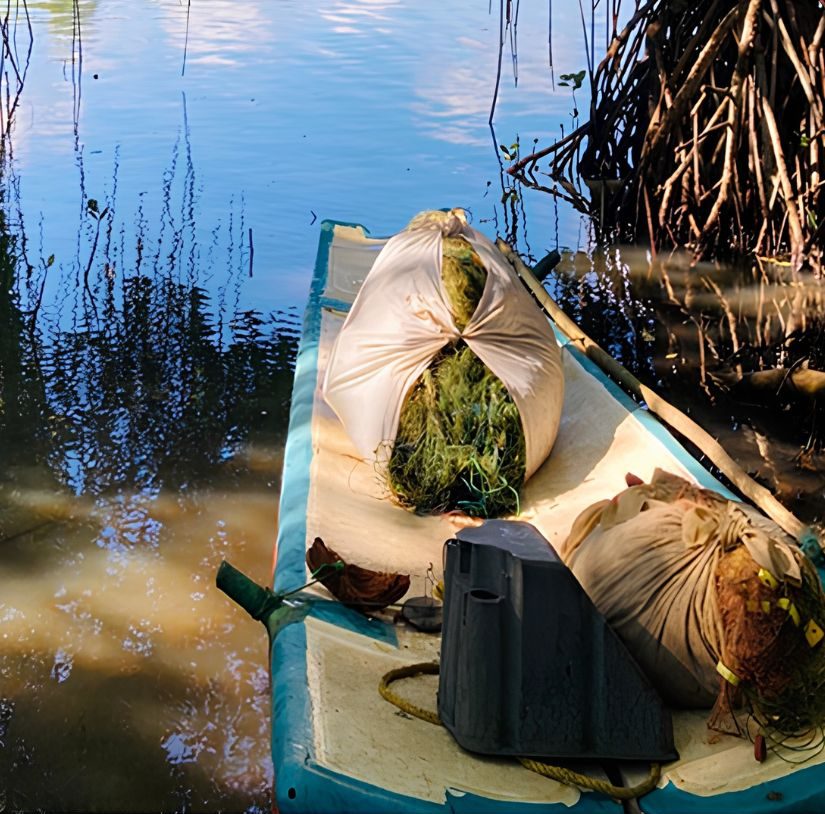
Wooden rafts were mainly used for setting and lifting fishing gear such as gill nets, cast nets, hooks and lines, and fish traps in reservoirs. Their simple design made them easy to construct using locally available materials, while their shallow draft allowed fishermen to operate in both deep and shallow waters. The raft was usually propelled with a wooden paddle or pole, depending on the water depth.
In the past, these rafts were made entirely of wood, and coconut oil was periodically applied to protect the timber from water damage, prevent cracking, and extend its lifespan. Regular maintenance ensured that the raft remained durable and safe for long-term use. However, with the introduction of modern materials, the use of traditional wooden rafts has gradually declined. Today, most fishermen use fiberglass rafts, which are lighter, require less maintenance, and have a longer service life. Despite this transition, the traditional wooden raft remains an important symbol of Sri Lanka’s inland fishing heritage and the ingenuity of rural fishing communities.
ඉතාමත් අතීතයේ සිට ජලාශ වල මසුන් ඇල්ලීම සඳහා යොදාගත් යාත්රාවකි. මෙය අඩි 10-12 තරම් ලී කඳන් 5ක් පමණ යොදා ගනිමින් සකස් කරන යාත්රාවකි. කොට කැබලි ඉතාමත් හොඳින් සැහැල්ලු වන සේ සුද්ද කර එම කොටවල කෙළවර වල් දෙකට වන්නට සිදුරු සකස් කර එම සිදුරු තුළින් ලී දෙකක් යාවා ලණු යොදාගෙන එම ලී ශක්තිමත්ව බැඳීමෙන් එක් හැඩයකට මෙම යාත්රාව දැකිය හැකිය. එම ලී ” කොම්බුව ” යනුවෙන් හඳුන්වයි. අතීතයේදී මෙම තෙප්පම් ලී වලින් සකස් කර පොල්තෙල් ගාමින් වරින්වර ලී වල පැවැත්ම තහවුරු කිරීම සිදුකොට තිබේ. මේ වන විට දැව භාවිතයෙන් මිදී ෆයිබර්ග්ග්ලාස් තෙප්පම් පමණක් දැකිය හැකිය.