Lanka Mangrove Museum

The Lanka Mangrove Museum is a dedicated environmental education center focused on preserving and promoting the rich biodiversity of Sri Lanka’s mangrove ecosystems. Located near the vibrant wetlands, the museum offers interactive exhibits, guided tours, and educational resources that showcase the ecological significance of mangroves and their role in coastal resilience.

Pocillopora sp

Pocillopora sp. 008

A key diagnostic feature of Pocillopora is the presence of characteristic wart-like projections on the skeleton known as verrucae, which are tightly spaced and often cover the branch surfaces. Corallites are typically small and superficial, with a uniform appearance and porous skeletal texture. However, morphological plasticity is common within this genus, and colony form can vary dramatically with water flow, light levels, and depth. As a result, distinguishing Pocillopora species solely by external morphology can be challenging, often requiring microscopic skeletal examination or genetic analysis for accurate identification. These corals are ecologically important reef builders and are known for their relatively fast growth rates and sensitivity to environmental disturbances. Their wide distribution and variable morphology make Pocillopora an important group for reef monitoring studies.

Pocillopora sp. 008 Read More »

Pocillopora spp., commonly known as cauliflower corals or lace corals, are a genus of small-polyp stony corals belonging to the family Pocilloporidae. They are widely distributed throughout the Indo-Pacific region, particularly abundant on shallow reef crests, reef flats, and high-energy environments. Members of this genus are easily recognized by their distinctive branching morphology, which may range from compact, bushy colonies to more open, irregular structures depending on species and environmental conditions.

Pocillopora sp. 007

A key diagnostic feature of Pocillopora is the presence of characteristic wart-like projections on the skeleton known as verrucae, which are tightly spaced and often cover the branch surfaces. Corallites are typically small and superficial, with a uniform appearance and porous skeletal texture. However, morphological plasticity is common within this genus, and colony form can vary dramatically with water flow, light levels, and depth. As a result, distinguishing Pocillopora species solely by external morphology can be challenging, often requiring microscopic skeletal examination or genetic analysis for accurate identification. These corals are ecologically important reef builders and are known for their relatively fast growth rates and sensitivity to environmental disturbances. Their wide distribution and variable morphology make Pocillopora an important group for reef monitoring studies.

Pocillopora sp. 007 Read More »

Acropora is a genus of small polyp stony coral in the phylum Cnidaria. Some of its species are known as table coral, elkhorn coral, and staghorn coral. Acropora species are some of the major reef corals responsible for building the immense calcium carbonate substructure that supports the thin living skin of a reef. Acropora sp. is commonly found in shallow reef environments that are bright and have moderate to high water motion. Acropora corals are commonly called "staghorn coral," and some colonies with flat tops are called "table coral." Besides the differences in the overall shape of the colony, the branches are usually cylindrical with corallites surrounding them. A corallite is a tiny cup about 0.5 cm in diameter. A distinctive feature of this species is the axial corallite, which is larger than the other corallites. It grows upward at the tip of the branch, while new corallites bud along its sides. The base of the coral attaches to rock or a plug and encrusts to increase stability. From this base, new branches can also grow outward. Acropora Coral – The Architects of Coral Reefs

Acropora Coral – The Architects of Coral Reefs 3

Acropora is a genus of small polyp stony coral in the phylum Cnidaria. Some of its species are known as table coral, elkhorn coral, and staghorn coral. Acropora species are some of the major reef corals responsible for building the immense calcium carbonate substructure that supports the thin living skin of a reef. Acropora sp. is commonly found in shallow reef environments that are bright and have moderate to high water motion. Acropora corals are commonly called “staghorn coral,” and some colonies with flat tops are called “table coral.” Besides the differences in the overall shape of the colony, the branches are usually cylindrical with corallites surrounding them. A corallite is a tiny cup about 0.5 cm in diameter. A distinctive feature of this species is the axial corallite, which is larger than the other corallites. It grows upward at the tip of the branch, while new corallites bud along its sides. The base of the coral attaches to rock or a plug and encrusts to increase stability. From this base, new branches can also grow outward. Acropora Coral – The Architects of Coral Reefs

Acropora Coral – The Architects of Coral Reefs 3 Read More »

Acropora is a genus of small polyp stony coral in the phylum Cnidaria. Some of its species are known as table coral, elkhorn coral, and staghorn coral. Acropora species are some of the major reef corals responsible for building the immense calcium carbonate substructure that supports the thin living skin of a reef. Acropora sp. is commonly found in shallow reef environments that are bright and have moderate to high water motion. Acropora corals are commonly called "staghorn coral," and some colonies with flat tops are called "table coral." Besides the differences in the overall shape of the colony, the branches are usually cylindrical with corallites surrounding them. A corallite is a tiny cup about 0.5 cm in diameter. A distinctive feature of this species is the axial corallite, which is larger than the other corallites. It grows upward at the tip of the branch, while new corallites bud along its sides. The base of the coral attaches to rock or a plug and encrusts to increase stability. From this base, new branches can also grow outward. Acropora Coral – The Architects of Coral Reefs

Acropora Coral – The Architects of Coral Reefs 2

Acropora is a genus of small polyp stony coral in the phylum Cnidaria. Some of its species are known as table coral, elkhorn coral, and staghorn coral. Acropora species are some of the major reef corals responsible for building the immense calcium carbonate substructure that supports the thin living skin of a reef. Acropora sp. is commonly found in shallow reef environments that are bright and have moderate to high water motion. Acropora corals are commonly called “staghorn coral,” and some colonies with flat tops are called “table coral.” Besides the differences in the overall shape of the colony, the branches are usually cylindrical with corallites surrounding them. A corallite is a tiny cup about 0.5 cm in diameter. A distinctive feature of this species is the axial corallite, which is larger than the other corallites. It grows upward at the tip of the branch, while new corallites bud along its sides. The base of the coral attaches to rock or a plug and encrusts to increase stability. From this base, new branches can also grow outward. Acropora Coral – The Architects of Coral Reefs

Acropora Coral – The Architects of Coral Reefs 2 Read More »

Acropora is a genus of small polyp stony coral in the phylum Cnidaria. Some of its species are known as table coral, elkhorn coral, and staghorn coral. Acropora species are some of the major reef corals responsible for building the immense calcium carbonate substructure that supports the thin living skin of a reef. Acropora sp. is commonly found in shallow reef environments that are bright and have moderate to high water motion. Acropora corals are commonly called "staghorn coral," and some colonies with flat tops are called "table coral." Besides the differences in the overall shape of the colony, the branches are usually cylindrical with corallites surrounding them. A corallite is a tiny cup about 0.5 cm in diameter. A distinctive feature of this species is the axial corallite, which is larger than the other corallites. It grows upward at the tip of the branch, while new corallites bud along its sides. The base of the coral attaches to rock or a plug and encrusts to increase stability. From this base, new branches can also grow outward. Acropora Coral – The Architects of Coral Reefs

Acropora Coral – The Architects of Coral Reefs 1

Acropora is a genus of small polyp stony coral in the phylum Cnidaria. Some of its species are known as table coral, elkhorn coral, and staghorn coral. Acropora species are some of the major reef corals responsible for building the immense calcium carbonate substructure that supports the thin living skin of a reef. Acropora sp. is commonly found in shallow reef environments that are bright and have moderate to high water motion. Acropora corals are commonly called “staghorn coral,” and some colonies with flat tops are called “table coral.” Besides the differences in the overall shape of the colony, the branches are usually cylindrical with corallites surrounding them. A corallite is a tiny cup about 0.5 cm in diameter. A distinctive feature of this species is the axial corallite, which is larger than the other corallites. It grows upward at the tip of the branch, while new corallites bud along its sides. The base of the coral attaches to rock or a plug and encrusts to increase stability. From this base, new branches can also grow outward. Acropora Coral – The Architects of Coral Reefs

Acropora Coral – The Architects of Coral Reefs 1 Read More »

Turbinaria sp., commonly known as scroll coral, cup coral, or pagoda coral, is a genus of colonial stony corals widely distributed across the Indo-Pacific region. These corals are recognized for their unique cup-shaped, scroll-like, or plate-forming structures, which often resemble vases, funnels, or layered formations.

Turbinaria Coral – The Scroll Builders of the Reef

Turbinaria sp., commonly known as scroll coral, cup coral, or pagoda coral, is a genus of colonial stony corals widely distributed across the Indo-Pacific region. These corals are recognized for their unique cup-shaped, scroll-like, or plate-forming structures, which often resemble vases, funnels, or layered formations.

The Scroll Builders of the Reef

Turbinaria Coral – The Scroll Builders of the Reef Read More »

Acropora is a genus of small polyp stony coral in the phylum Cnidaria. Some of its species are known as table coral, elkhorn coral, and staghorn coral. Acropora species are some of the major reef corals responsible for building the immense calcium carbonate substructure that supports the thin living skin of a reef. Acropora sp. is commonly found in shallow reef environments that are bright and have moderate to high water motion. Acropora corals are commonly called "staghorn coral," and some colonies with flat tops are called "table coral." Besides the differences in the overall shape of the colony, the branches are usually cylindrical with corallites surrounding them. A corallite is a tiny cup about 0.5 cm in diameter. A distinctive feature of this species is the axial corallite, which is larger than the other corallites. It grows upward at the tip of the branch, while new corallites bud along its sides. The base of the coral attaches to rock or a plug and encrusts to increase stability. From this base, new branches can also grow outward. Acropora Coral – The Architects of Coral Reefs

Acropora Coral – The Architects of Coral Reefs

Acropora is a genus of small polyp stony coral in the phylum Cnidaria. Some of its species are known as table coral, elkhorn coral, and staghorn coral. Acropora species are some of the major reef corals responsible for building the immense calcium carbonate substructure that supports the thin living skin of a reef. Acropora sp. is commonly found in shallow reef environments that are bright and have moderate to high water motion. Acropora corals are commonly called “staghorn coral,” and some colonies with flat tops are called “table coral.” Besides the differences in the overall shape of the colony, the branches are usually cylindrical with corallites surrounding them. A corallite is a tiny cup about 0.5 cm in diameter. A distinctive feature of this species is the axial corallite, which is larger than the other corallites. It grows upward at the tip of the branch, while new corallites bud along its sides. The base of the coral attaches to rock or a plug and encrusts to increase stability. From this base, new branches can also grow outward. Acropora Coral – The Architects of Coral Reefs

Acropora Coral – The Architects of Coral Reefs Read More »

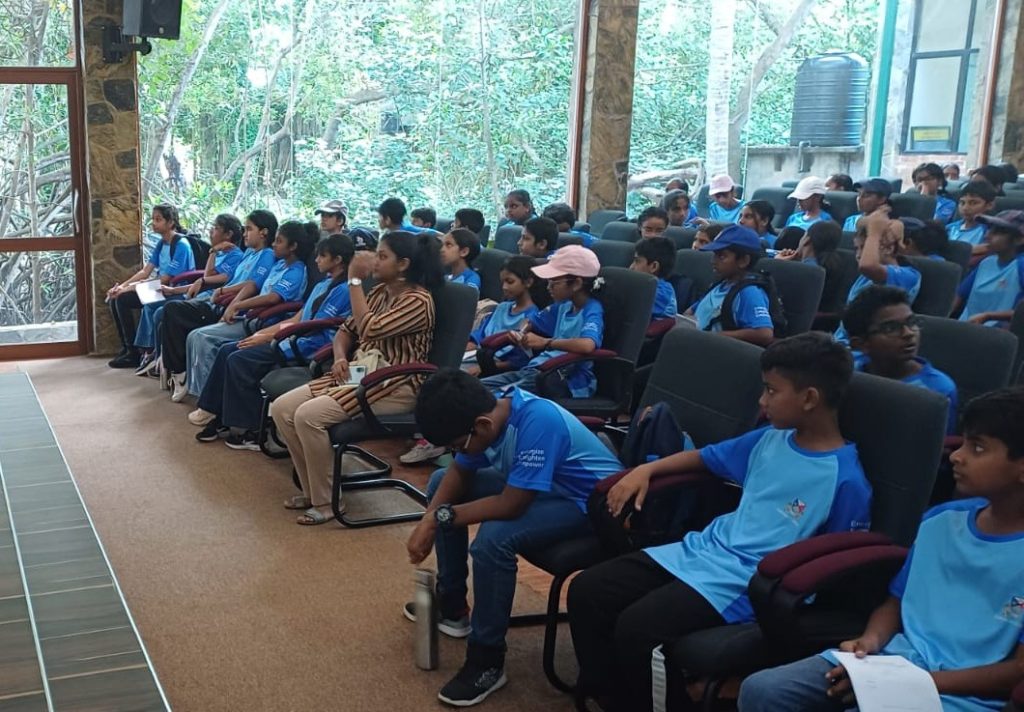
On 27th March 2026, a group of preschool children from the Nattandiya Pradeshiya Sabha visited the Lanka Mangrove Museum. The young visitors had a wonderful opportunity to explore the exhibits and learn about the importance of mangrove ecosystems in a fun and engaging way. During their visit, the children were introduced to the unique features of mangroves, their role in protecting coastal environments, and the importance of conserving these valuable ecosystems. The interactive sessions and guided explanations helped spark curiosity and environmental awareness among the children.

Visit of Preschool Children from Nattandiya Pradeshiya Sabha

Visit of Preschool Children from Nattandiya Pradeshiya Sabha – 27.03.2026 On 27th March 2026, a group of preschool children from the Nattandiya Pradeshiya Sabha visited the Lanka Mangrove Museum. The young visitors had a wonderful opportunity to explore the exhibits and learn about the importance of mangrove ecosystems in a fun and engaging way. During

Visit of Preschool Children from Nattandiya Pradeshiya Sabha Read More »

A student from Gampaha Wickramarachchi University of Indigenous Medicine recently conducted a research study at the Lanka Mangrove Museum and Learning Center, focusing on the use of mangrove plant parts in Ayurvedic medicine. The study aimed to explore the medicinal properties of different mangrove species and their potential applications in traditional healing practices. Mangroves are known to possess various bioactive compounds that can be used in treating a range of ailments, making them valuable resources in Ayurveda.

Research on Mangrove-Based Ayurvedic Medicine

A student from Gampaha Wickramarachchi University of Indigenous Medicine recently conducted a research study at the Lanka Mangrove Museum and Learning Center, focusing on the use of mangrove plant parts in Ayurvedic medicine.

The study aimed to explore the medicinal properties of different mangrove species and their potential applications in traditional healing practices. Mangroves are known to possess various bioactive compounds that can be used in treating a range of ailments, making them valuable resources in Ayurveda.

Research on Mangrove-Based Ayurvedic Medicine Read More »

Scroll to Top