Pocillopora damicornis
Cauliflower Coral/ reef-building coral
- Kingdom: Animalia
- Phylum: Cnidaria
- Class: Hexacorallia
- Order: Scleractinia
- Family: Pocilloporidae
- Genus: Pocillopora
- Species: P. damicornis
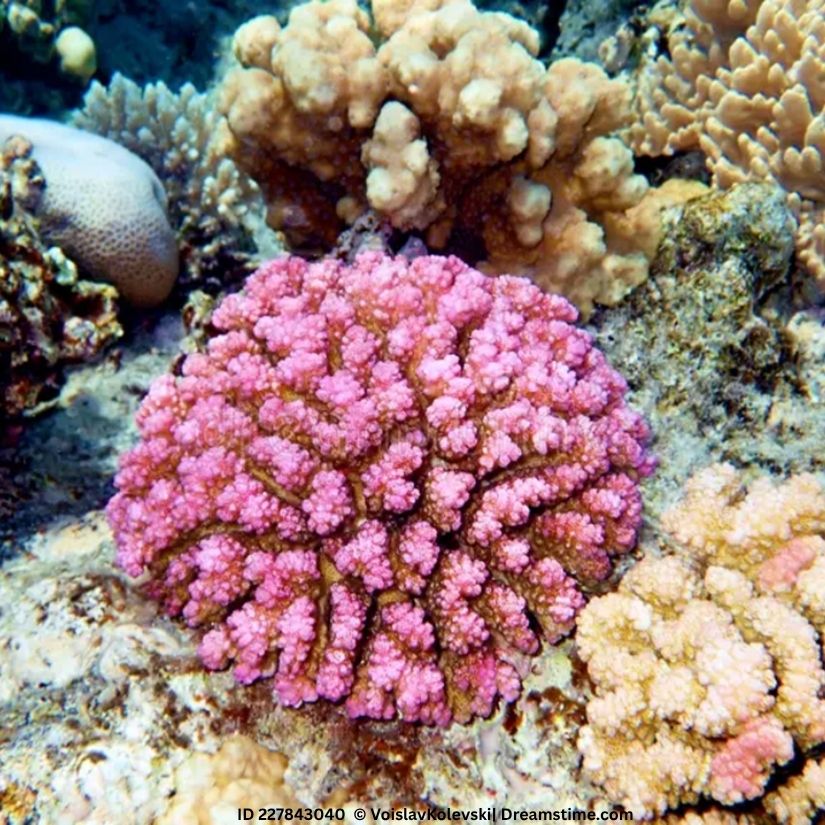
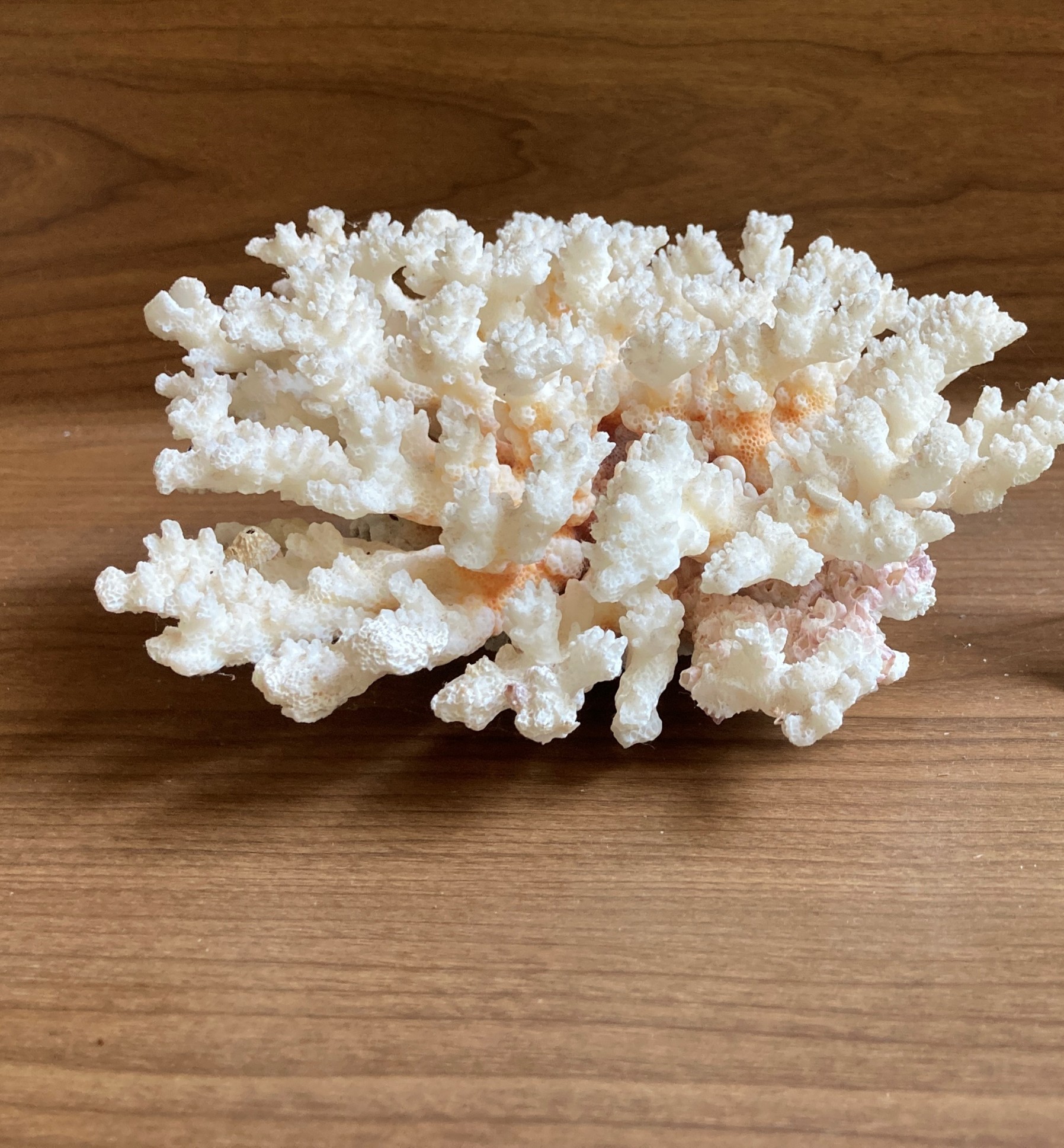
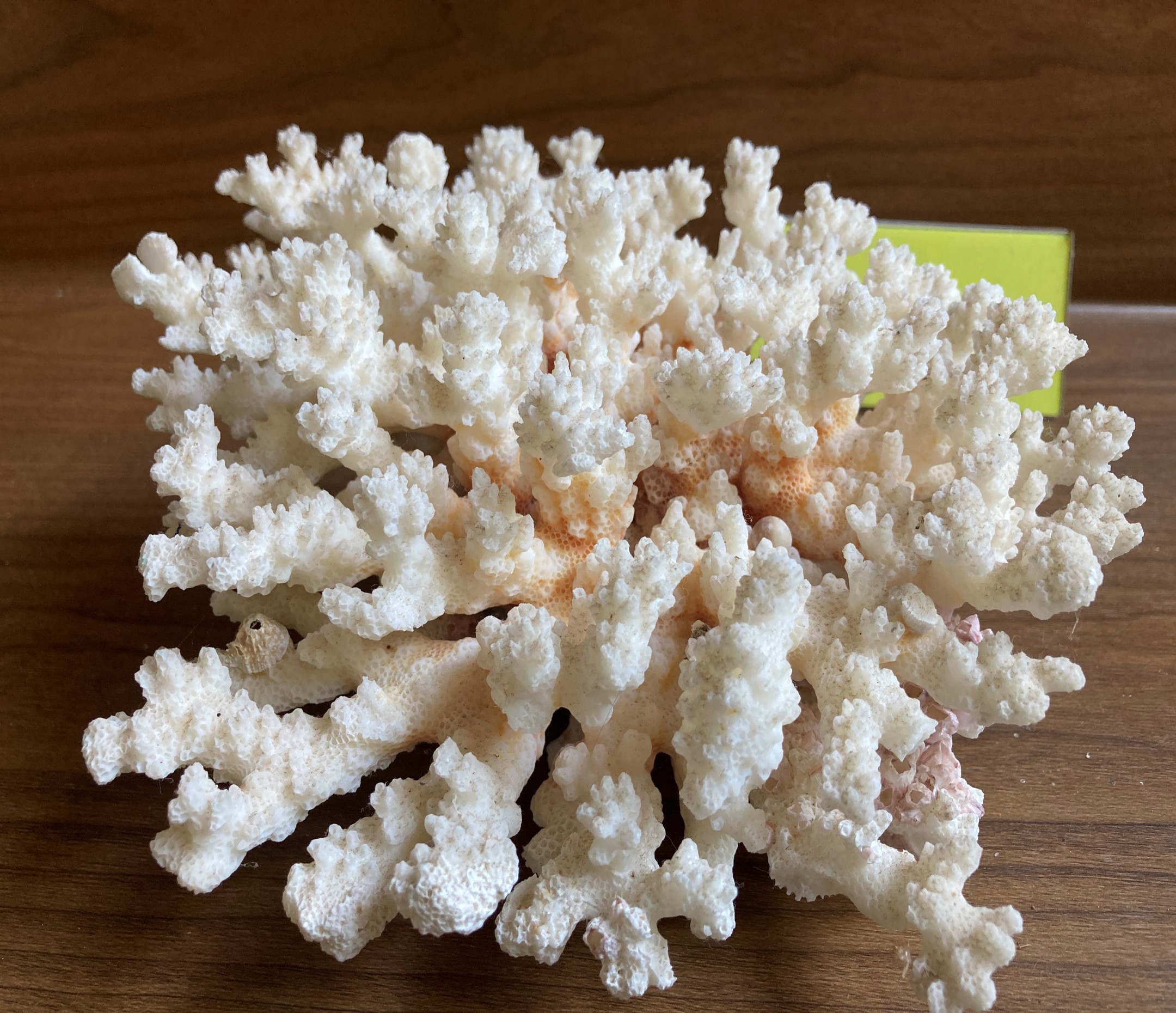
Pocillopora damicornis is a widely distributed reef-building coral found across the Indo-Pacific. It forms bushy, branching colonies that resemble cauliflower, with shapes varying depending on environmental conditions. Its color ranges from cream and pink to brown and green due to symbiotic algae (zooxanthellae).
Structure and Feeding:
- Made up of many tiny polyps living in skeletal cups (corallites)
- Polyps use tentacles with stinging cells (nematocysts) to capture plankton
- Gains energy through:
- Photosynthesis (via zooxanthellae)
- Feeding on organic particles (heterotrophy)
- Skeleton composed of calcium carbonate (aragonite)
Reproduction:
- Sexual: Both broadcast spawning and brooding (larvae released ready to settle)
- Asexual: Fragmentation (broken pieces grow into new colonies)
- This dual strategy helps rapid colonization
Habitat and Distribution
- Found from shallow reefs to ~40 m depth
- Thrives in a range of light and water flow conditions
- Highly adaptable (ecological plasticity)
Adaptability and Ecological Importance
- Acts as a pioneer species, quickly colonizing new reef areas
- Provides shelter and nursery habitats for fish and invertebrates
- Contributes significantly to reef structure and biodiversity
Threats:
- Coral bleaching (due to rising sea temperatures)
- Ocean acidification
- Pollution and physical damage
Conservation Status:
- Listed as Least Concern, but still at risk due to climate change and habitat degradation