Colony Structure and Morphology
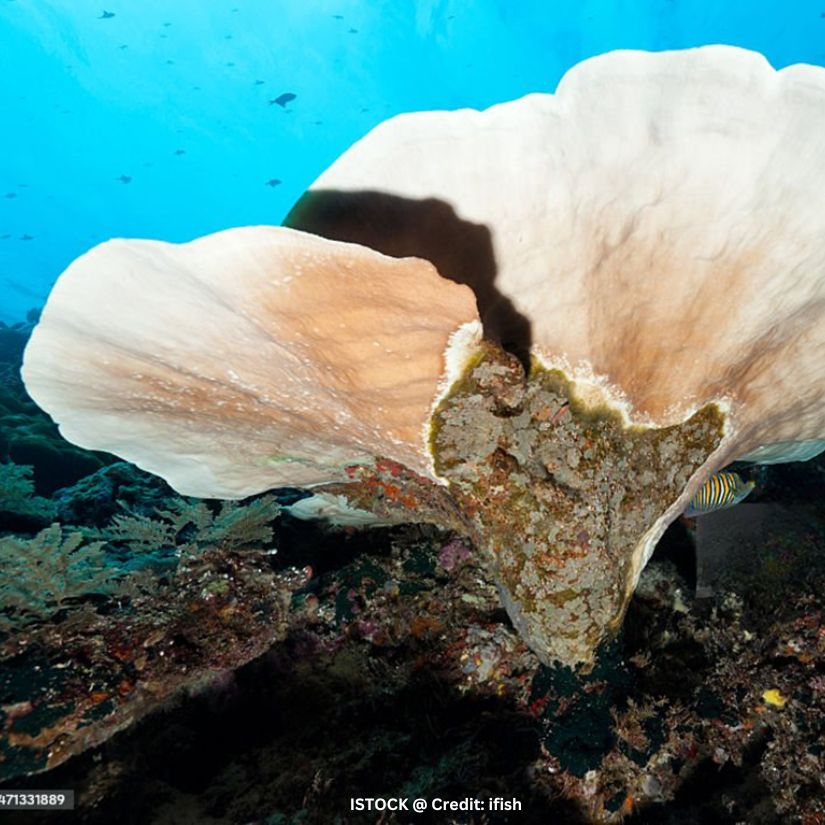
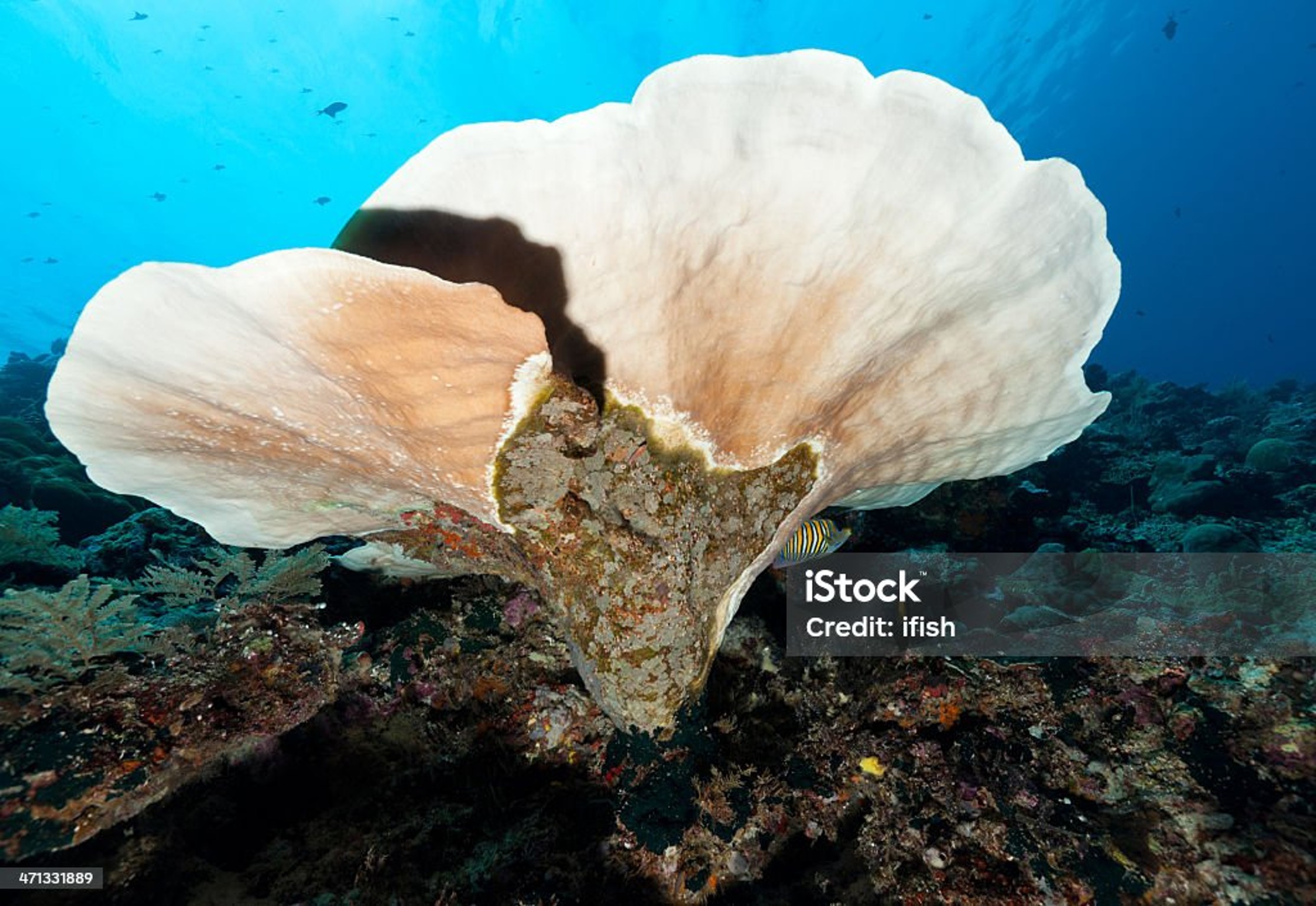
Turbinaria corals exhibit remarkable variation in colony form:
- Colony Form:
Colonies may be cup-shaped, funnel-shaped, plate-like (laminar), encrusting, or scroll-like. Some species develop vertically folded plates, creating complex three-dimensional reef structures. - Corallite Structure:
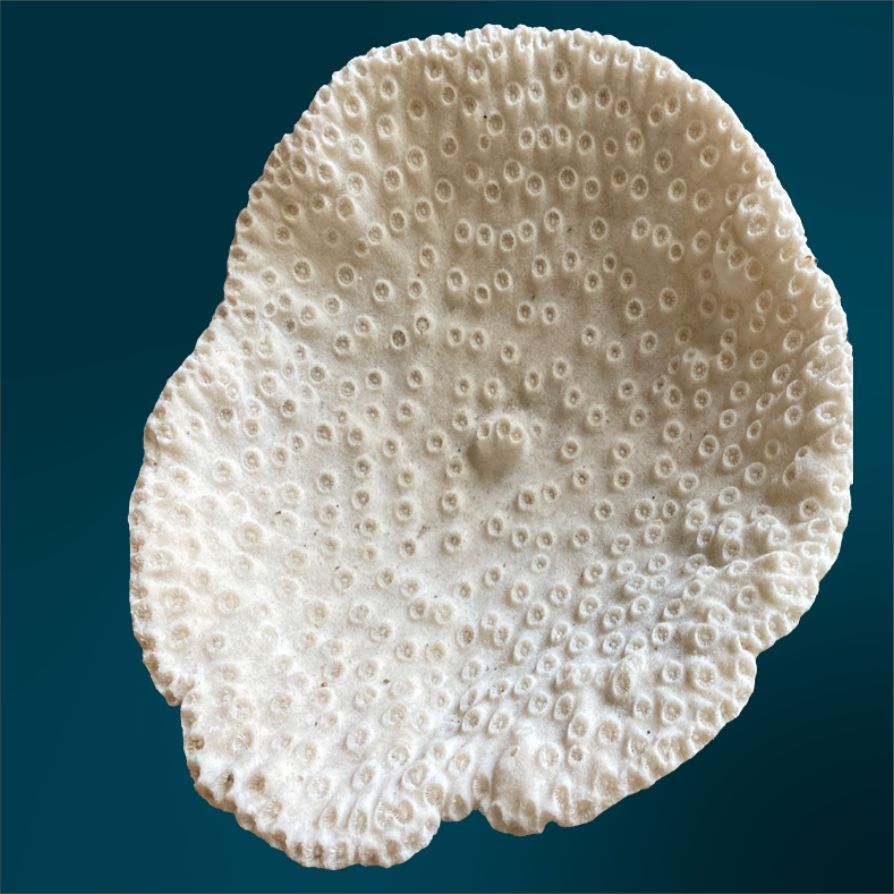
The surface is covered with small corallites (skeletal cups that house individual polyps), which are:- Tubular or conical in shape
- Slightly raised above the surface
- Densely packed, measuring about 1–3 mm in diameter
Each corallite contains internal skeletal ridges called septa, which radiate inward and meet at a central structure known as the columella.
- Texture:
The coral surface appears rough and granular due to the presence of numerous protruding corallites.
Coloration and Symbiosis
Turbinaria species display a variety of colors, including brown, yellow, green, grey, and cream, often with brightly colored polyps.
This coloration is primarily influenced by symbiotic dinoflagellates (zooxanthellae) living within the coral tissue. These microscopic algae perform photosynthesis, supplying nutrients to the coral and contributing to its color.
Habitat and Distribution
- Geographical Range:
- Widely found throughout the Indo-Pacific region, including:
- The Red Sea
- Indian Ocean
- Southeast Asia
- Australia (including the Great Barrier Reef)
- Western Pacific islands
- Habitat:
Turbinaria corals inhabit a variety of reef environments, such as:
- Coral reefs and reef slopes
- Lagoons
- Deeper, turbid (murky) waters
They are commonly found at depths ranging from 2 to 40 meters.
Adaptability and Ecological Importance
One of the key strengths of Turbinaria corals is their high adaptability. Unlike many reef-building corals, they can thrive in low-light and sediment-rich environments, making them well-suited for turbid waters.
They also:
- Grow in areas with moderate to strong currents, which help bring food particles and remove sediments
- Contribute to reef complexity by forming layered and structured habitats
- Provide shelter and support for a wide range of marine organisms