September 2025

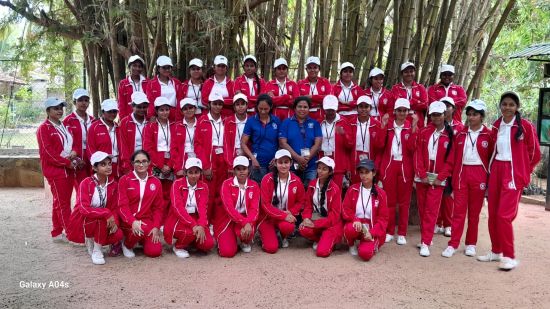
On 24th September 2025, 27 students of the Environmental Society of Madawakkulama M.M. Vidyalaya, along with their teachers, visited the Lanka Mangrove Museum and Learning Center. During their visit, the students explored the exhibits and gained valuable knowledge about the importance of mangrove ecosystems in protecting coastlines, preserving biodiversity, and mitigating climate change. The programme was an inspiring experience, encouraging the young Environmental Society members to strengthen their commitment to conservation.

Students of Madawakkulama M.M. Vidyalaya Visit the Lanka Mangrove Museum and Learning Center

On 24th September 2025, 27 students of the Environmental Society of Madawakkulama M.M. Vidyalaya, along with their teachers, visited the Lanka Mangrove Museum and Learning Center.

During their visit, the students explored the exhibits and gained valuable knowledge about the importance of mangrove ecosystems in protecting coastlines, preserving biodiversity, and mitigating climate change. The programme was an inspiring experience, encouraging the young Environmental Society members to strengthen their commitment to conservation.

Students of Madawakkulama M.M. Vidyalaya Visit the Lanka Mangrove Museum and Learning Center Read More »

On 26th September 2025, the Lanka Mangrove Museum held a special programme for the students of the Open University of Sri Lanka. The event featured Prof. Padmalal and other distinguished lecturers, who engaged the students in an insightful discussion on mangrove conservation.

Special Programme for Open University of Sri Lanka Students at the Lanka Mangrove Museum

On 26th September 2025, the Lanka Mangrove Museum held a special programme for the students of the Open University of Sri Lanka. The event featured Prof. Padmalal and other distinguished lecturers, who engaged the students in an insightful discussion on mangrove conservation.

Special Programme for Open University of Sri Lanka Students at the Lanka Mangrove Museum Read More »

On September 22, 2025, a group of 50 students and teachers from Kingston International School, Dambulla, visited the Lanka Mangrove Museum and Learning Center. During their visit, they explored the exhibits and learned about the importance of mangrove ecosystems in protecting coastlines, supporting biodiversity, and mitigating climate change.

Kingston International School Dambulla Visits the Lanka Mangrove Museum

On September 22, 2025, a group of 50 students and teachers from Kingston International School, Dambulla, visited the Lanka Mangrove Museum and Learning Center. During their visit, they explored the exhibits and learned about the importance of mangrove ecosystems in protecting coastlines, supporting biodiversity, and mitigating climate change.

Kingston International School Dambulla Visits the Lanka Mangrove Museum Read More »

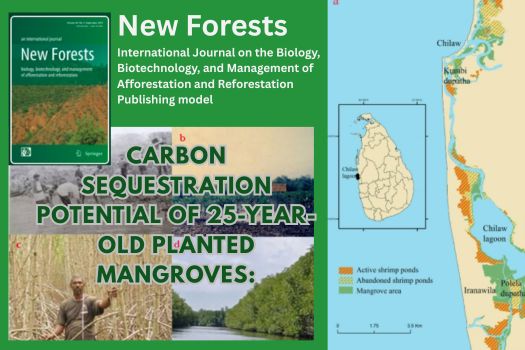
Tropical mangroves are rich in carbon and play an important role in reducing climate change by storing carbon dioxide in their trees and soils. However, in Sri Lanka, little research has been done on how restored mangroves contribute to carbon storage. This study looks at mangrove restoration and afforestation efforts in the Chilaw lagoon, which began in 1994 with the planting of Rhizophora mucronata and R. apiculata. Research was carried out in a 25-year-old mangrove plantation covering about 0.25 hectares. We identified the species present, measured tree height and girth, and estimated above- and below-ground biomass and organic carbon using standard methods and equations.

Carbon sequestration potential of 25-year-old planted mangroves: effects of monoculture cultivation, natural species colonization, and multi-species transition

Tropical mangroves are rich in carbon and play an important role in reducing climate change by storing carbon dioxide in their trees and soils. However, in Sri Lanka, little research has been done on how restored mangroves contribute to carbon storage.

This study looks at mangrove restoration and afforestation efforts in the Chilaw lagoon, which began in 1994 with the planting of Rhizophora mucronata and R. apiculata. Research was carried out in a 25-year-old mangrove plantation covering about 0.25 hectares. We identified the species present, measured tree height and girth, and estimated above- and below-ground biomass and organic carbon using standard methods and equations. Carbon sequestration

Carbon sequestration potential of 25-year-old planted mangroves: effects of monoculture cultivation, natural species colonization, and multi-species transition Read More »

On 9th September 2025, a group of teachers from Siyane National College of Education, Veyangoda visited the Lanka Mangrove Museum and Learning Center to participate in a special awareness programme on mangrove ecosystems.

Teachers from Siyane National College of Education Visit the Lanka Mangrove Museum

On 9th September 2025, a group of teachers from Siyane National College of Education, Veyangoda visited the Lanka Mangrove Museum and Learning Center to participate in a special awareness programme on mangrove ecosystems.

During the programme, the teachers explored the museum’s exhibits and gained valuable insights into the ecological importance of mangroves in protecting coastal areas, preserving biodiversity, and mitigating climate change. The session also highlighted the role of education in promoting sustainable environmental practices and raising awareness among future generations.

Teachers from Siyane National College of Education Visit the Lanka Mangrove Museum Read More »

The primary purpose of their visit was to collect valuable data and gain a deeper understanding of the Pambala Lagoon ecosystem and its surroundings. Their research focuses on mapping the Chilaw–Pambala Lagoon using satellite imagery, a study that will contribute to improved environmental monitoring and sustainable management of this vital coastal ecosystem.

Japanese Researchers from the University of Tsukuba Visit the Lanka Mangrove Museum and Learning Center

On 8th September 2025, Japanese Researchers Professor Emeritus Yuji Murayama and Assistant Professor Takehiro Morimoto from the Faculty of Life and Environmental Sciences, University of Tsukuba, Japan, visited the Lanka Mangrove Museum and Learning Center.

The primary purpose of their visit was to collect valuable data and gain a deeper understanding of the Pambala Lagoon ecosystem and its surroundings. Their research focuses on mapping the Chilaw–Pambala Lagoon using satellite imagery, a study that will contribute to improved environmental monitoring and sustainable management of this vital coastal ecosystem.

Japanese Researchers from the University of Tsukuba Visit the Lanka Mangrove Museum and Learning Center Read More »

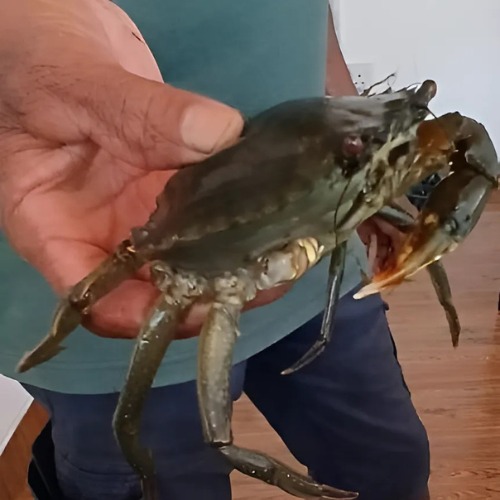
Taxonomic Classification of Scylla serrata:  Kingdom: Animalia  Phylum: Arthropoda  Subphylum: Crustacea  Class: Malacostraca  Order: Decapoda  Infraorder: Brachyura  Family: Portunidae Common Names: Mud crab, Mangrove crab, Giant Mud Crab, Green Crab

Giant Mud Crab- Scylla Serrata

Giant Mud Crab- Scylla Serrata
The larvae develop in the marine environment until they reach the juvenile stage, at which
point these juvenile crabs migrate from the ocean to mangroves, brackish waters, estuarine
regions, or lagoon areas. Subsequently, these juvenile crabs mature into adult crabs within
the mangroves, brackish waters, estuarine regions, or lagoon areas. Intertidal mangrove
forests are essential as they provide food, shelter, nursery habitats, and refuge for juvenile
S. serrata. The intricate root systems, such as the prop roots of Rhizophora sp. species,
create hiding spots for these juvenile crabs, protecting them from predators. The mangrove
environment offers safety during their molting phase, a time when crabs are particularly
vulnerable, and it maintains stable conditions—such as reduced water turbulence,
consistent water temperatures shielded by mangrove trees, and suitable salinity levels—
that are conducive to their growth.

Giant Mud Crab- Scylla Serrata Read More »

Students from Ananda National College, Chilaw visited the Lanka Mangrove Museum and Learning Center to gather information about the mangrove ecosystem. Their visit was part of their preparation to achieve the Rajatha Award at school.

Environmental Pioneers from Ananda National College, Chilaw

A group of Environmental Pioneers from Ananda National College, Chilaw visited the Lanka Mangrove Museum and Learning Center to gather information about the mangrove ecosystem. Their visit was part of their preparation to achieve the Environmental Pilot Silver Medal (commonly referred to as the Rajatha Medal) at school.

Environmental Pioneers from Ananda National College, Chilaw Read More »

On 03rd September 2025, the Lanka Mangrove Museum and Learning Center conducted a special study session on the crabs living in the mangrove ecosystem. Crabs play a vital role in the mangrove environment, contributing to the food web and helping to maintain the overall health of the ecosystem. During the session, participants learned about the life cycle of crabs, the challenges they face, and the unique connection between crabs and mangrove forests.

Study on Crabs in the Mangrove Ecosystem

On 03rd September 2025, the Lanka Mangrove Museum and Learning Center conducted a special study session on the crabs living in the mangrove ecosystem.

Crabs play a vital role in the mangrove environment, contributing to the food web and helping to maintain the overall health of the ecosystem. During the session, participants learned about the life cycle of crabs, the challenges they face, and the unique connection between crabs and mangrove forests. Study on Crabs

Study on Crabs in the Mangrove Ecosystem Read More »

Scroll to Top