LMM

The mangrove ecosystems of the Pambala–Chilaw Lagoon are more than just forests by the sea – they are living laboratories of biodiversity. Beneath the tangled web of Rhizophora mucronata roots, an entire community of organisms thrives, playing vital roles in keeping these ecosystems healthy. 🔹 A Natural Reef System Barnacles, oysters, mussels, and worms settle on mangrove prop roots, turning them into miniature reefs. These layered surfaces provide safe havens for crabs, shrimps, juvenile fish, and countless small creatures. 🔹 Ecosystem Engineers Sessile filter feeders like oysters and barnacles clean the water by removing suspended particles, while crabs and mollusks recycle nutrients by breaking down fallen leaves. Together, they stabilize sediments, trap carbon, and protect shorelines. 🔹 Balancing the Food Web Root-dwelling species not only feed on algae and detritus but also serve as prey for birds and larger fish. This delicate balance maintains the health and productivity of the lagoon. 🔹 Foundation Species Oysters and mussels act as “foundation species” – creating structures that allow other organisms to settle, grow, and flourish. Their presence transforms simple roots into complex, multi-layered habitats. 🔹 Three Unique Study Sites Researchers explored three areas of the lagoon: Open Lagoon – brackish waters with slower flow, rich in sediments. Bata Canal – lined with 1995 mangrove plantations, offering diverse habitats. Dutch Canal – with stronger tidal exchange and higher salinity, creating distinct settlement patterns. 🐚 From camouflaged crabs and black tiger shrimp hiding among roots, to oysters building reefs that support countless others, the mangrove root zone is a bustling underwater city. These hidden ecosystems remind us that conserving mangroves means protecting not just trees, but the entire web of life they support. 🌊🌿

🌱 Life Beneath the Mangrove Roots – A Hidden World of Biodiversity 🌱

The mangrove ecosystems of the Pambala–Chilaw Lagoon are more than just forests by the sea – they are living laboratories of biodiversity. Beneath the tangled web of Rhizophora mucronata roots, an entire community of organisms thrives, playing vital roles in keeping these ecosystems healthy. biodiversity

🌱 Life Beneath the Mangrove Roots – A Hidden World of Biodiversity 🌱 Read More »

An awareness program for school students was successfully organized by the Madampe Divisional Secretariat on June 6, 2025.

Awareness Program Organized by Madampe Divisional Secretariat

Awareness Program Organized by Madampe Divisional Secretariat 📅 Date: June 6, 2025📍 Venue: Madampe Divisional Secretariat Premises👨‍🎓 Participants: 45 school students and 6 teachers An awareness program for school students was successfully organized by the Madampe Divisional Secretariat on June 6, 2025. Objectives of the Program: To raise awareness among students about environmental protection To

Awareness Program Organized by Madampe Divisional Secretariat Read More »

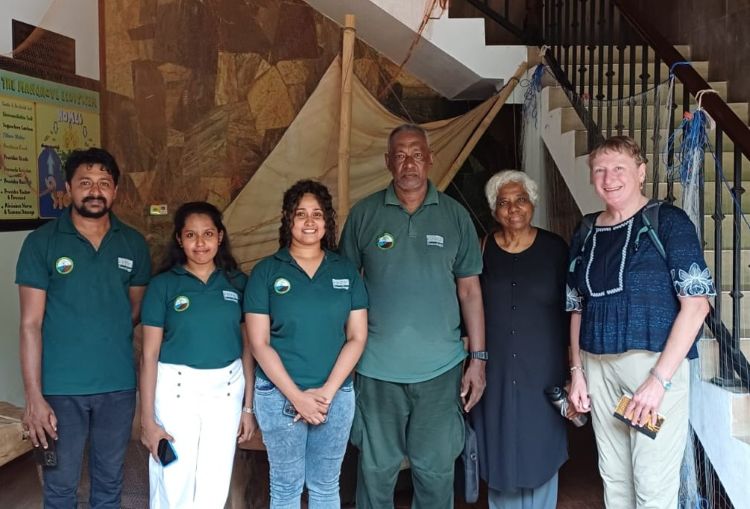
As the Lanka Mangrove Museum continues to grow in recognition as a regional hub for environmental education and research, it recently welcomed two researchers from Japan on 11th April 2025. Their visit marked yet another significant milestone in the museum's mission to support global efforts in mangrove conservation and environmental awareness.

Researchers keep coming as the Education Hub extends

Cultural Exchange On 11th April 2025, two researchers from Japan visited the Lanka Mangrove Museum as part of their data collection for ongoing research. During their visit, they were given a comprehensive tour of the museum. The Education Officer and other museum staff provided detailed explanations of the exhibits, helping the researchers gain deeper insights into mangrove ecosystems and conservation efforts.

Researchers keep coming as the Education Hub extends Read More »

research student from Ocean University of Sri Lanka visited the Lanka Mangrove Museum to conduct a study on species that inhabit mangrove roots.

Research on Mangrove Root Species at the Lanka Mangrove Museum

On March 28, 2025, a research student from Ocean University of Sri Lanka visited the Lanka Mangrove Museum to conduct a study on species that inhabit mangrove roots. These intricate ecosystems serve as a vital habitat for various marine and terrestrial organisms, playing a crucial role in maintaining biodiversity.

Research on Mangrove Root Species at the Lanka Mangrove Museum Read More »
https://www.fishbase.se/collaborators/CollaboratorSummary.php?ID=50

Arius platystomus: The Broad-Mouthed Sea Catfish

Arius platystomus, commonly known as the broad-mouthed sea catfish, is a species of marine and brackish water fish belonging to the family Ariidae. It is primarily found in coastal and estuarine environments and plays an important role in the ecosystem as both a predator and prey species. Like other members of the Ariidae family, this catfish has distinctive barbels and a robust body adapted to its habitat.

Arius platystomus: The Broad-Mouthed Sea Catfish Read More »

Chanos chanos, commonly known as the milkfish, is a widely distributed species found in tropical and subtropical waters. As the sole living species in the family Chanidae, it holds great economic and ecological importance, particularly in aquaculture and fisheries. Milkfish are known for their adaptability and fast growth, making them a key species in sustainable fish farming. Milkfish

Chanos chanos: The Resilient Milkfish of Tropical Waters

Chanos chanos, commonly known as the milkfish, is a widely distributed species found in tropical and subtropical waters. As the sole living species in the family Chanidae, it holds great economic and ecological importance, particularly in aquaculture and fisheries. Milkfish are known for their adaptability and fast growth, making them a key species in sustainable fish farming.

Chanos chanos: The Resilient Milkfish of Tropical Waters Read More »

The tank goby exhibits an elongated body with a rounded snout and a large mouth extending to the middle of its eyes. Its coloration ranges from pale brown to greenish-grey, often with darker blotches along the sides, providing effective camouflage in its natural habitat. Adults typically reach a length of 15–25 cm, though some individuals can grow larger under favorable conditions.

Glossogobius giuris : The Adaptable Tank Goby of Freshwater and Brackish Ecosystems

Glossogobius giuris, commonly known as the tank goby, is a widely distributed fish species found in freshwater and brackish environments across the Indo-Pacific region. Recognized for its adaptability, this species plays a significant role in local ecosystems and fisheries.

Glossogobius giuris : The Adaptable Tank Goby of Freshwater and Brackish Ecosystems Read More »

Scroll to Top