Lanka Mangrove Museum

The Lanka Mangrove Museum is a dedicated environmental education center focused on preserving and promoting the rich biodiversity of Sri Lanka’s mangrove ecosystems. Located near the vibrant wetlands, the museum offers interactive exhibits, guided tours, and educational resources that showcase the ecological significance of mangroves and their role in coastal resilience.

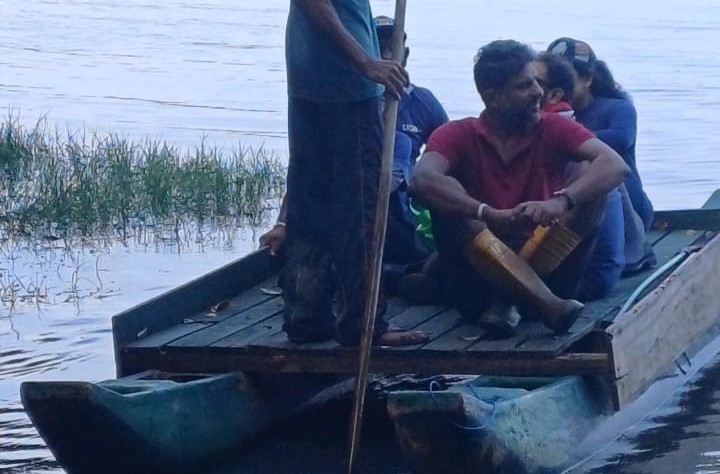
Mangrove-associated fisheries play a vital role in the livelihood and food security of coastal communities living around lagoon ecosystems. The complex root systems of mangrove trees provide shelter, feeding grounds, and nursery habitats for a wide range of aquatic species, including fish, crabs, and shrimp, making mangrove areas highly productive fishing zones. In the lagoon environment, fishers harvest a variety of species using traditional and small-scale methods such noodling, traps, kemana, and brush-pile-based techniques. Juvenile and adult fish use the submerged mangrove roots for protection from predators and as feeding grounds, making these areas important locations for artisanal fish catches. Crabs, especially mangrove and lagoon crab species, thrive among prop roots where they feed, hide, and molt. During low tide, many are caught by hand or using simple traps placed near root clusters. Similarly, shrimp species rely on mangrove detritus and nutrient-rich waters for growth. Their abundance in channels and root zones supports seasonal shrimp collection using nets and traditional gear. Overall, mangrove-associated fishing forms a tightly linked socio-ecological system where the health of the mangrove habitat directly influences the availability of lagoon fish, crabs, and shrimp. Protecting mangroves ensures the sustainability of these fisheries while supporting the cultural traditions and livelihoods of lagoon-dependent communities.

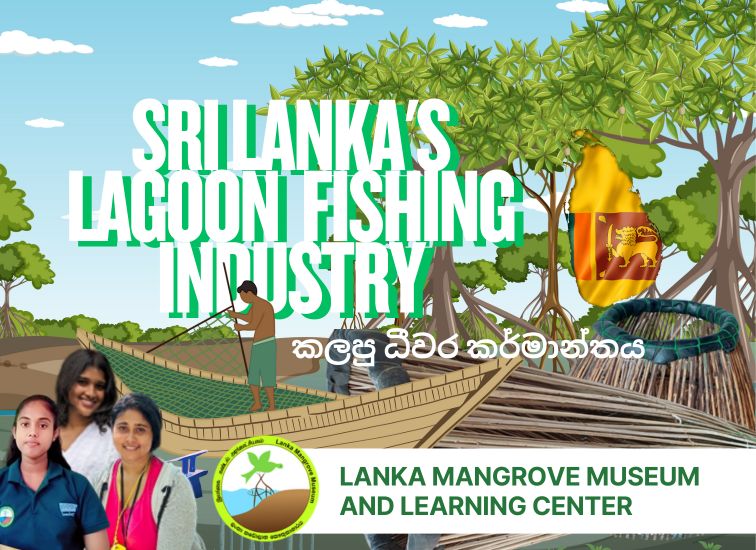
Sri Lanka’s lagoon fishing industry ශ්‍රීලංකාවේ කලපු ධීවර කර්මාන්තය

Sri Lanka’s lagoon fishing industry ශ්‍රීලංකාවේ කලපු ධීවර කර්මාන්තය Mangrove-associated fisheries play a vital role in the livelihood and food security of coastal communities living around lagoon ecosystems. The complex root systems of mangrove trees provide shelter, feeding grounds, and nursery habitats for a wide range of aquatic species, including fish, crabs, and shrimp, making mangrove areas highly productive fishing zones.
In the lagoon environment, fishers harvest a variety of species using traditional and small-scale methods such noodling, traps, kemana, and brush-pile-based techniques. Juvenile and adult fish use the submerged mangrove roots for protection from predators and as feeding grounds, making these areas important locations for artisanal fish catches.
Crabs, especially mangrove and lagoon crab species, thrive among prop roots where they feed, hide, and molt. During low tide, many are caught by hand or using simple traps placed near root clusters. Similarly, shrimp species rely on mangrove detritus and nutrient-rich waters for growth. Their abundance in channels and root zones supports seasonal shrimp collection using nets and traditional gear.
Overall, mangrove-associated fishing forms a tightly linked socio-ecological system where the health of the mangrove habitat directly influences the availability of lagoon fish, crabs, and shrimp. Protecting mangroves ensures the sustainability of these fisheries while supporting the cultural traditions and livelihoods of lagoon-dependent communities.

Sri Lanka’s lagoon fishing industry ශ්‍රීලංකාවේ කලපු ධීවර කර්මාන්තය Read More »

On 20 January 2026, students from the Dankotuwa Nenasa Education Center visited the Lanka Mangrove Museum and Learning Center to participate in an environmental awareness programme. During the visit, the students were introduced to the importance of mangrove ecosystems, their role in protecting coastal areas, supporting biodiversity, and maintaining environmental balance. Through interactive discussions and educational explanations, the programme aimed to build awareness and appreciation of mangroves among young learners.

Awareness Programme for Students from Dankotuwa Nenasa Education Center

On 20 January 2026, students from the Dankotuwa Nenasa Education Center visited the Lanka Mangrove Museum and Learning Center to participate in an environmental awareness programme.

During the visit, the students were introduced to the importance of mangrove ecosystems, their role in protecting coastal areas, supporting biodiversity, and maintaining environmental balance. Through interactive discussions and educational explanations, the programme aimed to build awareness and appreciation of mangroves among young learners.

Awareness Programme for Students from Dankotuwa Nenasa Education Center Read More »

On 20 January 2026, postgraduate student N. K. Abeyasinghe, along with her research team from the University of Ruhuna, visited the Lanka Mangrove Museum and Learning Center to carry out field research in the Pambala Lagoon area. This research is conducted under the supervision of Prof. Sunanda Kodikara, a respected academic and one of the scientific members of the Museum. During the visit, the research team engaged in data collection and field observations related to mangrove ecosystems, with the full support and guidance of the museum staff. As always, the Museum Director and staff extended their assistance by facilitating access to research sites, sharing local knowledge, and ensuring a productive field experience for the students.

Future Mangrove Conservators through Academic Research

On 20 January 2026, postgraduate student N. K. Abeyasinghe, along with her research team from the University of Ruhuna, visited the Lanka Mangrove Museum and Learning Center to carry out field research in the Pambala Lagoon area. This research is conducted under the supervision of Prof. Sunanda Kodikara, a respected academic and one of the scientific members of the Museum.

During the visit, the research team engaged in data collection and field observations related to mangrove ecosystems, with the full support and guidance of the museum staff. As always, the Museum Director and staff extended their assistance by facilitating access to research sites, sharing local knowledge, and ensuring a productive field experience for the students.

Future Mangrove Conservators through Academic Research Read More »

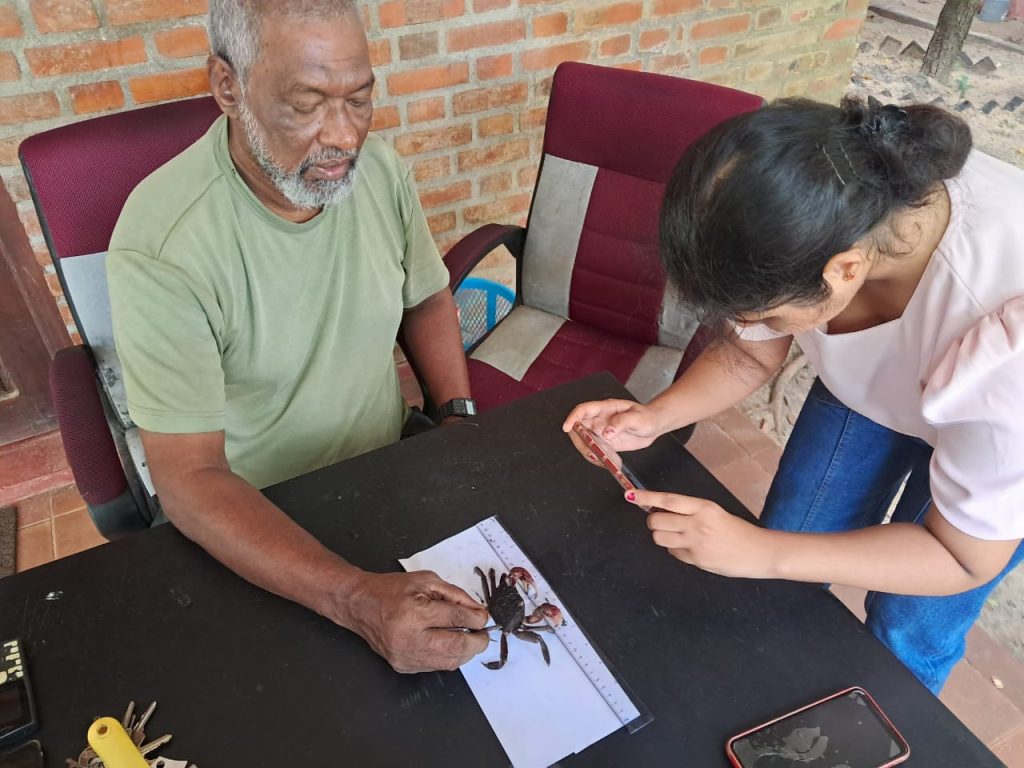
On 17 January, the Education Officer of the Lanka Mangrove Museum and Learning Center, with the support of the museum staff and guidance of the Museum Director, conducted an important field research activity at the Chilaw–Pambala mangrove sites. The research focused on the collection of data related to the abundance and density of crab species within the mangrove ecosystem. During the study, systematic field methods were used to observe and record the presence of crabs across selected mangrove areas. This data collection is essential for understanding species distribution, population levels, and the overall health of the mangrove habitat, as crabs play a key role in nutrient cycling and soil aeration within these ecosystems.

Field Research on Crab Abundance and Density in the Pambala Mangrove Ecosystem

Field Research on Crab Abundance and Density in the Pambala Mangrove Ecosystem On 17 January, the Education Officer of the Lanka Mangrove Museum and Learning Center, with the support of the museum staff and guidance of the Museum Director, conducted an important field research activity at the Chilaw–Pambala mangrove sites. The research focused on the

Field Research on Crab Abundance and Density in the Pambala Mangrove Ecosystem Read More »

On 17 January 2026, members of the “Together With Mangroves” Children and Youth Environmental Society participated in their routine Saturday session at the Lanka Mangrove Museum and Learning Center. The programme was designed to combine learning, creativity, and hands-on experience, fostering a deeper understanding of nature and conservation among young participants.

Nurturing Young Environmental Stewards through Education and Field Experience

On 17 January 2026, members of the “Together With Mangroves” Children and Youth Environmental Society participated in their routine Saturday session at the Lanka Mangrove Museum and Learning Center. The programme was designed to combine learning, creativity, and hands-on experience, fostering a deeper understanding of nature and conservation among young participants.

The day began with a study programme focused on environmental awareness, tailored to suit different age groups. Following this session, an art contest was organized for children under five years of age, encouraging them to express their understanding of nature and mangroves through creativity.

Nurturing Young Environmental Stewards through Education and Field Experience Read More »

On 17 January 2026, a research student visited the Lanka Mangrove Museum and Learning Center to collect field data as part of an academic study focused on mangrove ecosystems in Sri Lanka. The research aims to identify and analyze the differences between mangrove species found in the Negombo and Chilaw areas. During the visit, the student conducted detailed measurements of key physical characteristics of mangrove trees, including leaf length and size, tree height, and trunk diameter. These measurements are essential for understanding how mangroves adapt to different environmental conditions in each location.

Research Study on Mangrove Variations Between Negombo and Chilaw

On 17 January 2026, a research student visited the Lanka Mangrove Museum and Learning Center to collect field data as part of an academic study focused on mangrove ecosystems in Sri Lanka. The research aims to identify and analyze the differences between mangrove species found in the Negombo and Chilaw areas.

During the visit, the student conducted detailed measurements of key physical characteristics of mangrove trees, including leaf length and size, tree height, and trunk diameter. These measurements are essential for understanding how mangroves adapt to different environmental conditions in each location.

The study also seeks to identify the reasons behind these observed differences, examining factors such as salinity levels, soil conditions, water availability, and other ecological influences that affect mangrove growth and structure. By comparing data from Negombo and Chilaw, the research hopes to highlight how local environmental conditions drive specific adaptations in mangrove species. Research Study on Mangrove Variations Between Negombo and Chilaw

Research Study on Mangrove Variations Between Negombo and Chilaw Read More »

On 16th January 2026, small groups from Chilaw, Arachchikattuwa, Mahawewa, and Madampe visited the Lanka Mangrove Museum and Learning Center. Unlike organized institutional field visits, these visitors came independently after learning about the museum through social media and the official website. Their visits are highly encouraging, as they reflect growing public awareness and appreciation of mangrove conservation efforts. The interest shown by these community members highlights the impact of effective outreach and the importance of sharing conservation work with a wider audience. Such engagement motivates the museum to continue its mission of protecting mangrove ecosystems while educating and inspiring the public.

Inspired by Conservation: Community Visitors to the Lanka Mangrove Museum

On 16th January 2026, small groups Community Visitors from Chilaw, Arachchikattuwa, Mahawewa, and Madampe visited the Lanka Mangrove Museum and Learning Center. Unlike organized institutional field visits, these visitors came independently after learning about the museum through social media and the official website.

Their visits are highly encouraging, as they reflect growing public awareness and appreciation of mangrove conservation efforts. The interest shown by these community members highlights the impact of effective outreach and the importance of sharing conservation work with a wider audience. Such engagement motivates the museum to continue its mission of protecting mangrove ecosystems while educating and inspiring the public.

Inspired by Conservation: Community Visitors to the Lanka Mangrove Museum Read More »

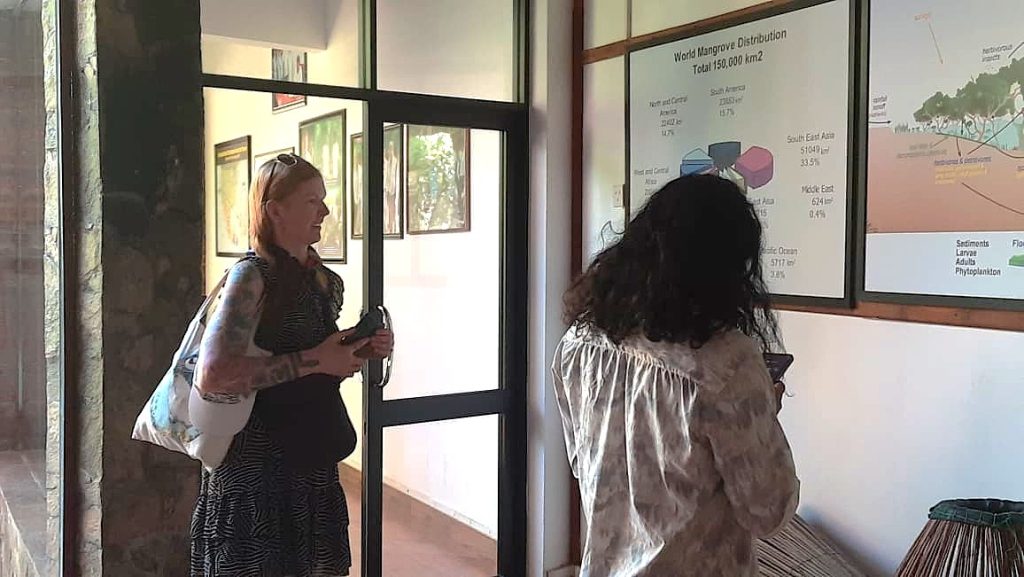
On 14th January, a visitor from Ireland visited the Lanka Mangrove Museum and Learning Center. She was fascinated by the well-curated exhibits and expressed her admiration for the overall setting and excellent maintenance of the museum. During her visit, she showed great interest in learning about mangrove ecosystems, conservation efforts, and the important role mangroves play in protecting coastal environments. The visitor highly appreciated the dedication of the museum staff in preserving and presenting valuable environmental knowledge in an engaging and informative manner.

Foreign Visitor from Ireland Visits Lanka Mangrove Museum and Learning Center

On 14th January, a visitor from Ireland visited the Lanka Mangrove Museum and Learning Center. She was fascinated by the well-curated exhibits and expressed her admiration for the overall setting and excellent maintenance of the museum. During her visit, she showed great interest in learning about mangrove ecosystems, conservation efforts, and the important role mangroves play in protecting coastal environments. The visitor highly appreciated the dedication of the museum staff in preserving and presenting valuable environmental knowledge in an engaging and informative manner.

Foreign Visitor from Ireland Visits Lanka Mangrove Museum and Learning Center Read More »

A special programme was successfully conducted on 13 January 2026 for preschool teachers in the Chilaw Pradeshiya Sabha administrative area, with the aim of introducing effective and age-appropriate environmental activities for preschool children. The programme was attended by two members of the Pradeshiya Sabha (Local Government Council), the Chairman of the Chilaw Pradeshiya Sabha, and 75 preschool teachers representing various preschools in the region. Their active participation highlighted the strong commitment of local authorities and educators toward promoting environmental awareness from an early age.

Empowering Preschool Teachers with Environmental Education Activities

A special programme was successfully conducted on 13 January 2026 for preschool teachers in the Chilaw Pradeshiya Sabha administrative area, with the aim of introducing effective and age-appropriate environmental activities for preschool children.

The programme was attended by two members of the Pradeshiya Sabha (Local Government Council), the Chairman of the Chilaw Pradeshiya Sabha, and 75 preschool teachers representing various preschools in the region. Their active participation highlighted the strong commitment of local authorities and educators toward promoting environmental awareness from an early age.

Empowering Preschool Teachers with Environmental Education Activities Read More »

Scroll to Top