
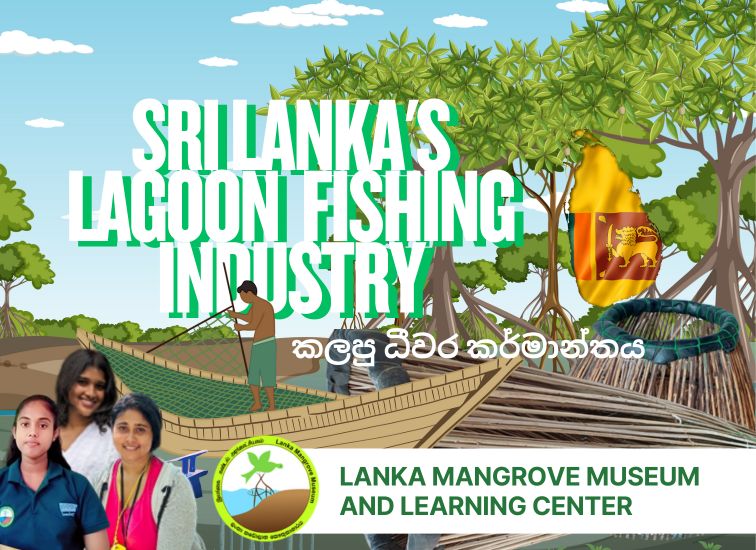
Sri Lanka’s lagoon fishing industry ශ්රීලංකාවේ කලපු ධීවර කර්මාන්තය
Sri Lanka’s lagoon fishing industry ශ්රීලංකාවේ කලපු ධීවර කර්මාන්තය Mangrove-associated fisheries play a vital role in the livelihood and food security of coastal communities living around lagoon ecosystems. The complex root systems of mangrove trees provide shelter, feeding grounds, and nursery habitats for a wide range of aquatic species, including fish, crabs, and shrimp, making mangrove areas highly productive fishing zones.
In the lagoon environment, fishers harvest a variety of species using traditional and small-scale methods such noodling, traps, kemana, and brush-pile-based techniques. Juvenile and adult fish use the submerged mangrove roots for protection from predators and as feeding grounds, making these areas important locations for artisanal fish catches.
Crabs, especially mangrove and lagoon crab species, thrive among prop roots where they feed, hide, and molt. During low tide, many are caught by hand or using simple traps placed near root clusters. Similarly, shrimp species rely on mangrove detritus and nutrient-rich waters for growth. Their abundance in channels and root zones supports seasonal shrimp collection using nets and traditional gear.
Overall, mangrove-associated fishing forms a tightly linked socio-ecological system where the health of the mangrove habitat directly influences the availability of lagoon fish, crabs, and shrimp. Protecting mangroves ensures the sustainability of these fisheries while supporting the cultural traditions and livelihoods of lagoon-dependent communities.
Sri Lanka’s lagoon fishing industry ශ්රීලංකාවේ කලපු ධීවර කර්මාන්තය Read More »