October 2025

Environmentalist-Jagath-Gunawardana-was-awarded-the-Honorary-Doctorate-9

Field Visit by Students from the Open University of Sri Lanka

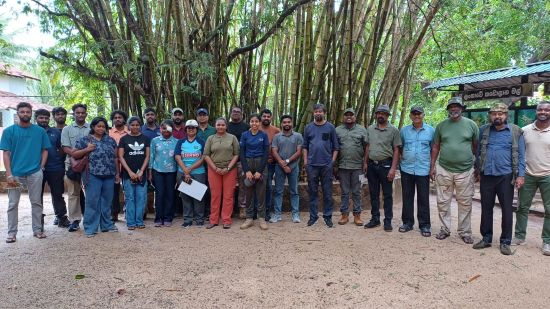
Students from the Open University of Sri Lanka, accompanied by Dr. Kalinga Padmalal and Dr. Gihan Dahanayeka, visited the Lanka Mangrove Museum and Learning Center as part of their field visit program.

During their visit, the students explored the museum’s exhibits and gained valuable insights into the ecological importance of mangrove ecosystems. The museum’s educational team guided them through various sections, explaining the conservation efforts, biodiversity, and sustainable practices related to mangrove management.

Field Visit by Students from the Open University of Sri Lanka Read More »
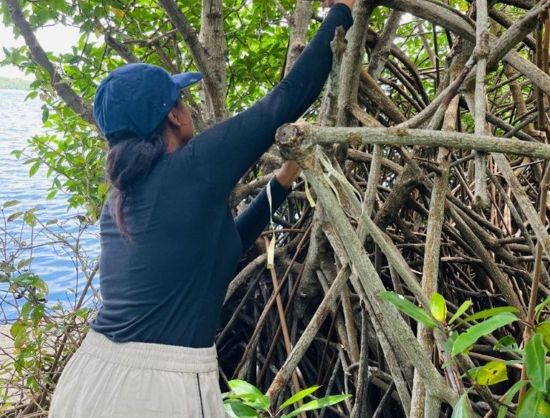
Mangroves are powerful natural carbon sinks, capturing and storing atmospheric carbon in their biomass and soils. The Chilaw Lagoon mangrove ecosystem holds immense untapped potential as a natural carbon sink. Through the evaluation of aboveground, belowground, and sediment carbon stores, this study provides important new insights into the lagoon's potential to mitigate climate change. The results of this study may support conservation and restoration initiatives while highlighting the ecological and economic significance of mangroves. In order to improve climate resilience plans and encourage sustainable ecosystem management in coastal communities, this study provides baseline data to stakeholders and policymakers.

Mangroves and Climate Resilience: Carbon Stock Estimation in Chilaw Lagoon

Mangroves are powerful natural carbon sinks, capturing and storing atmospheric carbon in their biomass and soils. The Chilaw Lagoon mangrove ecosystem holds immense untapped potential as a natural carbon sink.
Through the evaluation of aboveground, belowground, and sediment carbon stores, this study provides important new insights into the lagoon’s potential to mitigate climate change. The results of this study may support conservation and restoration initiatives while highlighting the ecological and economic significance of mangroves. In order to improve climate resilience plans and encourage sustainable ecosystem management in coastal communities, this study provides baseline data to stakeholders and policymakers.

Mangroves and Climate Resilience: Carbon Stock Estimation in Chilaw Lagoon Read More »

The museum staff and educational officers guided the students through various sections, explaining the biodiversity of mangrove forests, their ecological significance, and ongoing conservation initiatives. The visit provided an engaging and educational experience, inspiring students to appreciate and protect these vital coastal ecosystems

Students from Wadduwa Central College Visit the Lanka Mangrove Museum and Learning Center

On October 17, 2025, a group of students from Wadduwa Central College visited the Lanka Mangrove Museum and Learning Center. During their visit, the students explored the museum’s exhibits, gaining valuable knowledge about the importance of mangrove ecosystems and their role in environmental protection.

Students from Wadduwa Central College Visit the Lanka Mangrove Museum and Learning Center Read More »

Undergraduate Research Student from the University of Peradeniya

Undergraduate Research Student from the University of Peradeniya

On October 15, 2025, an undergraduate research student from the University of Peradeniya visited the Lanka Mangrove Museum and Learning Center to gather valuable information for her research project. Her study focuses on understanding key aspects of mangrove ecosystems and their role in environmental sustainability.

Undergraduate Research Student from the University of Peradeniya Read More »

On 1st October 2025, the Lanka Mangrove Museum and Learning Center celebrated Children’s Day together with the “Together With Mangroves” Children and Youth Environmental Society. The event brought joy, learning, and environmental awareness to young participants, making the day both meaningful and memorable.

Celebrating Children’s Day at the Lanka Mangrove Museum and Learning Center

On 1st October 2025, the Lanka Mangrove Museum and Learning Center celebrated Children’s Day together with the “Together With Mangroves” Children and Youth Environmental Society. The event brought joy, learning, and environmental awareness to young participants, making the day both meaningful and memorable.

Celebrating Children’s Day at the Lanka Mangrove Museum and Learning Center Read More »

The teachers explored the exhibits and engaged in discussions about the importance of mangroves in safeguarding coastal ecosystems. The program highlighted the educational value of mangrove conservation, offering insights that the teachers can share with their students to promote environmental awareness. Their visit strengthened the bond between science education and practical conservation, inspiring them to integrate mangrove-related knowledge into their teaching practices.

Nikaweratiya Science Teachers Gain Insights into Mangrove Conservation

On October 3rd, the Science Teachers of the Nikaweratiya Education Zone visited the Lanka Mangrove Museum and Learning Center.
The teachers explored the exhibits and engaged in discussions about the importance of mangroves in safeguarding coastal ecosystems. The program highlighted the educational value of mangrove conservation, offering insights that the teachers can share with their students to promote environmental awareness. Their visit strengthened the bond between science education and practical conservation, inspiring them to integrate mangrove-related knowledge into their teaching practices.

Nikaweratiya Science Teachers Gain Insights into Mangrove Conservation Read More »

On October 2nd, the Environmental Pioneers from Dankotuwa Balika Maha Vidyalaya visited the Lanka Mangrove Museum and Learning Center. The students explored the exhibits and gained valuable knowledge about the importance of mangroves in protecting coastal ecosystems. During their visit, they also learned about the role of mangroves in biodiversity conservation, carbon storage, and supporting the livelihoods of local communities. The program inspired the young pioneers to strengthen their commitment to environmental protection and to spread awareness among their peers.

Inspiring Young Minds: Environmental Pioneers from Dankotuwa Balika Maha Vidyalaya Explore Mangroves

On October 2nd, the Environmental Pioneers from Dankotuwa Balika Maha Vidyalaya visited the Lanka Mangrove Museum and Learning Center.
The students explored the exhibits and gained valuable knowledge about the importance of mangroves in protecting coastal ecosystems. During their visit, they also learned about the role of mangroves in biodiversity conservation, carbon storage, and supporting the livelihoods of local communities. The program inspired the young pioneers to strengthen their commitment to environmental protection and to spread awareness among their peers.

Inspiring Young Minds: Environmental Pioneers from Dankotuwa Balika Maha Vidyalaya Explore Mangroves Read More »

The mangrove ecosystems of the Pambala–Chilaw Lagoon are more than just forests by the sea – they are living laboratories of biodiversity. Beneath the tangled web of Rhizophora mucronata roots, an entire community of organisms thrives, playing vital roles in keeping these ecosystems healthy. 🔹 A Natural Reef System Barnacles, oysters, mussels, and worms settle on mangrove prop roots, turning them into miniature reefs. These layered surfaces provide safe havens for crabs, shrimps, juvenile fish, and countless small creatures. 🔹 Ecosystem Engineers Sessile filter feeders like oysters and barnacles clean the water by removing suspended particles, while crabs and mollusks recycle nutrients by breaking down fallen leaves. Together, they stabilize sediments, trap carbon, and protect shorelines. 🔹 Balancing the Food Web Root-dwelling species not only feed on algae and detritus but also serve as prey for birds and larger fish. This delicate balance maintains the health and productivity of the lagoon. 🔹 Foundation Species Oysters and mussels act as “foundation species” – creating structures that allow other organisms to settle, grow, and flourish. Their presence transforms simple roots into complex, multi-layered habitats. 🔹 Three Unique Study Sites Researchers explored three areas of the lagoon: Open Lagoon – brackish waters with slower flow, rich in sediments. Bata Canal – lined with 1995 mangrove plantations, offering diverse habitats. Dutch Canal – with stronger tidal exchange and higher salinity, creating distinct settlement patterns. 🐚 From camouflaged crabs and black tiger shrimp hiding among roots, to oysters building reefs that support countless others, the mangrove root zone is a bustling underwater city. These hidden ecosystems remind us that conserving mangroves means protecting not just trees, but the entire web of life they support. 🌊🌿

🌱 Life Beneath the Mangrove Roots – A Hidden World of Biodiversity 🌱

The mangrove ecosystems of the Pambala–Chilaw Lagoon are more than just forests by the sea – they are living laboratories of biodiversity. Beneath the tangled web of Rhizophora mucronata roots, an entire community of organisms thrives, playing vital roles in keeping these ecosystems healthy. biodiversity

🌱 Life Beneath the Mangrove Roots – A Hidden World of Biodiversity 🌱 Read More »

Scroll to Top