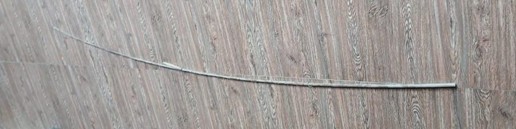
Fishing Rod
බිලී පිත්ත
The fishing rod and line is one of the oldest and most widely used traditional fishing gears in Sri Lanka. It is a simple, inexpensive, and effective method of fishing that has been practiced for generations in rivers, reservoirs, tanks, lagoons, and coastal waters. Because it can be constructed using locally available materials, it has remained a popular fishing method among both subsistence and recreational fishermen.
Traditionally, a fishing rod is made from a lightweight kitul (Caryota urens) pole. Small bamboo poles or slender wooden sticks from various tree species are also commonly used. A nylon fishing line is tied to the thin end of the rod, and a fish hook is attached to the end of the line. A small lead sinker is fixed slightly above the hook to help the bait sink to the desired depth.

A small float, locally known as the “ipiyāwa,” is attached to the fishing line to indicate when a fish bites the bait. It is usually made from a light piece of wood or other buoyant material. The position of the float can be adjusted along the line according to the depth of the water, allowing fishermen to target fish feeding at different levels of the water column.
A variety of natural baits are traditionally used, including earthworms, maggots, small shrimps, insect larvae, and dough-like mixtures prepared by rolling rice flour with termite eggs into small balls. These baits are selected according to the target fish species and the fishing location.
Owing to its simplicity, low construction cost, and ease of operation, the fishing rod remains one of the most practical and environmentally friendly fishing methods. It is widely used by artisanal fishermen and recreational anglers, causing minimal disturbance to aquatic habitats while allowing the selective capture of individual fish species.
අතීතයේ සිටම ඉතාමත් ප්රචලිත ධීවර ආම්පන්නයකි. බිළි පිත්ත අඩු වියදමකින් සකස් කරගත හැක. කිතුල් ගසකින් කපාගන්නා කිතුල් පිත්ත ඉතාමත් සැහැල්ලු බිලී පිත්තකි. එයට අමතරව කුඩා උණබට යොදාගෙන සහ විවිධ ලී වර්ගවල කුඩා ලී උපයෝගී කරගෙන ද බිලීපිත්ත සකස් කර ගත හැකිය.
කිතුල් පිත්තෙහි සිහින් කෙළවරට තංගුස් නූල බැඳ එම නූලේ කෙළවර බිලී කොක්ක බැඳ එයට මඳක් ඉහළින් දිය යට යාම සඳහා ඊයම් කෑල්ලද බඳින ලබයි. මාළුවෙක් ඇමට කොටන විට එය ගොඩ සිටින ධීවරයාට පෙනීම සඳහා පුංචි ලී කැබැල්ලක් එක් හැඩයකට කපා එම තංගුස් නූලෙහි ගැට ගසයි. එය “ඉපියාව” ලෙස හැඳින් වේ. ජලයේ ගැඹුර අනුව මෙම ඉපියාව උස් පහත් කර තබා ගත හැකිය. මෙයට ඇම සඳහා ගැඩවිල්ලන්, පණුවන්, කුඩා ඉස්සන්, දිමි බිත්තර පාන් පිටි ගුලිකර සකස් කරගත් විවිධ දෑ යොදාගනී.