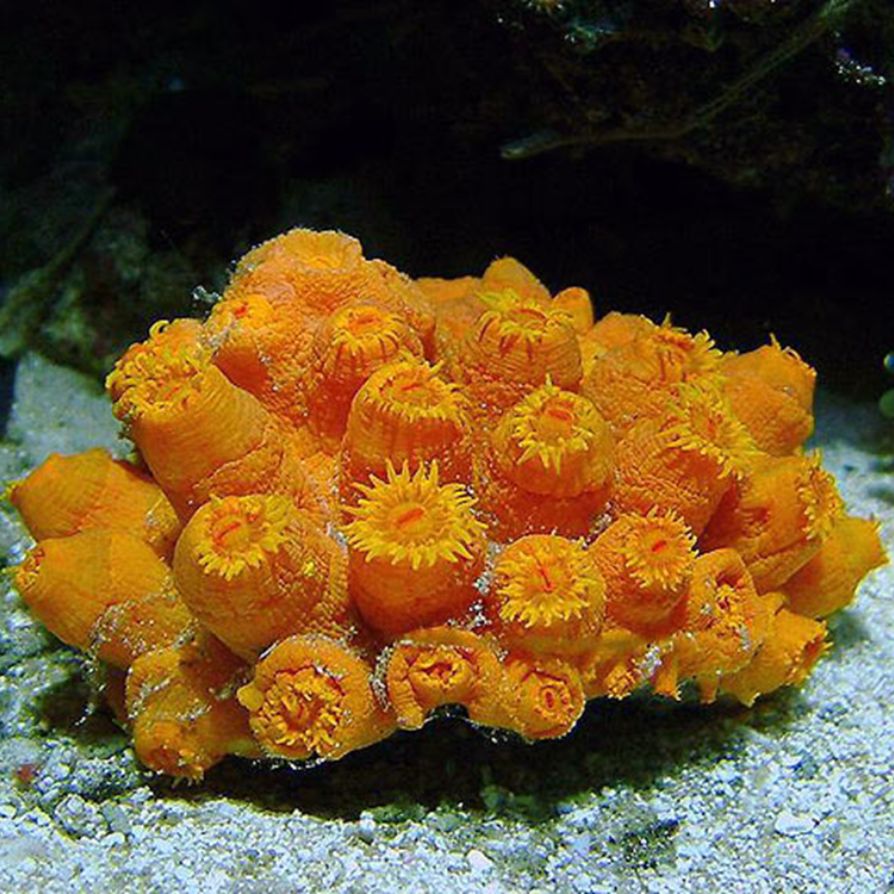
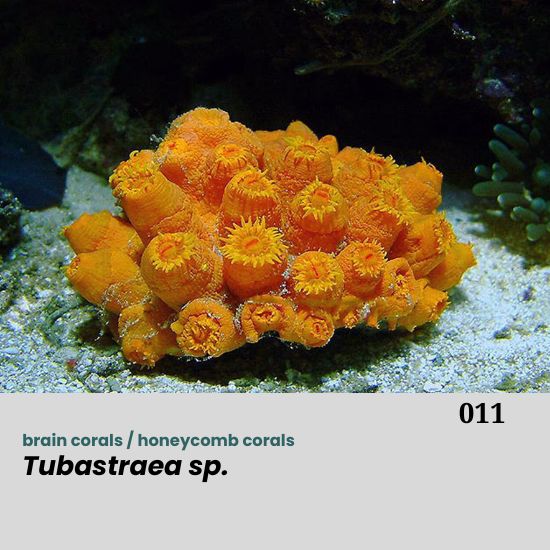
Tubastraea spp., widely known as sun corals or orange cup corals, are members of the family Dendrophylliidae. Unlike most reef-building corals, species of this genus are azooxanthellate, meaning they lack symbiotic zooxanthellae and do not rely on photosynthesis for nutrition. As a result, Tubastraea corals are often found in low-light or shaded habitats, such as caves, overhangs, deep reef slopes, shipwrecks, and artificial structures, where they capture plankton and organic particles with their large, fleshy polyps.
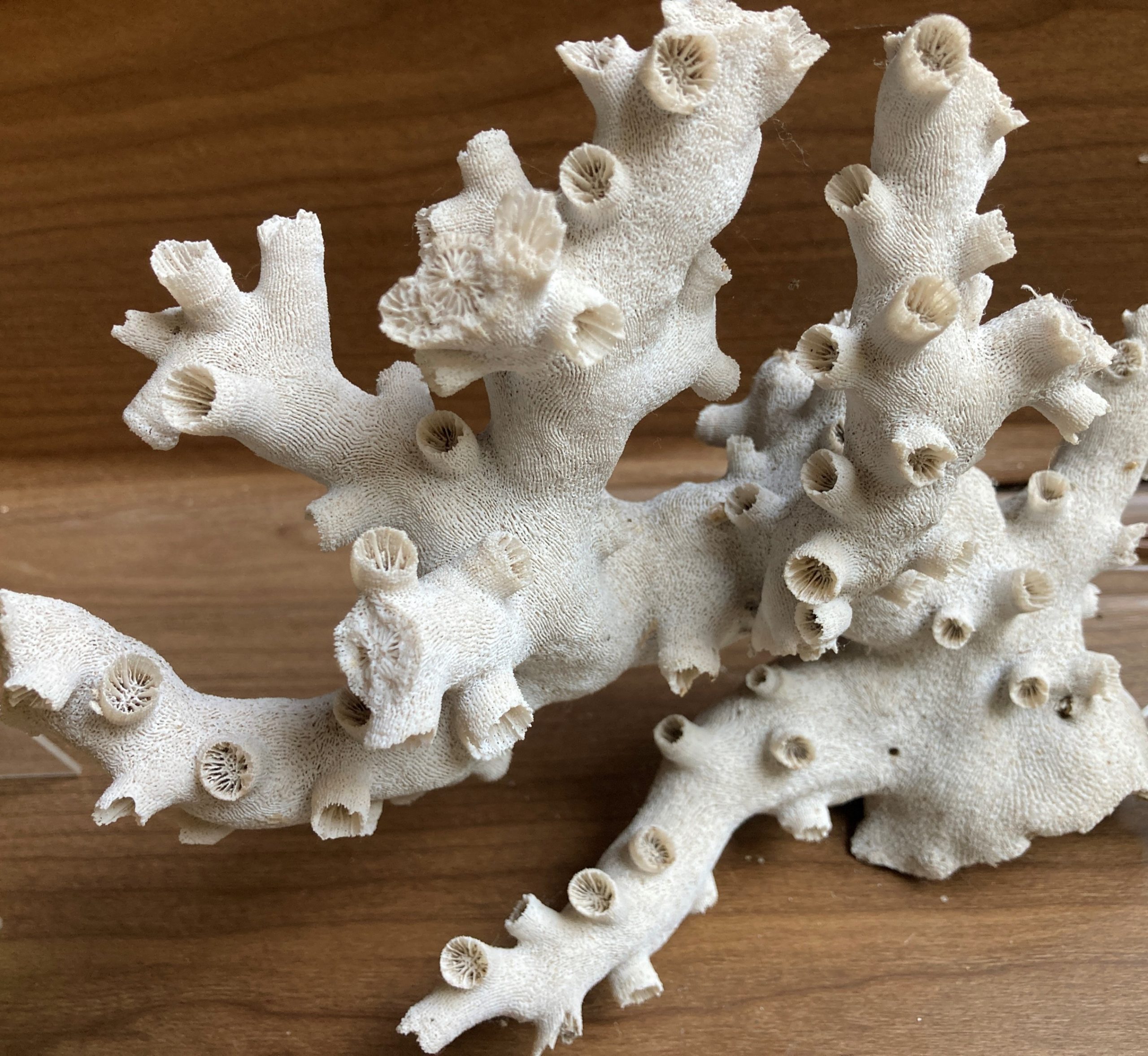
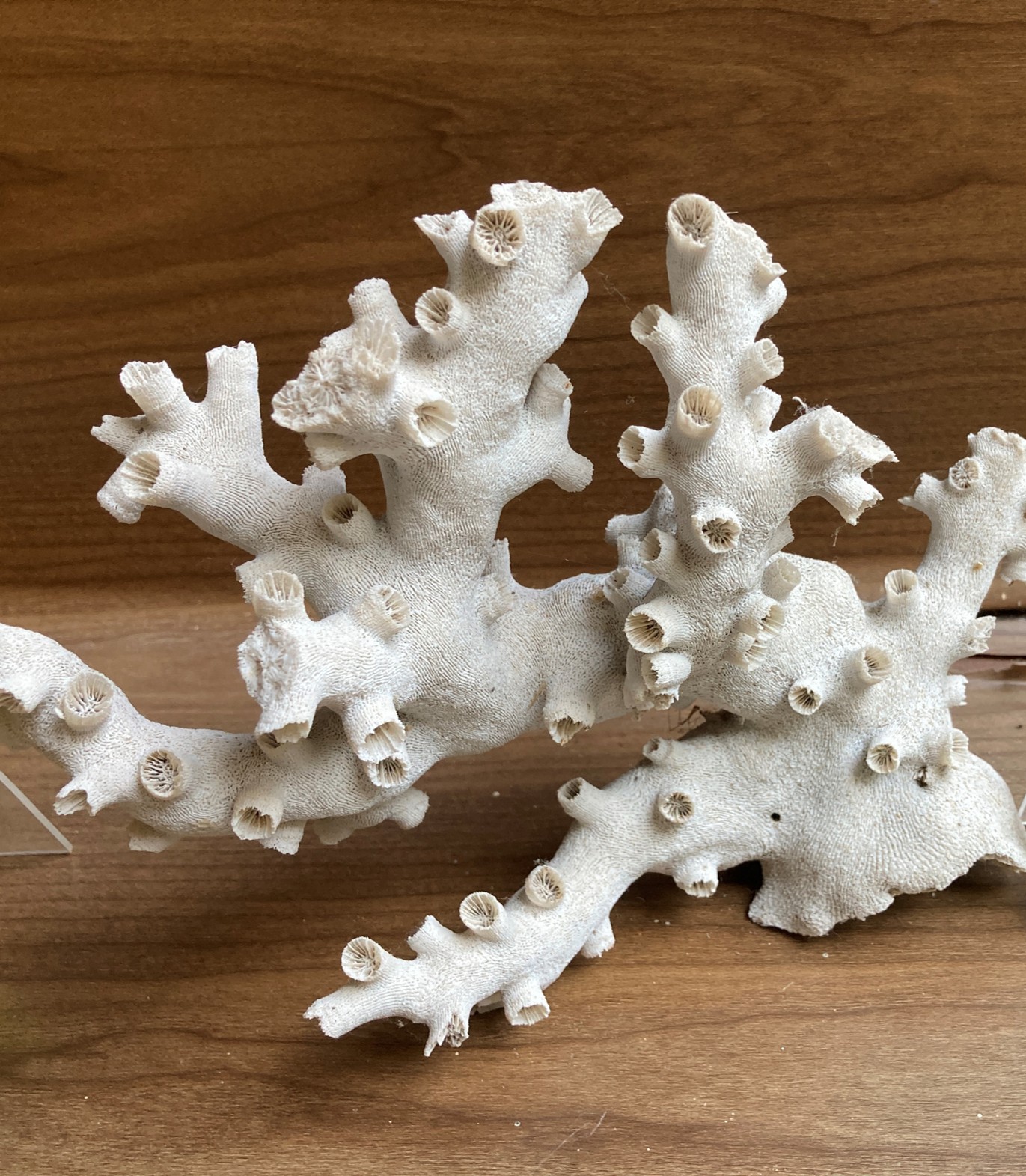
These corals are easily recognized by their vibrant coloration, typically bright orange, yellow, or golden, and by their distinctive tubular, solitary or clustered corallites. Colonies may range from small clumps of individual polyps to large, spreading mats. Corallites in Tubastraea are cylindrical, with well-developed septa and a porous coenosteum. When polyps are extended, they display long tentacles that give the colony a flower-like appearance—hence the name “sun coral.”
Because Tubastraea spp. do not contribute to reef calcification and can rapidly colonize new substrates, some species—particularly Tubastraea coccinea and T. tagusensis—have become invasive in certain regions. Species-level identification within the genus requires close examination of corallite structure, septal arrangement, and skeletal microfeatures, sometimes supported by molecular techniques.