Sri Lanka's lagoon fishing industry

ශ්‍රී ලංකාවේ කලපු ධීවර කර්මාන්තය

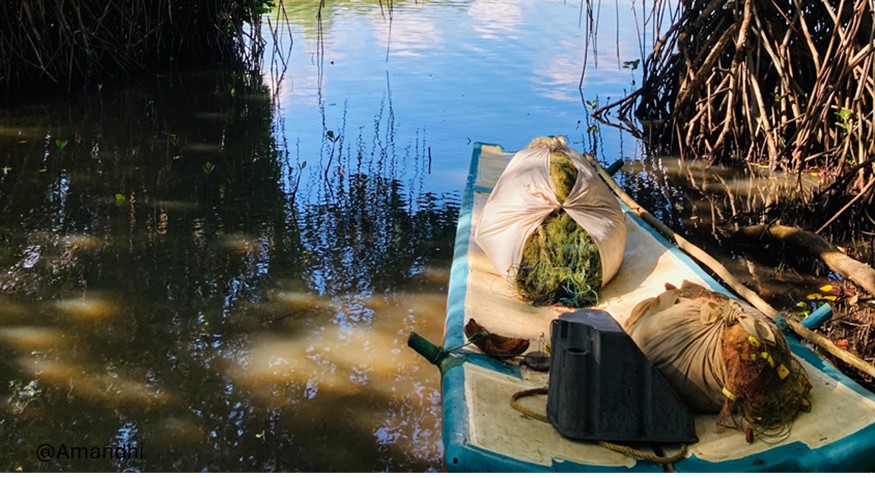
Mangrove-associated fisheries play a vital role in the livelihood and food security of coastal communities living around lagoon ecosystems. The complex root systems of mangrove trees provide shelter, feeding grounds, and nursery habitats for a wide range of aquatic species, including fish, crabs, and shrimp, making mangrove areas highly productive fishing zones.

In the lagoon environment, fishers harvest a variety of species using traditional and small-scale methods such noodling, traps, kemana, and brush-pile-based techniques. Juvenile and adult fish use the submerged mangrove roots for protection from predators and as feeding grounds, making these areas important locations for artisanal fish catches.

Crabs, especially mangrove and lagoon crab species, thrive among prop roots where they feed, hide, and molt. During low tide, many are caught by hand or using simple traps placed near root clusters. Similarly, shrimp species rely on mangrove detritus and nutrient-rich waters for growth. Their abundance in channels and root zones supports seasonal shrimp collection using nets and traditional gear.

Overall, mangrove-associated fishing forms a tightly linked socio-ecological system where the health of the mangrove habitat directly influences the availability of lagoon fish, crabs, and shrimp. Protecting mangroves ensures the sustainability of these fisheries while supporting the cultural traditions and livelihoods of lagoon-dependent communities.
 

Mangrove-associated fisheries play a vital role in the livelihood and food security of coastal communities living around lagoon ecosystems. The complex root systems of mangrove trees provide shelter, feeding grounds, and nursery habitats for a wide range of aquatic species, including fish, crabs, and shrimp, making mangrove areas highly productive fishing zones. In the lagoon environment, fishers harvest a variety of species using traditional and small-scale methods such noodling, traps, kemana, and brush-pile-based techniques. Juvenile and adult fish use the submerged mangrove roots for protection from predators and as feeding grounds, making these areas important locations for artisanal fish catches. Crabs, especially mangrove and lagoon crab species, thrive among prop roots where they feed, hide, and molt. During low tide, many are caught by hand or using simple traps placed near root clusters. Similarly, shrimp species rely on mangrove detritus and nutrient-rich waters for growth. Their abundance in channels and root zones supports seasonal shrimp collection using nets and traditional gear. Overall, mangrove-associated fishing forms a tightly linked socio-ecological system where the health of the mangrove habitat directly influences the availability of lagoon fish, crabs, and shrimp. Protecting mangroves ensures the sustainability of these fisheries while supporting the cultural traditions and livelihoods of lagoon-dependent communities.
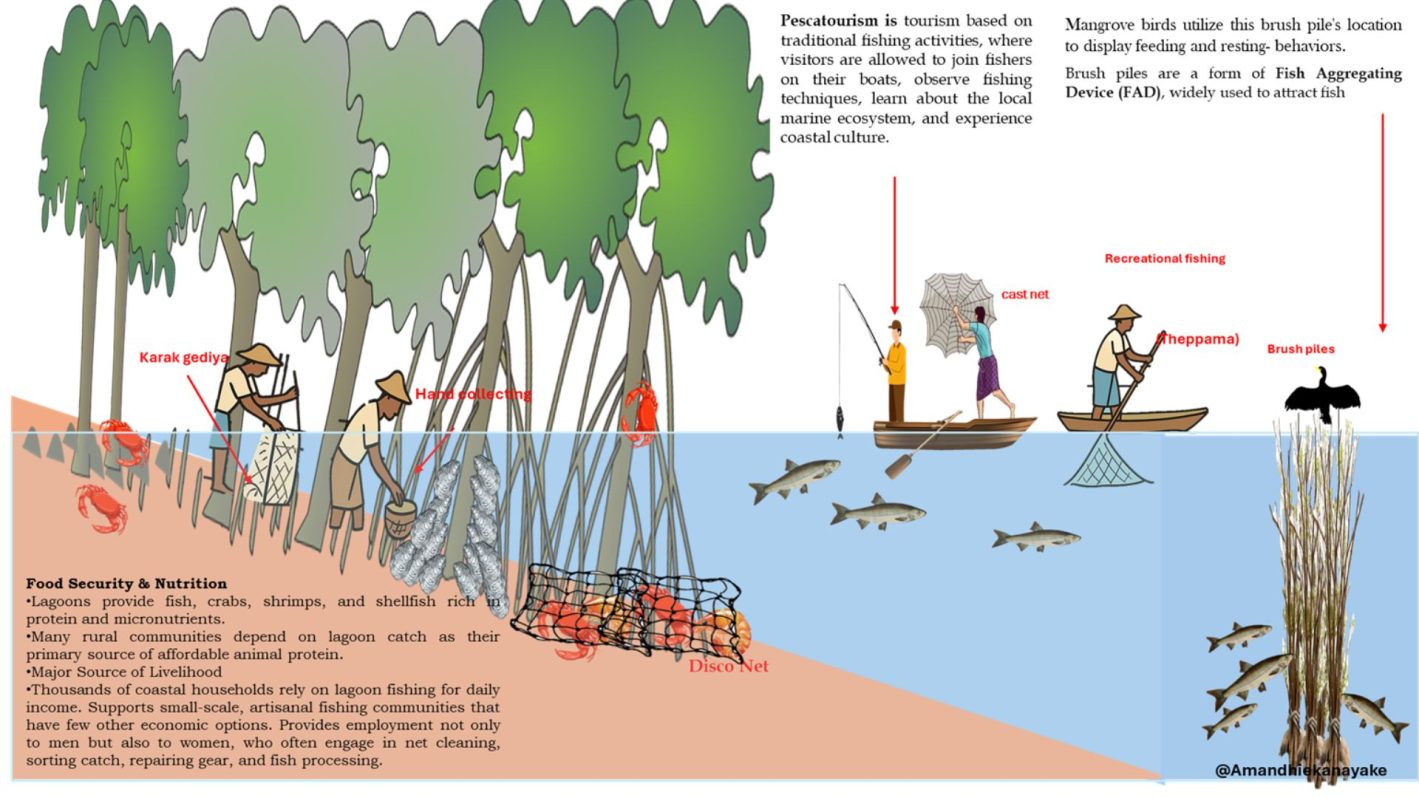
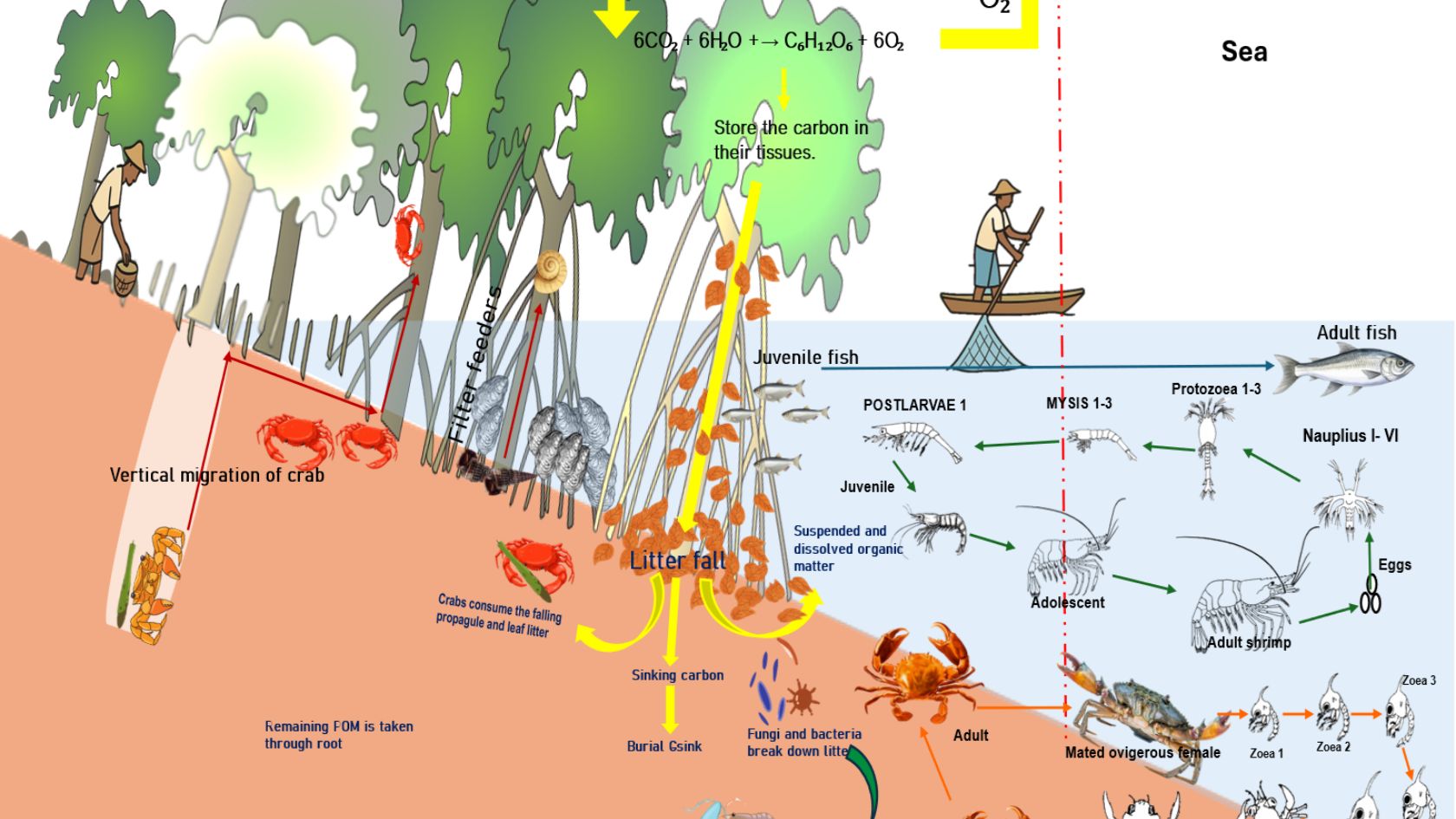
The success of lagoon fisheries is strongly linked to the life cycles of fish, crabs, and shrimp, all of which depend on mangrove habitats during their most vulnerable stages. Many fish species spawn in deeper lagoon or coastal waters, but their larvae and juveniles settle among mangrove prop roots, where the complex root structure provides shelter from predators and abundant food, allowing rapid growth before they migrate back to open lagoon areas as adults. Crabs also rely on mangroves throughout their life cycle: their larvae develop in coastal waters, but juveniles return to mangrove mudflats and root systems, which offer ideal conditions for hiding, feeding, and molting—a critical stage that requires protection. Similarly, shrimp follow an offshore–estuarine life cycle in which post-larvae enter lagoon and mangrove creeks to grow, taking advantage of the nutrient-rich, sheltered environment before moving to open waters as adults. Because these species use mangroves as nursery grounds, feeding areas, and refuge habitats, mangroves significantly enhance juvenile survival and recruitment. This increased productivity directly supports higher and more stable fish, crab, and shrimp catches, making mangrove ecosystems essential to the long-term success and sustainability of lagoon fisheries.

How the Life Cycles of Fish, Crabs, and Shrimp Support the Success of Lagoon Fisheries

The success of lagoon fisheries is strongly linked to the life cycles of fish, crabs, and shrimp, all of which depend on mangrove habitats during their most vulnerable stages. Many fish species spawn in deeper lagoon or coastal waters, but their larvae and juveniles settle among mangrove prop roots, where the complex root structure provides shelter from predators and abundant food, allowing rapid growth before they migrate back to open lagoon areas as adults. Crabs also rely on mangroves throughout their life cycle: their larvae develop in coastal waters, but juveniles return to mangrove mudflats and root systems, which offer ideal conditions for hiding, feeding, and molting—a critical stage that requires protection. Similarly, shrimp follow an offshore–estuarine life cycle in which post-larvae enter lagoon and mangrove creeks to grow, taking advantage of the nutrient-rich, sheltered environment before moving to open waters as adults. Because these species use mangroves as nursery grounds, feeding areas, and refuge habitats, mangroves significantly enhance juvenile survival and recruitment. This increased productivity directly supports higher and more stable fish, crab, and shrimp catches, making mangrove ecosystems essential to the long-term success and sustainability of lagoon fisheries.

The success of lagoon fisheries is strongly linked to the life cycles of fish, crabs, and shrimp, all of which depend on mangrove habitats during their most vulnerable stages. Many fish species spawn in deeper lagoon or coastal waters, but their larvae and juveniles settle among mangrove prop roots, where the complex root structure provides shelter from predators and abundant food, allowing rapid growth before they migrate back to open lagoon areas as adults. Crabs also rely on mangroves throughout their life cycle: their larvae develop in coastal waters, but juveniles return to mangrove mudflats and root systems, which offer ideal conditions for hiding, feeding, and molting—a critical stage that requires protection. Similarly, shrimp follow an offshore–estuarine life cycle in which post-larvae enter lagoon and mangrove creeks to grow, taking advantage of the nutrient-rich, sheltered environment before moving to open waters as adults. Because these species use mangroves as nursery grounds, feeding areas, and refuge habitats, mangroves significantly enhance juvenile survival and recruitment. This increased productivity directly supports higher and more stable fish, crab, and shrimp catches, making mangrove ecosystems essential to the long-term success and sustainability of lagoon fisheries.

නොගැඹුරු දියේ ධීවර කර්මාන්තය සහ ධීවර ආම්පන්න

ඈත අතීතයේ සිට මුහුදු ආශ්‍රිතව කලපු ගංමෝය, ගංගා, වැව් සහ ජල ගැබ් (පතහක් (කාලිනව ජලය පිරෙන තැන්)) වල මසුන් ඇල්ලීම සඳහා යම් යම් ක්‍රම උපයෝගී කර ගත් අතර ඒවා අප විසින් ධීවර ආම්පන්න ලෙස නම් කර ඇත.

අතීතයේ සිට යොදා ගත් ධීවර ආම්පන්න සකස් කර ගැනීම සඳහා අවශ්‍ය ද්‍රව්‍ය එම ප්‍රජාව විසින් පරිසරයෙන්ම සොයා ගැනීමට පෙළඹී ඇත. උදාහරණයක් ලෙස කරක්ගෙඩිය සකස් කර ගැනීම සඳහා වැල් වර්ග කපා සුද්ද කර එම උපකරණය සකස් කර ගෙන ඇත. මේවා අතර බොහෝ ආම්පන්න පරිසරයෙන් සොයා ගත් කොටස් වලින්ම නිරිමාණය කර ඇත.

තවද වර්තමානය වන විට තාක්ෂණික දියුණුවත් සමඟ එම ආම්පන්න විවිධ නූල් වර්ග වලින් නිෂ්පාදනය කරන අතර එම නිසා පරිසරයට ඔරොත්තු දිය නොහැකි ලෙස තංගුස් දැල් වැනි දැල්ද නිෂ්පාදනය විය. මෙම නව ප්‍රමිතියකට නොමැති ධීවර මෙවලම් නිසා අධික ලෙස කුඩා මත්ස්‍යයින්ද, ඉස්සන්ද, කකුළුවන් ද ඒ සමඟ කළපු පතුලේ ඇති විවිධ තෘණ වර්ගද විනාශ වීම ආරම්භ විය. මෙය වර්තමානයේදී විශාල වශයෙන් ධීවර කර්මාන්තයට බලපා ඇති තරීජනයකි. මෙය මිනිසාගේම අධි පරිභෝජන රටාවට ගිජු වීම නිසා ඇති වූ අවාසනාවන්ත ප්‍රතිඵලයකි.

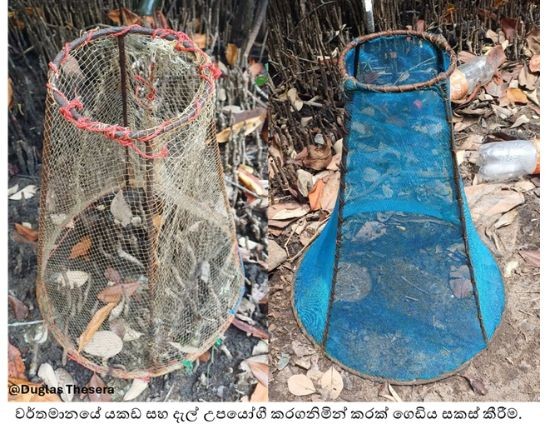
වර්තමානය වන විට විවිධ හේතු නිසා අප ධීවර පරිසරය විනාශ වෙමින් පවතී. එයට යම් ලෙසකින් මෙම ධීවර ආම්පන්නවල අස්ථාවර ප්‍රමිතිය ද බලපා ඇත. අපගේ අවශ්‍යතාවය අනුව මත්ස්‍ය විශේෂ, ඉස්සන් විශේෂ සහ කකුළුවන් විශේෂ ආහාර සඳහා අවශ්‍ය වුවත් මෙම හිත කර ආම්පන්න වලින් බැහැර වී අප විසින් සාදා ගෙන ඇති කූඩු දැල් (කල්පිටිය කළපුව) නිසා විශාල වශයෙන් කුඩා ඉස්සන්, මත්ස්‍යයින් වැනි සියලු සම්පත් අද වන විට විනාශ වෙමින් පවතී. මෙම තත්වය මත නොගැඹුරු දියේ ධීවර කර්මාන්තය හෙට දවසේ අනාරක්ෂිතය. එය අප සිතා බැලිය යුතු කරුණකි.

වර්තමානය වන විට විවිධ හේතු නිසා අප ධීවර පරිසරය විනාශ වෙමින් පවතී. එයට යම් ලෙසකින් මෙම ධීවර ආම්පන්නවල අස්ථාවර ප්‍රමිතිය ද බලපා ඇත. අපගේ අවශ්‍යතාවය අනුව මත්ස්‍ය විශේෂ, ඉස්සන් විශේෂ සහ කකුළුවන් විශේෂ ආහාර සඳහා අවශ්‍ය වුවත් මෙම හිත කර ආම්පන්න වලින් බැහැර වී අප විසින් සාදා ගෙන ඇති කූඩු දැල් (කල්පිටිය කළපුව) නිසා විශාල වශයෙන් කුඩා ඉස්සන්, මත්ස්‍යයින් වැනි සියලු සම්පත් අද වන විට විනාශ වෙමින් පවතී. මෙම තත්වය මත නොගැඹුරු දියේ ධීවර කර්මාන්තය හෙට දවසේ අනාරක්ෂිතය. එය අප සිතා බැලිය යුතු කරුණකි.

Athanguwa අතංගුව

අතංගුව 1970 – 1980 දශකයේ කලපු වල විසිතුරු මසුන් ඇල්ලීම සඳහා යොදාගත් අතර එම මත්ස්‍යයන් සුරතල් මසුන් ලෙස එකල පිටරටවල් සඳහා අපනයනය කර තිබේ. එම කාලයේ විවිධ මිල ගණන් වලට එම මත්ස්‍යයින් මිලදී ගනු ලැබූ අතර ඉලත්තියා සත 25 මුදලකටද කපු හැන්දා සත 30 මුදලකටද, මසුන් අපනයන කරුවන් විසින් මිලදී ගනු ලැබීය. කලපු ආශ්‍රිත කෘත්‍රිම ඉස්සන් වගාවට පෙර මේ ආකාරයට හොඳ ආදායමක් ලබා ගැනීමට හැකි විය. මුල් කාලයේදී සත 25 – සත 30 වැනි මිල ගණ වලට මිලදී ගනු ලැබුවත් ඉන් අනතුරුව රු. 5. රු. 10 වැනි මිල ගණන් වලටද එම මසුන් අලෙවිය සිදු විය. විශේෂයෙන්ම එම මත්ස්‍යයන් අපනයනය සිදුකරනු ලැබුවේ මීගමුව, පිටපන, කුරණ ප්‍රදේශයේ අපනයන කරුවන් විසිනි. 1985 කෘත්‍රිම ඉස්සන් වගාව ආරම්භ වීමත් සමඟ කලපු දූෂණයට ලක්වීම හේතුවෙන් එම මසුන් බෝවීම පිළිබඳව ප්‍රශ්න සහ ගැටලු සහගත තත්ත්වයන් උදා විය. අද වන විට මෙම මත්ස්‍යයින් කලපු වල ඉතාමත් අඩු බවක් පෙන්නුම් කරයි.

In the 1970s and 1980s, the “Athanguwa” was used for ornamental fishing in the lagoons, and the fish were exported abroad as pet fish. At that time, the fish were purchased at various prices, and the ‘Ilatthiya’ was purchased for 25 cents, and the ‘Kapu Handa’ for 30 cents.  Before the artificial shrimp farming in the lagoons, it was possible to earn a good income in this way. Although it was purchased at prices of 25-30 cents in the early days, the fish were later sold at prices of Rs. 5 and Rs. 10.  The fish were especially exported by exporters in the Negombo, Pitapana, and Kurana areas. With the commencement of artificial shrimp farming in 1985, problems and problematic situations arose regarding the breeding of the fish due to pollution in the lagoons.  Today, these fish are very rare in the lagoons.

In the 1970s and 1980s, the “Athanguwa” was used for ornamental fishing in the lagoons, and the fish were exported abroad as pet fish. At that time, the fish were purchased at various prices, and the ‘Ilatthiya’ was purchased for 25 cents, and the ‘Kapu Handa’ for 30 cents. Before the artificial shrimp farming in the lagoons, it was possible to earn a good income in this way. Although it was purchased at prices of 25-30 cents in the early days, the fish were later sold at prices of Rs. 5 and Rs. 10. The fish were especially exported by exporters in the Negombo, Pitapana, and Kurana areas. With the commencement of artificial shrimp farming in 1985, problems and problematic situations arose regarding the breeding of the fish due to pollution in the lagoons. Today, these fish are very rare in the lagoons.

Cast net/ Throwing net / විසි දැල

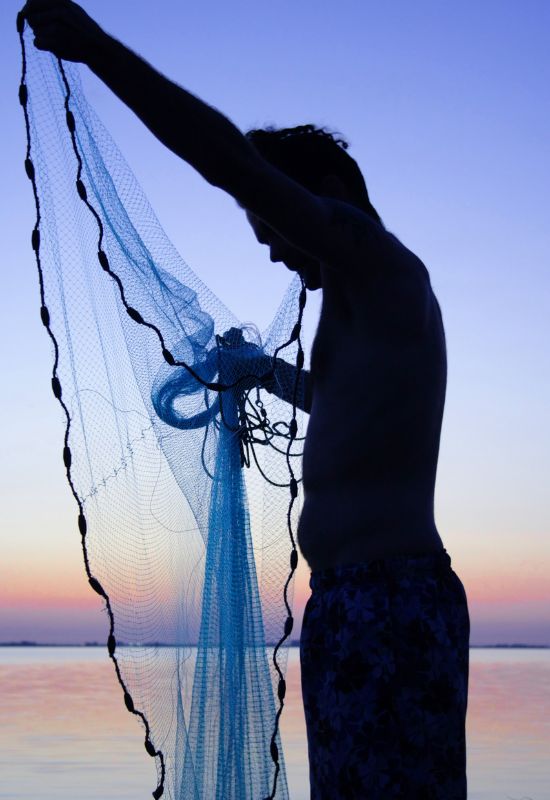
විසි දැල යන නාමය මෙම ධීවර ආම්පන්නයට ලැබී තිබෙන්නේ විශේෂයෙන්ම මෙම ආම්පන්නය ධීවරයා විසින් අත් දෙකට සමබරව රැගෙන ඉතා ඈතට විසි කිරීම නිසාවෙනි. විසි දැල කලපු ආශ්‍රිතවත් මුහුදු වෙරළ ආශ්‍රිතවත් වැව් සහ ගංගා ආශ්‍රිතවත් භාවිතා කරනු ලබන අතර කලපු වල ඉස්සන් වගාවට පෙර හලාවත කලපුව තුළ බොහෝ ධීවරයන් පිරිසක් මෙම විසිදැල් රැකියාව සිදුකර ඇත. එකල එක් ධීවරයෙක් දිනකට මෙම විසිදැල් භාවිතා කර ඉස්සන් රාත්තල් 20 ක් පමණ විශේෂයෙන්ම ඉස්සන් හොඳින් හසුවන කාලවල උදේ 5.00 සිට සවස 2.00 පමණ වනතෙක් කාලය තුළ අල්ලගෙන ඇත. විශේෂයෙන්ම මෙම විසිදැල් රැකියාව සිදු කළ කලපුවක් වූ හලාවත පම්බල කලපුවේ වර්තමානයේදී කෘත්‍රිම ඉස්සන් වගාව හේතු කොට ගෙන කලපුව දූෂණය වීමෙන් විසිදැල් රැකියාව සිදුකරගෙන යාමට අපහසු වී තිබේ. ඉස්සන් ඇල්ලීම සඳහා යොදාගනු ලබන දැල් ඇස් හෙවත් දැල් සිදුරු කුඩාවටත් මසුන් ඇල්ලීම සඳහා යොදාගන්නා විසි දැලේ දැල් සිදුරු ඊට වඩා විශාලවත් දක්නට ලැබේ.

The fishing gear known as the cast net derives its name from the method of operation, as the fisherman throws the net a long distance by holding it evenly with both hands. Cast nets are used in lagoon environments, along the seashore, and in reservoirs and rivers. Before the introduction of shrimp farming in lagoons, a large number of fishermen were engaged in cast-net fishing in the Chilaw Lagoon. During that period, a single fisherman using a cast net was able to catch approximately 20 pounds of shrimp per day, particularly during seasons when shrimp availability was high. Fishing activities were typically carried out from around 5.00 a.m. to 2.00 p.m. using this method. Chilaw–Pambala Lagoon, which was a major site for cast-net fishing, has at present become polluted due to the expansion of artificial shrimp farming. As a result, continuing cast-net fishing in this lagoon has become increasingly difficult. The mesh size of cast nets used for shrimp fishing is relatively small, whereas cast nets used for catching fish have comparatively larger mesh openings.

Karakgediya
කරක්ගෙඩිය

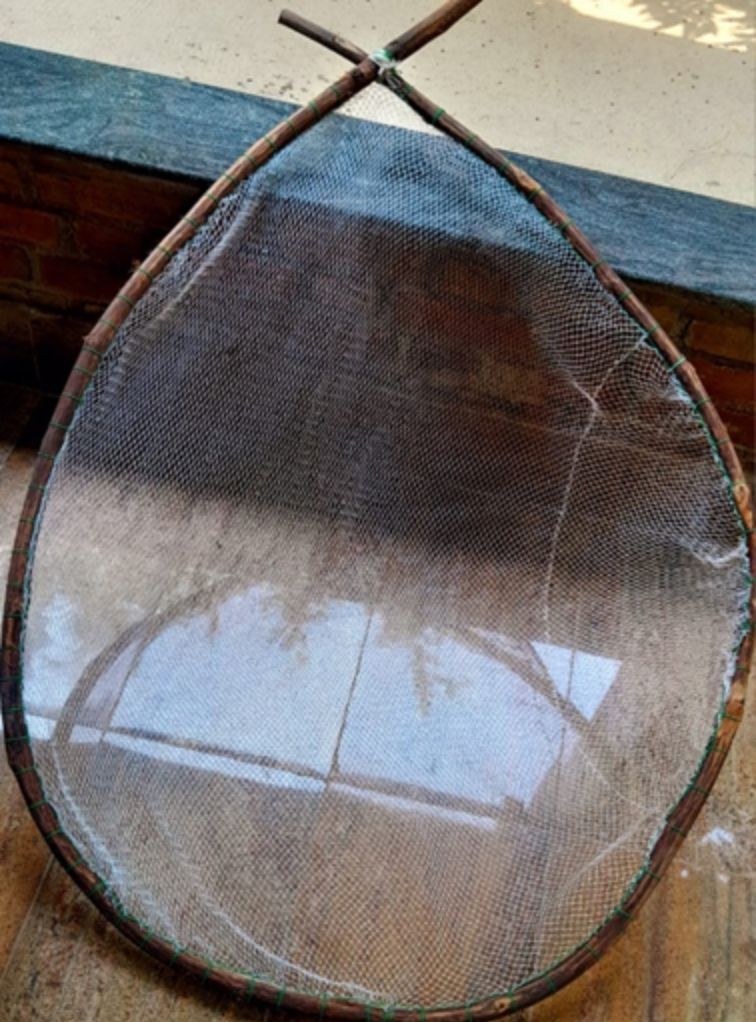
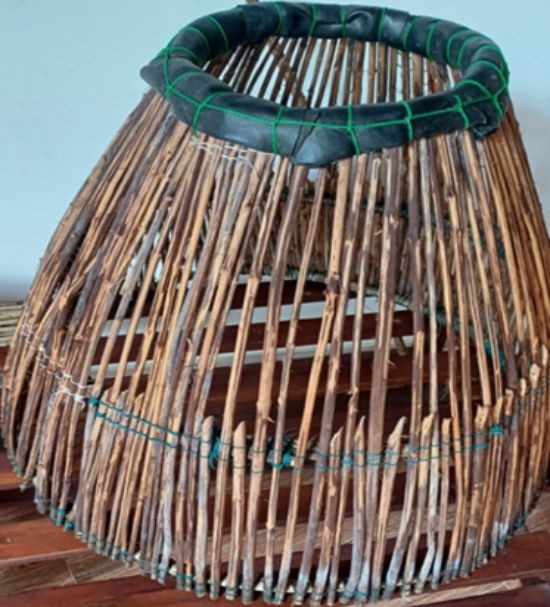
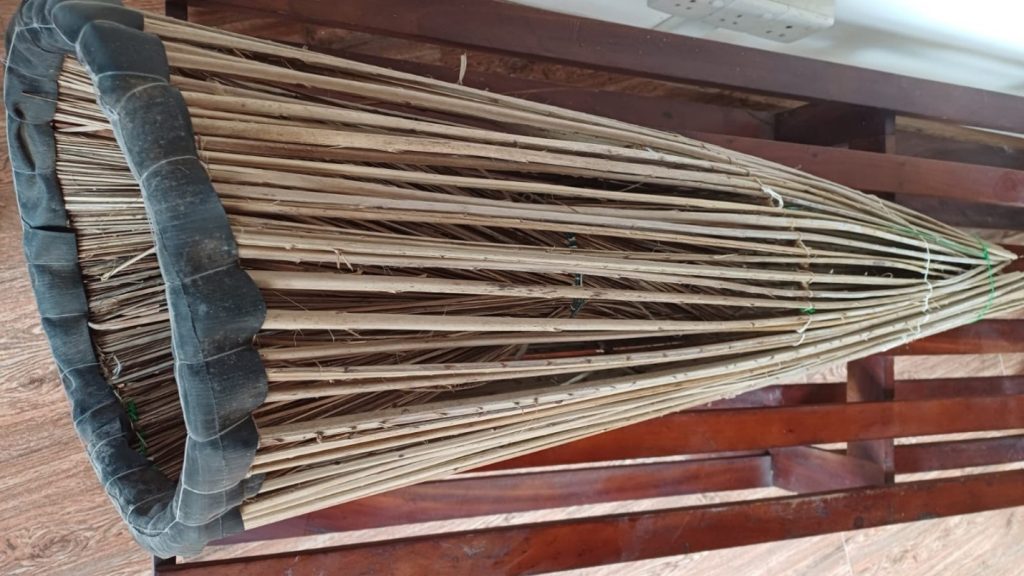
කරක් ගෙඩිය යනුවෙන් හඳුන්වනු ලබන මෙම ධීවර උපකරණය කලපු ආශ්‍රිතව සහ වැව් ආශ්‍රිත ධීවර කර්මාන්තයේදී ප්‍රචලිතව යොදාගත් ධීවර ආම්පන්නයක් වේ. විශේෂයෙන්ම මෙය සකස් කරගනීම සඳහා මුදල් වියදම් කළ යුතු නැත. අතීතයේ මෙම උපකරණය භාවිතා කරමින් මසුන් සහ ඉස්සන් අල්ලා ගැනීම සිදුවේ. විශේෂයෙන්ම කලපුවල කඩොලාන ආවරණ ආශ්‍රිත ජලයේ මෙම උපකරණය ආධාරයෙන් මසුන් ඇල්ලීම සිදු කර තිබේ. ජනවහරට අනුව “ කරක්ගහනවා ” යන යන වචනය ජනවහරේ ඇති වීමට හේතු වී ඇත්තේ කරක් ගෙඩිය ආධාරයෙන් මසුන් ඇල්ලීම සිදු කරන ධීවරයන්ද වැඩි ඈතට නොගොස් එම ස්ථානයේම ගැවසෙමින් මසුන් ඇල්ලීමේ කාර්යය සිදුකරන බැවිනි.

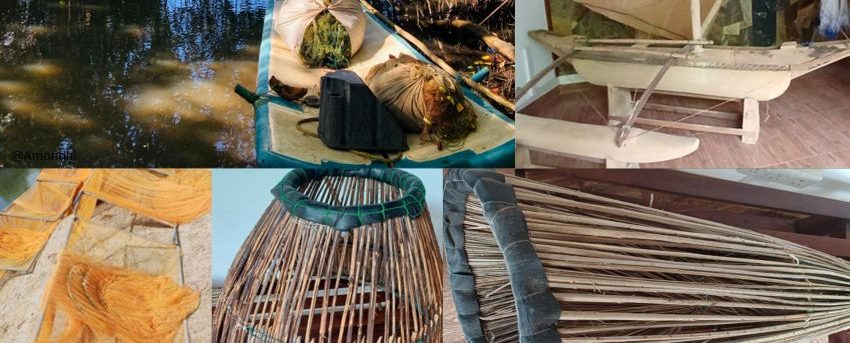
This fishing device, called a Karak gediya, is a fishing gear primarily used in the lagoon and tank fishing industry. In particular, it does not require any money to prepare it. In the past, fish and shrimp were caught using this device. Fishing was done with the help of this device, especially in the waters surrounding the mangroves of the lagoons. According to folklore, the word “karakgediya” has arisen in folklore because fishermen who fish with the help of a Karakgediya do not go far and do their fishing work by staying in the same place.

This fishing device, called a Karak gediya, is a fishing gear primarily used in the lagoon and tank fishing industry. In particular, it does not require any money to prepare it. In the past, fish and shrimp were caught using this device. Fishing was done with the help of this device, especially in the waters surrounding the mangroves of the lagoons. According to folklore, the word "karakgediya" has arisen in folklore because fishermen who fish with the help of a Karakgediya do not go far and do their fishing work by staying in the same place.

රුවල් ඔරුව/ Sailboat

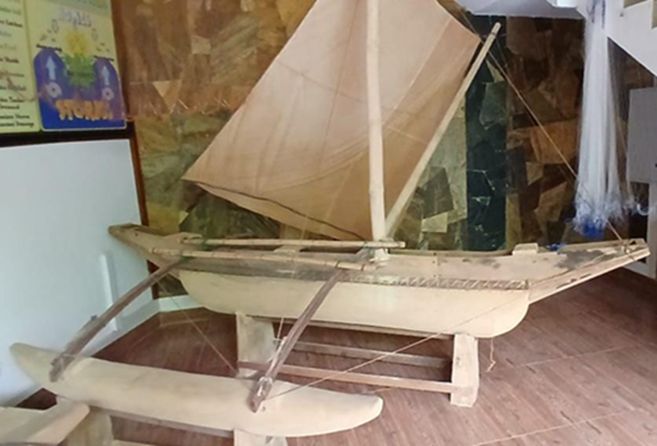
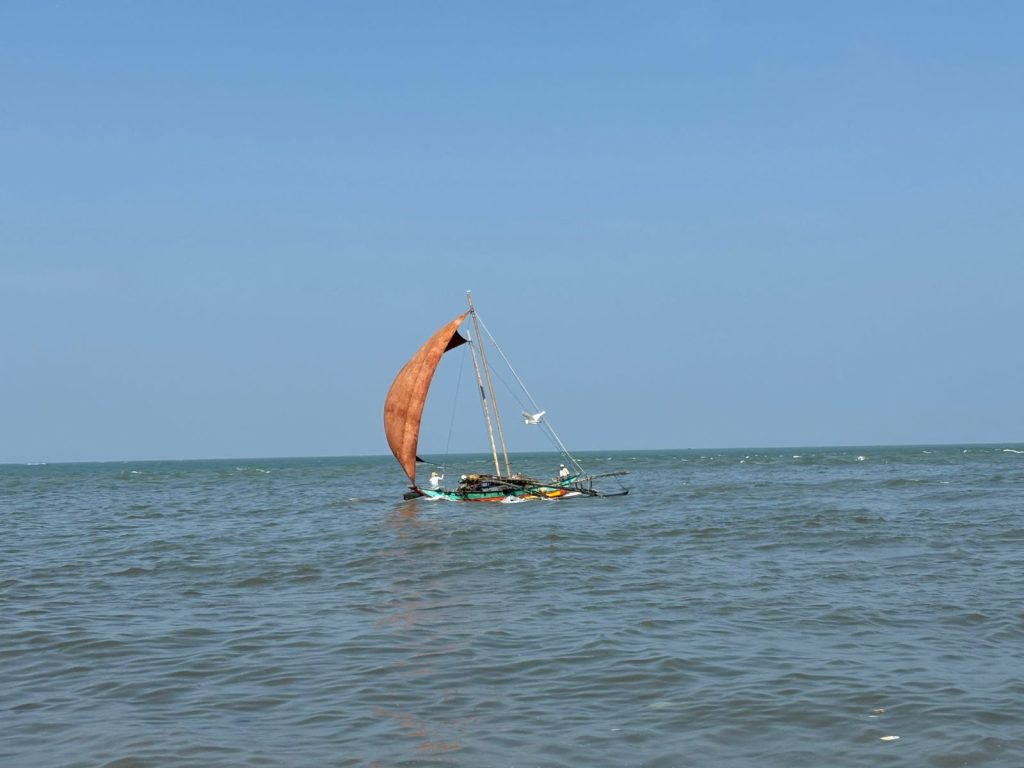
රුවල් ඔරුව යනු විශේෂිත යාත්‍රාවකි. අතීතයේ ධීවරයින් විසින් කොස්, අඹ, ලුණු මිදෙල්ල යන ශාකවල විශාල ලී කඳන් අඩි 25-30 තරම් ඔරු සකස් කිරීම සඳහා යොදා ගන්නා ලදී. 1970-1980 දශකයේ පම්බල හලාවත කලපුවේ එම එක් ඔරුවක ධීවරයින් 6 දෙනෙක් රැකියාව කළේය. තවමත් ධීවර කර්මාන්තයේ යෙදෙන නොගැඹුරු මුහුදේ සහ කලපු වල, වැව්වල රුවල් ඔරු මඟින් ධීවර කර්මාන්තයේ යෙදේ. ඔරුවක් සකස් කරගන්නේ ලී කොටයක් හෑරීමෙනි. එහි ඉහළ කොටසට ලෑලි බැඳීම ” පත්තාර ” යනුවෙන් හඳුන්වන අතර තවත් ලී කොටයක් ගෙන කොල්ලෑව සකස් කරනු ඇත. එම ඔරුව සහ කොල්ලෑව එකතු කිරීම සඳහා ඔරුවට සහ කොල්ලෑවට උඩින් බඳිනු ලබන ලී දෙක ” වියල් ” නමින් හැඳින්වේ. මෙම ඔරුවේ රුවල රෙදි වලින් මසා සකස් ගන්නා අතර එය සවි කිරීම සඳහා උණ බට දෙකක් යොදා ගැනේ. ඒවා “කුඩ ගහ ” සහ ” තුඹ ගහ ” යනුවෙන් හැඳින්වේ.

The sail outrigger canoe is a distinctive type of fishing craft. In the past, fishermen used large timber logs from tree species such as jackfruit (Artocarpus heterophyllus), mango (Mangifera indica), and milla (Berrya cordifolia) to construct canoes approximately 25–30 feet in length. During the 1970s and 1980s, each canoe operating in the Pambala–Chilaw Lagoon typically carried about six fishermen.

Even at present, sail outrigger canoes are used in fisheries conducted in shallow marine waters, lagoons, and reservoirs. A canoe is constructed by hollowing out a single log. The attachment of planks to the upper section of the canoe is known as “patthara,” while another wooden log is used to construct the outrigger float (kollewa). The two wooden beams used to connect the main canoe and the outrigger are known as “viyal.”

The sail of this canoe is made by stitching cloth, and two bamboo poles are used to secure it. These poles are referred to as the “kuda gaha” and the “thumba gaha”.

The sail of this canoe is made by stitching cloth, and two bamboo poles are used to secure it. These poles are referred to as the “kuda gaha” and the “thumba gaha”.

The sail outrigger canoe is a distinctive type of fishing craft. In the past, fishermen used large timber logs from tree species such as jackfruit (Artocarpus heterophyllus), mango (Mangifera indica), and milla (Berrya cordifolia) to construct canoes approximately 25–30 feet in length. During the 1970s and 1980s, each canoe operating in the Pambala–Chilaw Lagoon typically carried about six fishermen. Even at present, sail outrigger canoes are used in fisheries conducted in shallow marine waters, lagoons, and reservoirs. A canoe is constructed by hollowing out a single log. The attachment of planks to the upper section of the canoe is known as “patthara,” while another wooden log is used to construct the outrigger float (kollewa). The two wooden beams used to connect the main canoe and the outrigger are known as “viyal.”

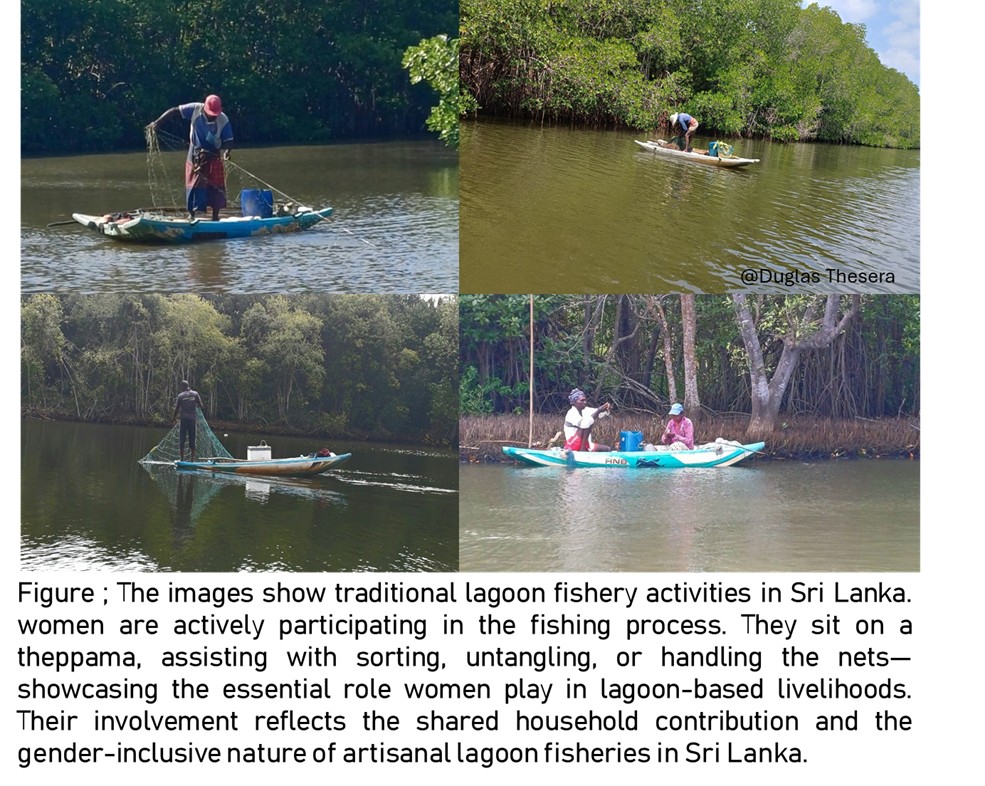
Theppama තෙප්පම

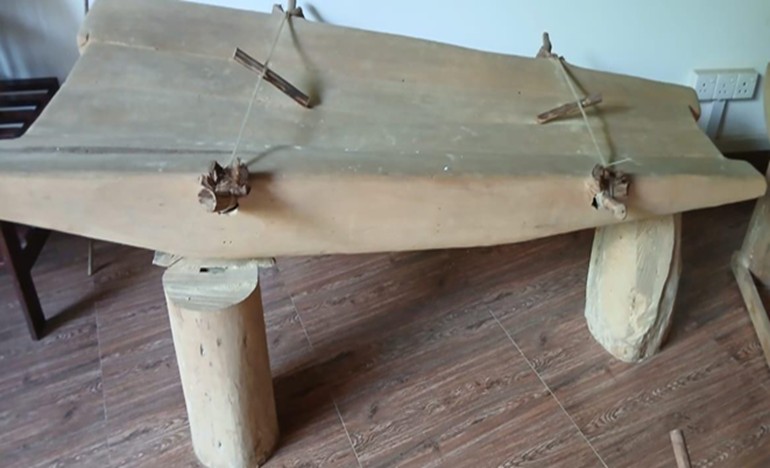
ඉතාමත් අතීතයේ සිට ජලාශ වල මසුන් ඇල්ලීම සඳහා යොදාගත් යාත්‍රාවකි. මෙය අඩි 10-12 තරම් ලී කඳන් 5ක් පමණ යොදා ගනිමින් සකස් කරන යාත්‍රාවකි. කොට කැබලි ඉතාමත් හොඳින් සැහැල්ලු වන සේ සුද්ද කර එම කොටවල කෙළවර වල් දෙකට වන්නට සිදුරු සකස් කර එම සිදුරු තුළින් ලී දෙකක් යාවා ලණු යොදාගෙන එම ලී ශක්තිමත්ව බැඳීමෙන් එක් හැඩයකට මෙම යාත්‍රාව දැකිය හැකිය. එම ලී ” කොම්බුව ” යනුවෙන් හඳුන්වයි. අතීතයේදී මෙම තෙප්පම් ලී වලින් සකස් කර පොල්තෙල් ගාමින් වරින්වර ලී වල පැවැත්ම තහවුරු කිරීම සිදුකොට තිබේ. මේ වන විට දැව භාවිතයෙන් මිදී ෆයිබර්ග්ග්ලාස් තෙප්පම් පමණක් දැකිය හැකිය.

Since ancient times, this craft has been used for fishing in reservoirs. It is constructed using about five wooden logs, each approximately 10–12 feet in length. The logs are carefully cleaned and smoothed to make them light, and holes are made near both ends of the logs. Two wooden crossbars are passed through these holes and firmly tied using ropes, forming the structure of the craft into a stable shape. These wooden crossbars are known as “kombuwa.”

In the past, these rafts were made entirely of wood, and coconut oil was applied periodically to preserve the durability of the timber. At present, the use of wooden rafts has declined, and only fiberglass rafts are commonly seen.

Since ancient times, this craft has been used for fishing in reservoirs. It is constructed using about five wooden logs, each approximately 10–12 feet in length. The logs are carefully cleaned and smoothed to make them light, and holes are made near both ends of the logs. Two wooden crossbars are passed through these holes and firmly tied using ropes, forming the structure of the craft into a stable shape. These wooden crossbars are known as “kombuwa.” In the past, these rafts were made entirely of wood, and coconut oil was applied periodically to preserve the durability of the timber. At present, the use of wooden rafts has declined, and only fiberglass rafts are commonly seen.

Karapalawa කරපලාව

අතීතයේ පටන් මසුන් ඇල්ලීම සඳහා යොදාගත් දැල් අතර කරපලාව ද සුවිශේෂී දැල් ආම්පන්නයකි. ජලාශයේ උසට සහ අල්ලා ගන්නා මසුන් අනුව දැලේ උස සහ දැල් ඇස්වල (දැල් සිදුරු) ප්‍රමාණය වෙනස් වේ. දැළේ උඩ ඇස් වලට නූලක් අමුණා එය ජලයේ මතුපිට පාවීම සඳහා ඉපියාවල් බඳින අතර එය “උඩු මන්ද ” ලෙස හැඳින් වේ. ඉන් අමතරව දැලේ පහල කොටසටද කිත්තම් නූලක් අමුණා එයද දැලට සවි කිරීම ” යටි මන්ද ” ලෙස හැඳින් වේ. මෙය මුහුදු, කලපු, වැව්, ජලාශ යන ඕනෑම ස්ථානයක රැකියාව කිරීම සඳහා යොදාගත් ධීවර ආම්පන්නයකි.

Among the nets used for fishing since ancient times, the ‘Karapalawa’ is a unique netting device. The height of the net and the size of the meshes (mesh holes) vary depending on the height of the reservoir and the fish being caught. A string is attached to the upper eyes of the net, and a rope is tied to it to float it on the surface of the net, which is called “Udu Manda”. In addition, a string is attached to the lower part of the net, and it is also attached to the net, which is called “Yati Manda”. This is a fishing device used to work in any place, such as the sea, lagoons, tanks, and reservoirs.

Among the nets used for fishing since ancient times, the ‘Karapalawa’ is a unique netting device. The height of the net and the size of the meshes (mesh holes) vary depending on the height of the reservoir and the fish being caught. A string is attached to the upper eyes of the net, and a rope is tied to it to float it on the surface of the net, which is called “Udu Manda”. In addition, a string is attached to the lower part of the net, and it is also attached to the net, which is called “Yati Manda”. This is a fishing device used to work in any place, such as the sea, lagoons, tanks, and reservoirs.

Disco Net ඩිස්කෝ දැල

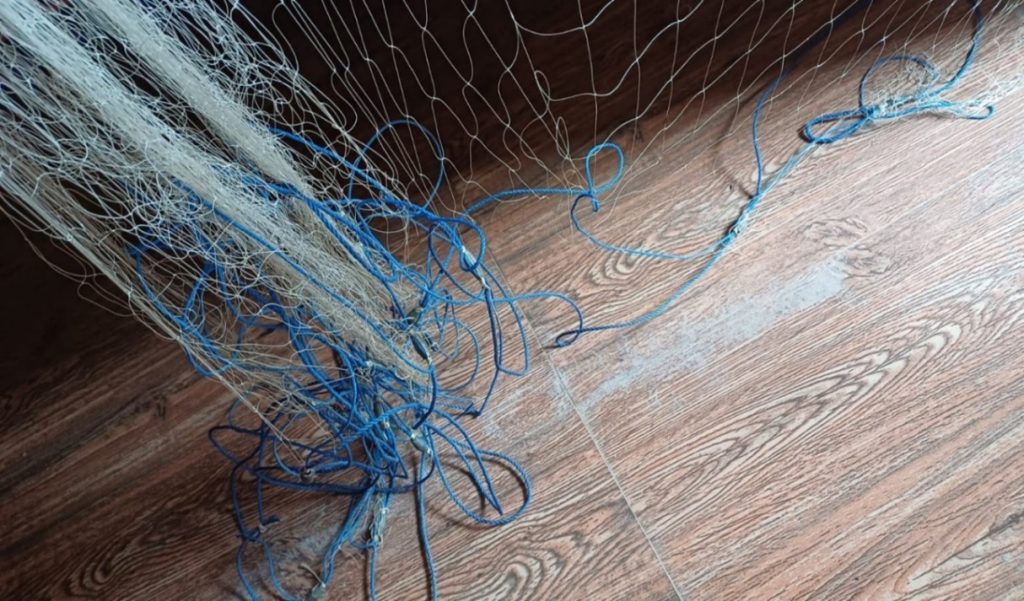
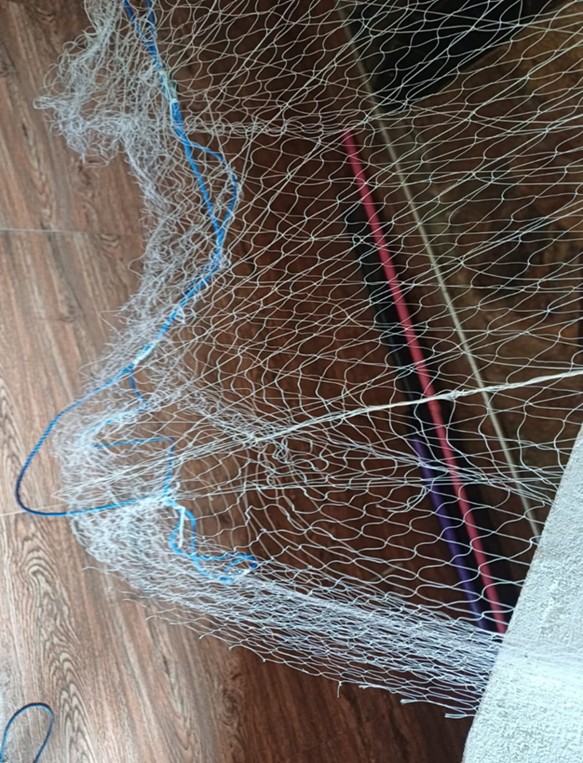
කරපළාව ලෙස සකස් කරගත් දැල පසුව ධීවරයින් විසින් එවැනි දැල් තුනක් එකට තබා සකස්කරගත් දැල ඩිස්කො දැල ලෙස හැඳින්වේ. මෙම දැල් තුනේ බැඳ ඇති දැල අල්ලා ගත්තා ගත්තා මත්ස්‍යයින්, ඉස්සන්, කකුළුවන් යන සතුන්ගේ ප්‍රමාණය අනුව වෙනස් වේ. එයට අමතරව එහි මැද දැලට අමතරව දැල දෙපැත්තට දමන දැලේ ඇස් හෙවත් දැල් සිදුරු විශාල වේ. මෙහි ඇති සුවිශේෂත්වය නම්, ඉස්සන් හෝ මසුන්, කකුළුවන් මෙම දැලට හසු වීමෙන් පසු දෙපැත්තට දමා ඇති දැලේ පැටලීම නිසා එම සතුන්ට නැවත බේරී යාමට නොහැකි වීමයි.  

A net initially prepared as a karapalawa is later modified by fishermen by joining three such nets together, and the resulting gear is known as a disco net. The mesh size of the three nets tied together varies depending on the size of the fish, shrimps, and crabs being targeted. In addition, the mesh openings of the two outer nets are larger than those of the middle net.

The distinctive feature of this net is that once shrimps, fish, or crabs become trapped, they get entangled in the outer nets, making it impossible for them to escape after being caught.

A net initially prepared as a karapalawa is later modified by fishermen by joining three such nets together, and the resulting gear is known as a disco net. The mesh size of the three nets tied together varies depending on the size of the fish, shrimps, and crabs being targeted. In addition, the mesh openings of the two outer nets are larger than those of the middle net. The distinctive feature of this net is that once shrimps, fish, or crabs become trapped, they get entangled in the outer nets, making it impossible for them to escape after being caught.

Fishing Rod බිලී පිත්ත

අතීතයේ සිටම ඉතාමත් ප්‍රචලිත ධීවර ආම්පන්නයකි. බිළි පිත්ත අඩු වියදමකින් සකස් කරගත හැක. කිතුල් ගසකින් කපාගන්නා කිතුල් පිත්ත ඉතාමත් සැහැල්ලු බිලී පිත්තකි. එයට අමතරව කුඩා උණබට යොදාගෙන සහ විවිධ ලී වර්ගවල කුඩා ලී උපයෝගී කරගෙන ද බිලීපිත්ත සකස් කර ගත හැකිය.

කිතුල් පිත්තෙහි සිහින් කෙළවරට තංගුස් නූල බැඳ එම නූලේ කෙළවර බිලී කොක්ක බැඳ එයට මඳක් ඉහළින් දිය යට යාම සඳහා ඊයම් කෑල්ලද බඳින ලබයි. මාළුවෙක් ඇමට කොටන විට එය ගොඩ සිටින ධීවරයාට පෙනීම සඳහා පුංචි ලී කැබැල්ලක් එක් හැඩයකට කපා එම තංගුස් නූලෙහි ගැට ගසයි. එය “ඉපියාව” ලෙස හැඳින් වේ. ජලයේ ගැඹුර අනුව මෙම ඉපියාව උස් පහත් කර තබා ගත හැකිය. මෙයට ඇම සඳහා ගැඩවිල්ලන්, පණුවන්, කුඩා ඉස්සන්, දිමි බිත්තර පාන් පිටි ගුලිකර සකස් කරගත් විවිධ දෑ යොදාගනී.

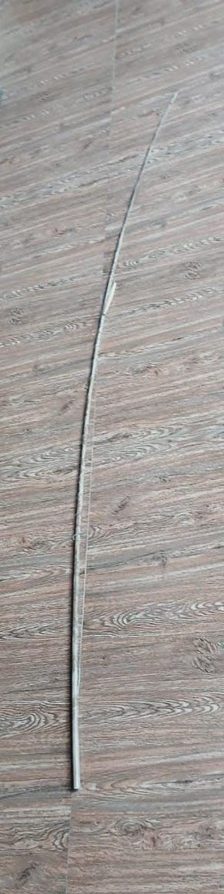
From ancient times, the fishing rod has been a very commonly used fishing gear. A fishing rod can be constructed at a low cost. A kitul pole cut from the kitul palm tree is a very light fishing rod. In addition, fishing rods can also be made using small bamboo sticks and short pieces of wood from various timber species.

At the thin end of the kitul pole, a nylon line is tied. A fish hook is attached to the end of this line, and slightly above the hook, a lead sinker is fixed to allow the bait to sink underwater. To enable the fisherman standing on land to see when a fish bites the bait, a small piece of wood is shaped and tied to the nylon line. This is known as the “ipiyāwa” (float). The position of the float can be adjusted up or down depending on the depth of the water.

For bait, earthworms, maggots, small shrimps, and various mixtures prepared by rolling rice flour and termite eggs into small balls are commonly used.

From ancient times, the fishing rod has been a very commonly used fishing gear. A fishing rod can be constructed at a low cost. A kitul pole cut from the kitul palm tree is a very light fishing rod. In addition, fishing rods can also be made using small bamboo sticks and short pieces of wood from various timber species. At the thin end of the kitul pole, a nylon line is tied. A fish hook is attached to the end of this line, and slightly above the hook, a lead sinker is fixed to allow the bait to sink underwater. To enable the fisherman standing on land to see when a fish bites the bait, a small piece of wood is shaped and tied to the nylon line. This is known as the “ipiyāwa” (float). The position of the float can be adjusted up or down depending on the depth of the water. For bait, earthworms, maggots, small shrimps, and various mixtures prepared by rolling rice flour and termite eggs into small balls are commonly used.

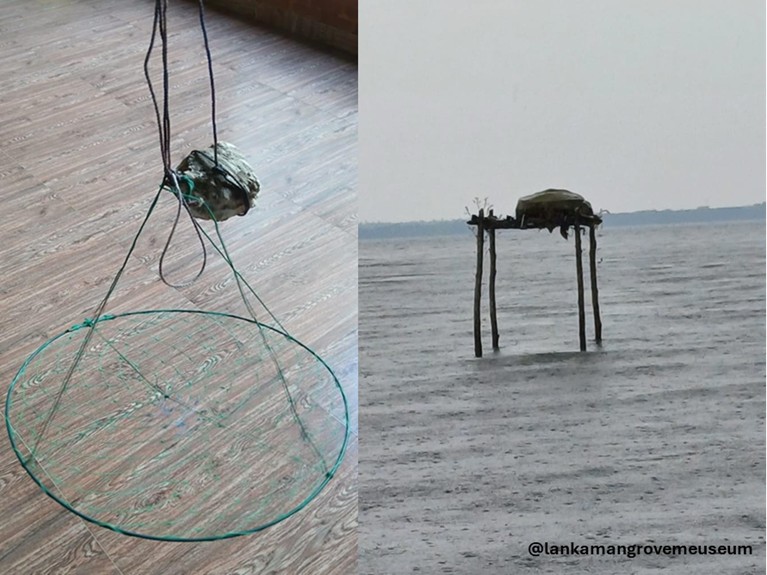
Crab pot කකුළු වට්ටිය

අතීතයේ පටන් කලපුවල මෙම කකුළු වට්ටි යන ධීවර ආම්පන්න ක්‍රමය භාවිතා කළ අතර මෙය කකුළුවන් සිටින කලපුවල පමණක් භාවිතා කළේය. මුලින්ම මෙම කකුළු වට්ටිය සඳහා යොදා ගත්තේ කැලයෙන් කපාගත් වැලක් රවුමට බැඳ එයට ඇස් ලොකු ප්‍රමාණයේ දැල් කැබැල්ලක් ද රවුමට බැඳ වට්ටිය සකස් කර එයට නූල් පොටවල් 4ක් බැඳ ජලය මතුපිටට පෙනෙන ආකාරයට පොල්ලෙලි කැබැල්ලක් හෝ ඉපියා බැඳ ගැනීමෙනි. කකුළුවන් එම වට්ටියට ගෙන්වා ගැනීම සඳහා කකුළු වට්ටියේ මැදට සිටින ආකාරයට ඇමක් (හරක් හම් කැබැල්ලක්, මඩු මාළු කැබැල්ලක් හෝ වෙනත්) වට්ටිය මැදට බැඳ ජලයේ දමා තබා පැයකට හෝ පැය දෙකකට වරක් ජලයෙන් මතුපිටට උස්සා බැලීම සිදු කරයි. එම අවස්ථාවේදී ඇම ආහාරයට ගැනීම සඳහා කකුළුවෙක් පැමිණ එම වට්ටියේ සිටියොත් අල්ලා ගනු ලබයි.

Since ancient times, this fishing method, known as the crab trap, has been used in lagoons, and it has been practiced only in lagoons where crabs are present. Initially, the crab trap was constructed by bending a creeper cut from the forest into a circular shape and tying it securely. A piece of netting with a relatively large mesh size was then attached around the circular frame to form the trap. Four strings were tied to the trap, and a small piece of wood or a float (ipiyāwa) was attached so that the trap could be seen from the water surface.

To attract crabs into the trap, bait such as a piece of cattle hide, a piece of catfish, or other suitable material was tied at the center of the crab trap. The trap was then placed in the water and lifted to the surface every one to two hours for inspection. If a crab had entered the trap to feed on the bait, it was captured during this process.

Dead vines

මෙය විශාල වශයෙන් භාවිතයට ගැනෙන ධීවර ආම්පන්නයකි. මසුන් අල්ලා ගන්නා ස්ථානය අනුව මෙම ආම්පන්න ක්‍රමය වෙනස් වේ. විශාල මසුන් ඇල්ලීම සඳහා විශාල කටු භාවිතා කරන අතර කුඩා මසුන් ඇල්ලීම සඳහා කුඩා කටු භාවිතා කරයි. මෙම පන්න ක්‍රමය මුහුදේ සහ කලපුවලත් ගංගා වැව් ආශ්‍රිතවත් සිදු කරනු ලබන්නකි.

This is a type of fishing gear that is widely used. The method of this fishing gear varies depending on the location where fish are caught. Large hooks are used to catch large fish, while small hooks are used to catch small fish. This fishing method is practiced in the sea as well as in lagoons, rivers, and reservoirs.

Iratiya ඉරටිය

මෙම ධීවර ආම්පන්නය ඉතාමත් පැරණි එකකි. මෙය කලපුවක් ආශ්‍රිතව හෝ වැවක් ආශ්‍රිතව හෝ ඇති කුඩා ජලය බැස යන ස්ථානයක හරස් අතට රඳවා ජල පහර දිගේ පහළට එන මසුන් අල්ලා ගැනීම සඳහා යොදාගනී. විශේෂයෙන්ම වැසි කාලවලදීත් මෙම පන්න ක්‍රමය භාවිතා කරන අතර කුඩා දිය බැස යන ස්ථානවල එය සිදු කෙරේ.

This fishing gear is very old one. It is used to catch fish coming downstream by holding it horizontally in a small watercourse near a lagoon or a tank. This method is used especially during the rainy season and is done in small watercourses.


මස් අතු ධීවර කර්මාන්තය
Mangrove Branch Fishing (Brush-Pile Fishing)

කලපු ධීවර කර්මාන්තයේදී මස් අතු ධීවර රැකියාව යනු ඉතාමත් පැරණි ධීවර රැකියාවකි. විශේෂයෙන් මෙම මස් අතු ධීවර කර්මාන්තය හලාවත – පම්බල කලපුව, මීගමුව කලපුව, රැකව කලපුව ආශ්‍රිතව කාලයක සිට මසුන් ඇල්ලීමට යොදාගන්නා ක්‍රමයකි.

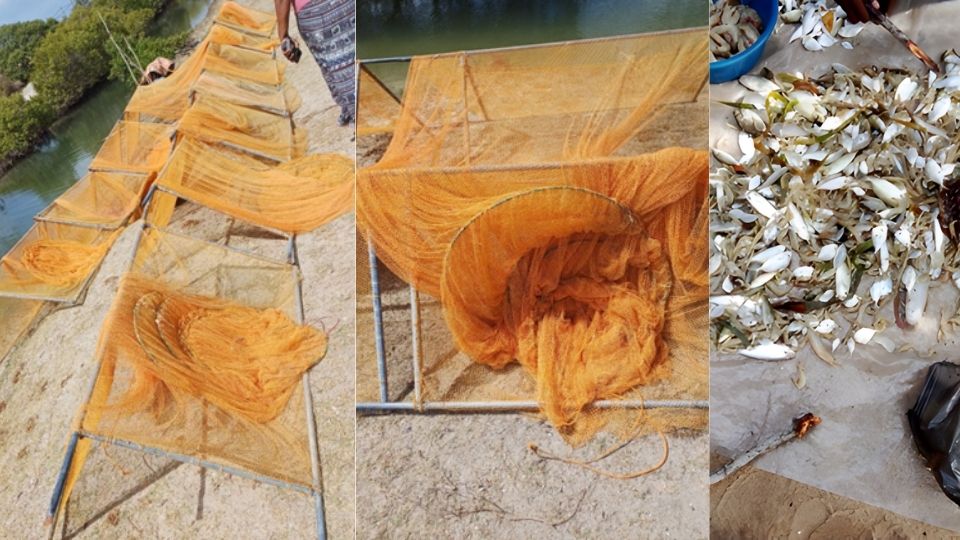
විශේෂයෙන්  කඩොල් ශාක විශේෂවල අතු උදා: මහ කඩොල් – Rhizophora mucronata, Rhizophora apiculata  සහ මණ්ඩා – Avicennia officinalis, Avicennia marina සහ බෑරිය – Lumnitzera recemosa යන විශේෂ වල අතු භාවිතයට ගනී. ජල මායිමේ ඇති විශාල වශයෙන් වැවී ඇති ශාක විශේෂ වල තෝරාගත් අතු කීපයක් (අතු 10ක් 20ක් පමණ- මස් අත්තේ ප්‍රමාණය අනුව අතු ප්‍රමාණය වෙනස් වේ.) කපා ඒවා ඔරුවේ පටවාගෙන සුදුසු ස්ථානවල දමා ඒවායේ අතුවලින් කොළ හැලෙන තුරු දින 30ක් 35ක් පමණ කාලයක් බලා සිට එම මස් අත්ත ධීවරයින් විසින් දැලකින් වට කර එම දැල ජලයෙන් උඩට උස්සා ලී වල පටලවා එම අතු සියල්ලම දැල තුළින් පිටතට විසිකර දැල  තුළ කිසිවක් නොතිබෙන ලෙස පිරිසිදු කර  එම දැල තුළ සිටින ලොකු මත්ස්‍යයින්, කකුළුවන්,  ඉස්සන් ඇතුළු ආහාරයට ගත හැකි විශේෂ තෝරාගන්නා අතර  අතීතයේ දී සුරතල් මසුන්  ලෙස විදේශීය රටවලට යැවූ ඉලත්තියා – Scatophagus  argus , කපු හැන්දා – Monodactylus argenteus  යන සුරතල් මසුන්ද ඉතා බහුලව අල්ලා ගත් අතර  කෘත්‍රිම ඉස්සන් වගාවත් සමග බොහෝ කලපු ගොඩවීම නිසා විවිධ මුහුදු පැළෑටි සෑදීමත් සමඟ කලපුවලින් මස් අතු ධීවර කර්මාන්තයද මේ  වන විට අඩාල වී ඇත.

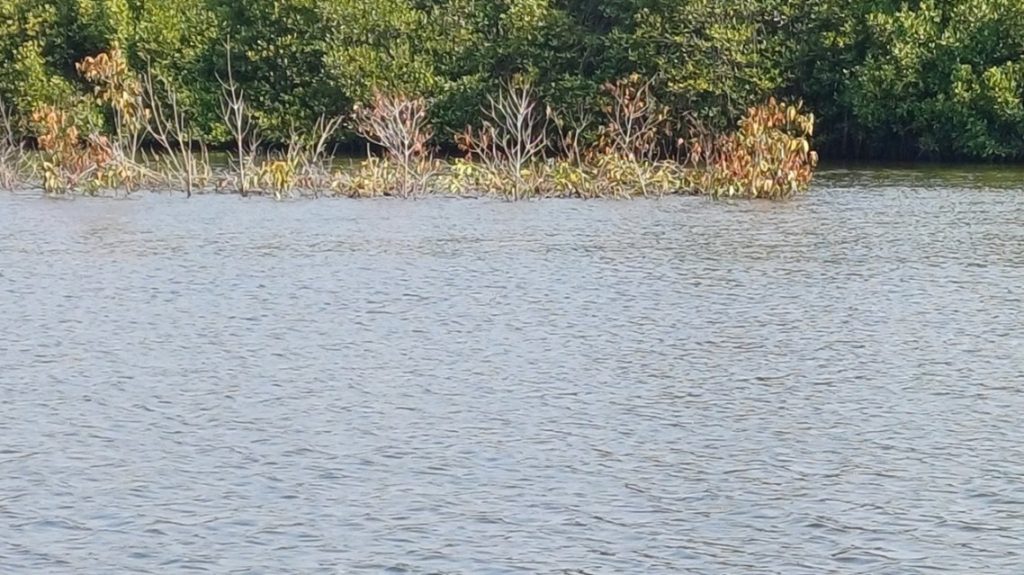
In lagoon fisheries, mangrove branch fishing (commonly known as mas-athu/ Brush piles fishing) is one of the oldest traditional fishing methods practiced in Sri Lanka. This method has been used for generations in lagoons such as the Chilaw–Pambala lagoon, Negombo lagoon, and Rekawa lagoon to harvest fish. Mangrove species commonly used for this technique include Rhizophora mucronata, Rhizophora apiculata, Avicennia officinalis, Avicennia marina, and Lumnitzera racemosa.

Branches from these mangrove trees usually about 10–20 branches, depending on the desired size of the brush pile are cut and tied together on a boat. These brush piles are then placed at suitable sites within mangrove-rich lagoon areas with good water flow. They are left submerged for about 30–35 days until fish, crabs, shrimp, and other aquatic organisms gather and seek refuge within the branches.

After this period, fishers surround the brush pile with a net and gradually lift it from the water while keeping the net tightly closed around it. All the branches are then removed, leaving only the organisms inside the net. The catch typically includes various food fish, crabs, and shrimp. In the past, this method also yielded large numbers of high-value ornamental species such as Scatophagus argus (spotted scat) and Monodactylus argenteus (silver moony), which were exported internationally.

However, with the expansion of aquaculture particularly shrimp farming and the spread of artificial structures in lagoons, along with mangrove degradation, the traditional mangrove branch fishing industry has declined in many lagoon systems.

In lagoon fisheries, mangrove branch fishing (commonly known as mas-athu/ Brush piles fishing) is one of the oldest traditional fishing methods practiced in Sri Lanka. This method has been used for generations in lagoons such as the Chilaw–Pambala lagoon, Negombo lagoon, and Rekawa lagoon to harvest fish. Mangrove species commonly used for this technique include Rhizophora mucronata, Rhizophora apiculata, Avicennia officinalis, Avicennia marina, and Lumnitzera racemosa.
In lagoon fisheries, mangrove branch fishing (commonly known as mas-athu/ Brush piles fishing) is one of the oldest traditional fishing methods practiced in Sri Lanka. This method has been u

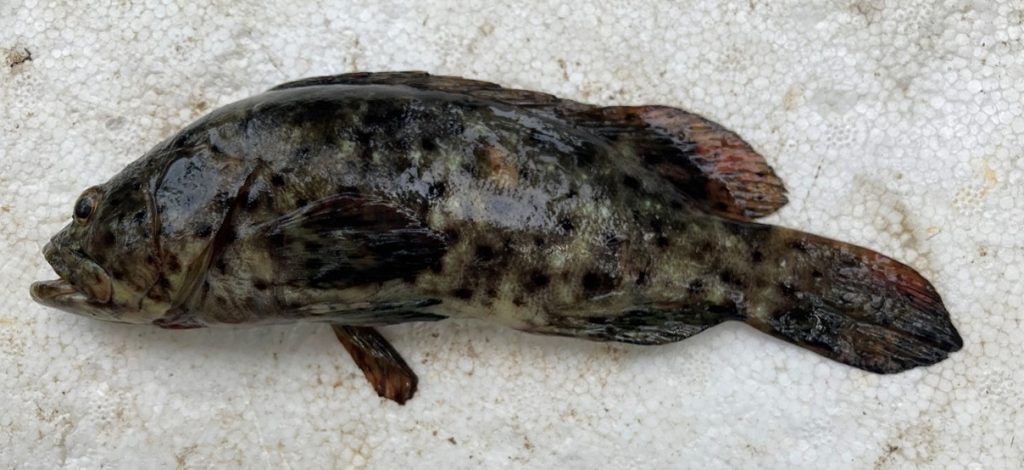
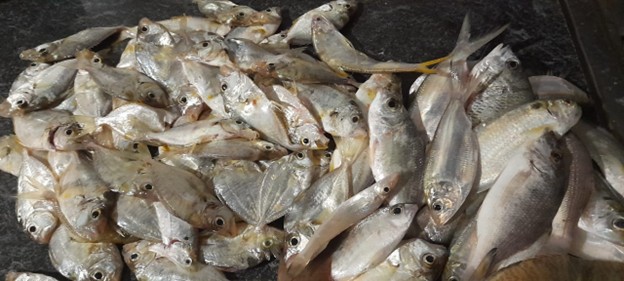
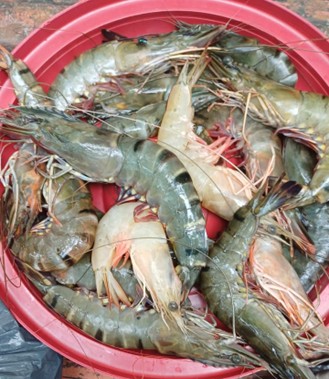
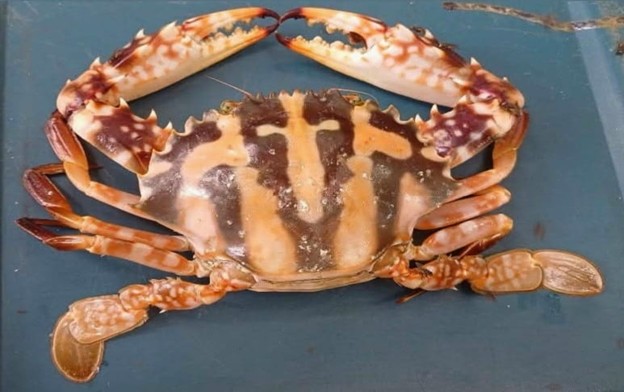
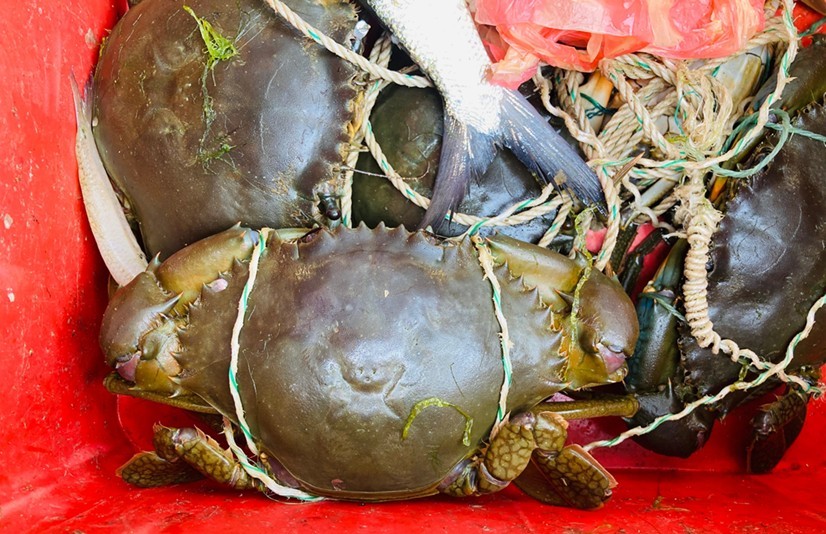
කලපු ධීවර ආම්පන්න වලට හසුවන කකුලුවන්, ඉස්සන් සහ මසුන්

කලපු ධීවර ආම්පන්න වලට හසුවන කකුලුවන්, ඉස්සන් සහ මසුන්

Prepared By

Educational officer of LMM&LC Undergraduate B.Sc.,Faculty of Natural science, Open University of Sri Lanka
P.D.K. Fernando

Educational officer of LMM&LC

Undergraduate B.Sc.,Faculty of Natural science, Open University of Sri Lanka

Undergraduate. B.Sc. (Hons) in Fisheries and Marine Science, Faculty of Fisheries and Ocean Sciences, Ocean University of Sri Lanka.
E.M. Amandhi Ekanayake

Undergraduate. B.Sc. (Hons) in Fisheries and Marine Science, Faculty of Fisheries and Ocean Sciences, Ocean University of Sri Lanka.

Intern of LMM & LC.
W. Lashini Chamodini Thissera.

Intern of LMM & LC.

Reviewed By

MP Kumara
Dr. M.P. Kumara

Senior Lecturer at the Faculty of Fisheries and Ocean Sciences, Ocean University of Sri Lanka

Director
Duglas Thesera

Director
Lanka Mangrove Museum and Learning Center

Scroll to Top