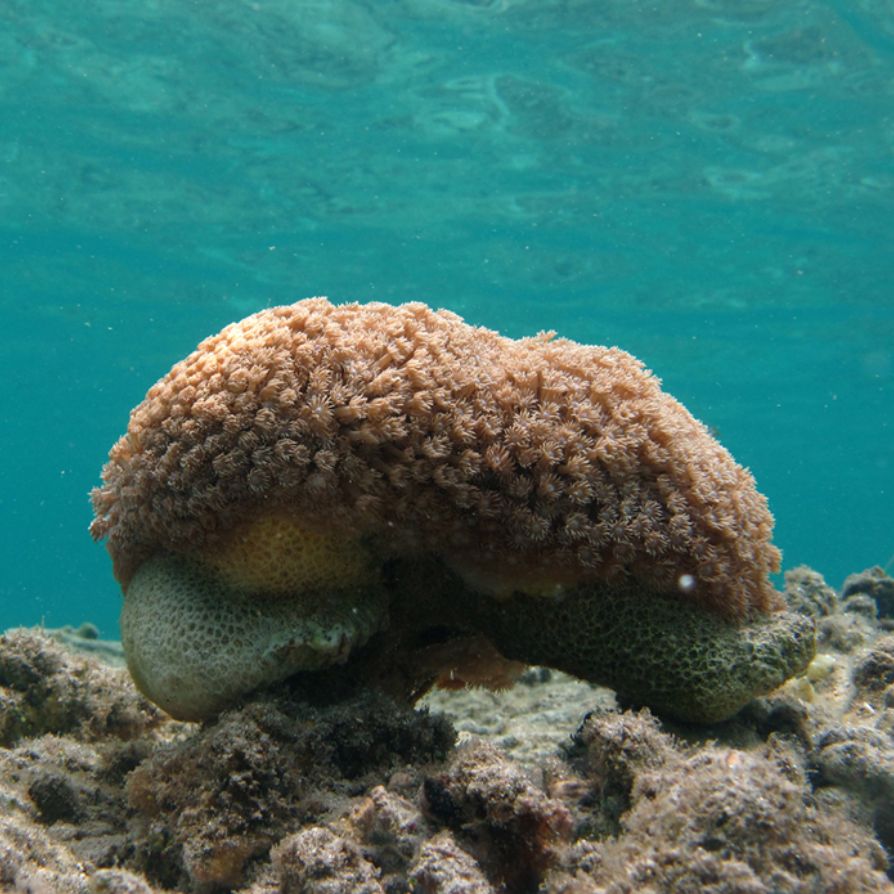
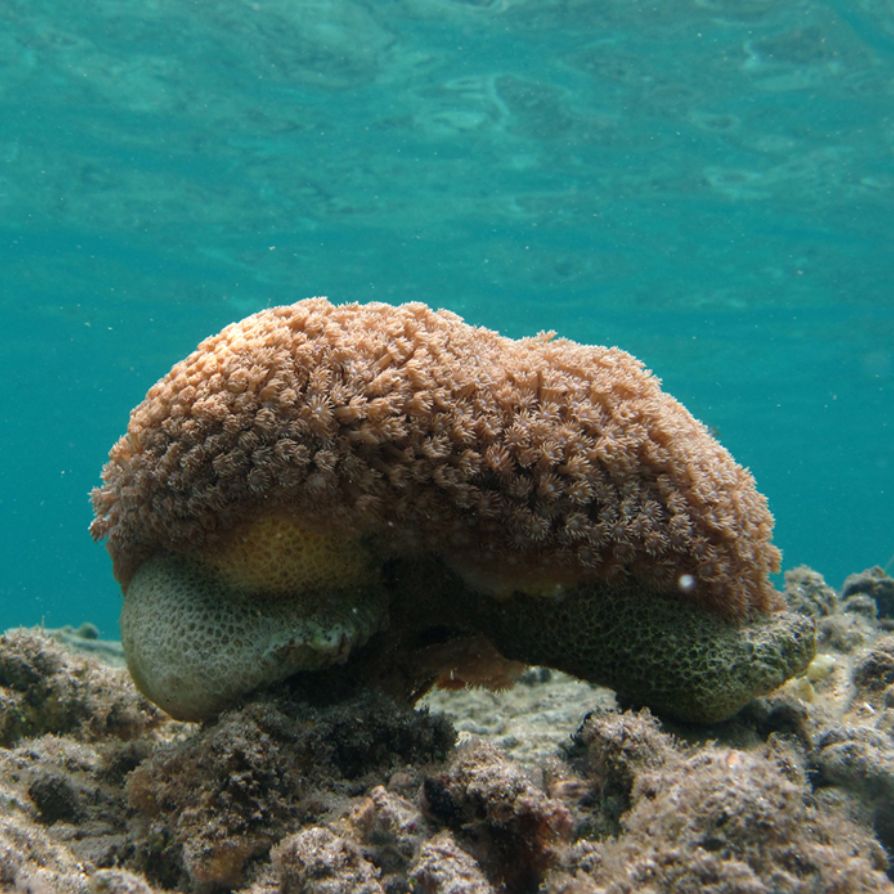
Goniopora spp., commonly referred to as flowerpot corals, are large-polyp stony corals belonging to the family Poritidae. They are widely distributed across the Indo-Pacific region, typically inhabiting sheltered reef slopes, lagoonal environments, turbid coastal waters, and soft-substrate areas. Goniopora colonies are easily recognized by their distinctive long, tubular polyps, each tipped with 24 tentacles, which give the coral its characteristic flower-like appearance when fully extended.
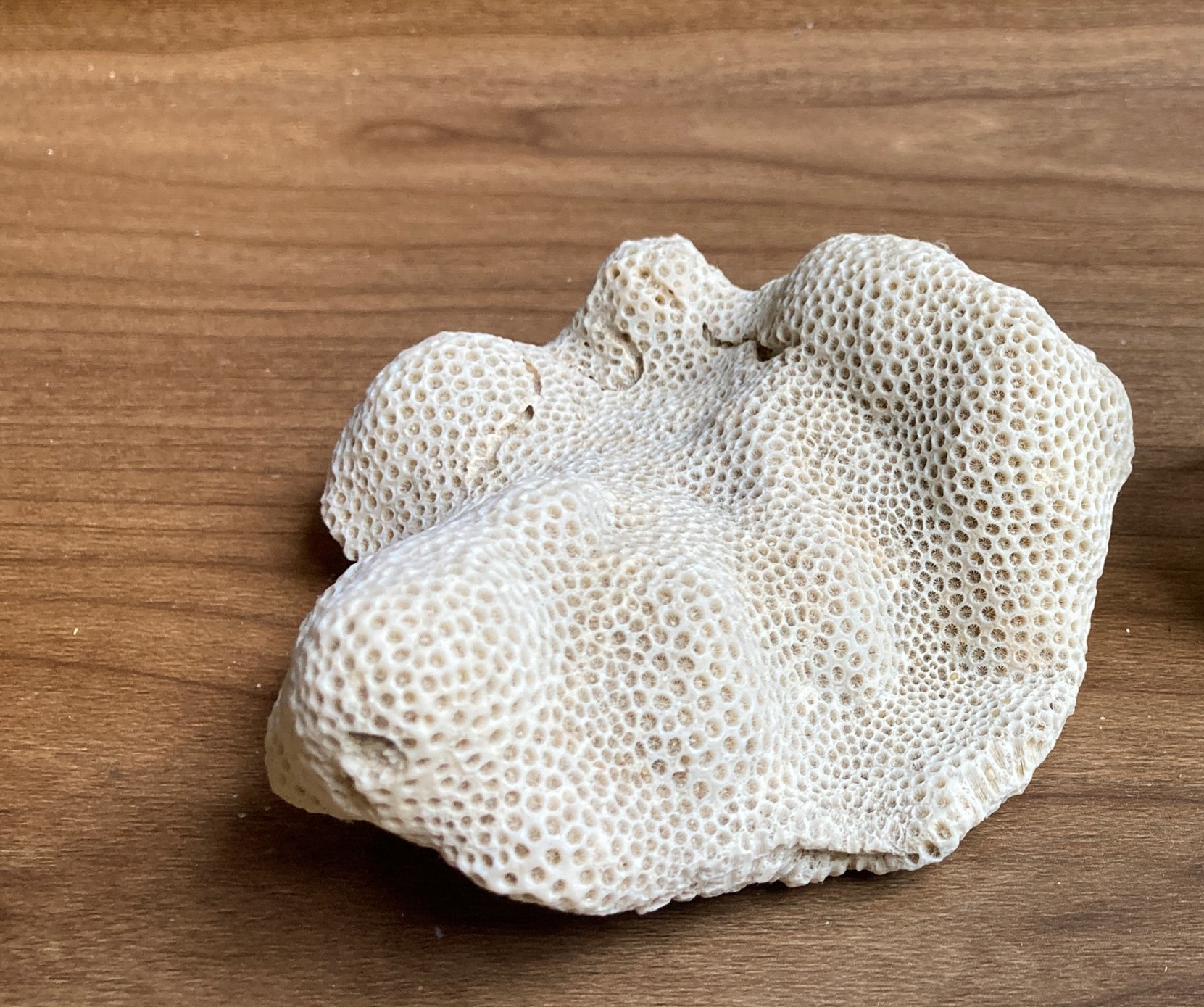
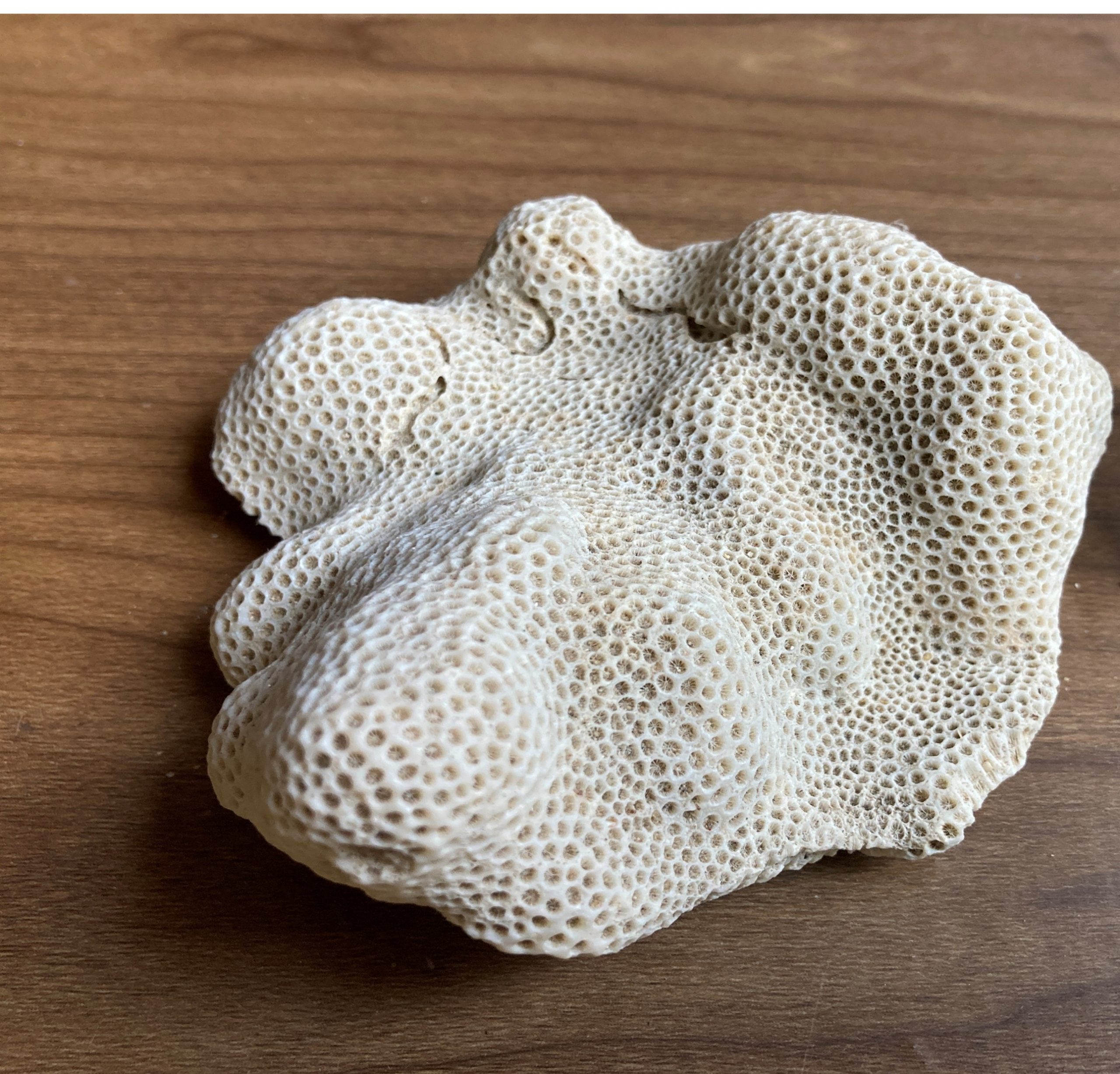
Colonies may form massive, encrusting, columnar, or hemispherical shapes. The coral skeleton consists of small, closely packed calices with thin walls and shallow depressions, although skeletal features can vary among species. The extended polyps are usually longer than those of the closely related genus Alveopora, which typically has only 12 tentacles per polyp—an important diagnostic distinction.
Coloration in Goniopora is highly variable, ranging from brown and green to yellow, purple, or bright fluorescent shades depending on species and environmental conditions. Because many Goniopora species inhabit turbid or sediment-rich waters, they exhibit adaptations for mucus production and polyp extension to clear sediments and capture suspended particles.
Species-level identification within Goniopora is often challenging due to morphological plasticity and overlapping skeletal features, usually requiring detailed skeletal analysis or molecular tools. Ecologically, Goniopora corals contribute to reef diversity and structural complexity, though they are generally considered more sensitive to environmental stress compared to many other massive coral genera.
Goniopora corals are easily recognized by their long, extended polyps, each typically having 24 tentacles (a key identifying feature). These polyps can extend several centimeters beyond the skeleton, giving the coral a soft, flower-like appearance despite being a hard coral.
- Colors include green, pink, red, brown, and yellow
- Forms massive, dome-shaped or encrusting colonies
- Skeleton is porous with small, closely packed corallites