- Widely found in the Indo-Pacific region
- Common in coral reefs around:
- Sri Lanka
- Maldives
- Great Barrier Reef
- Southeast Asia
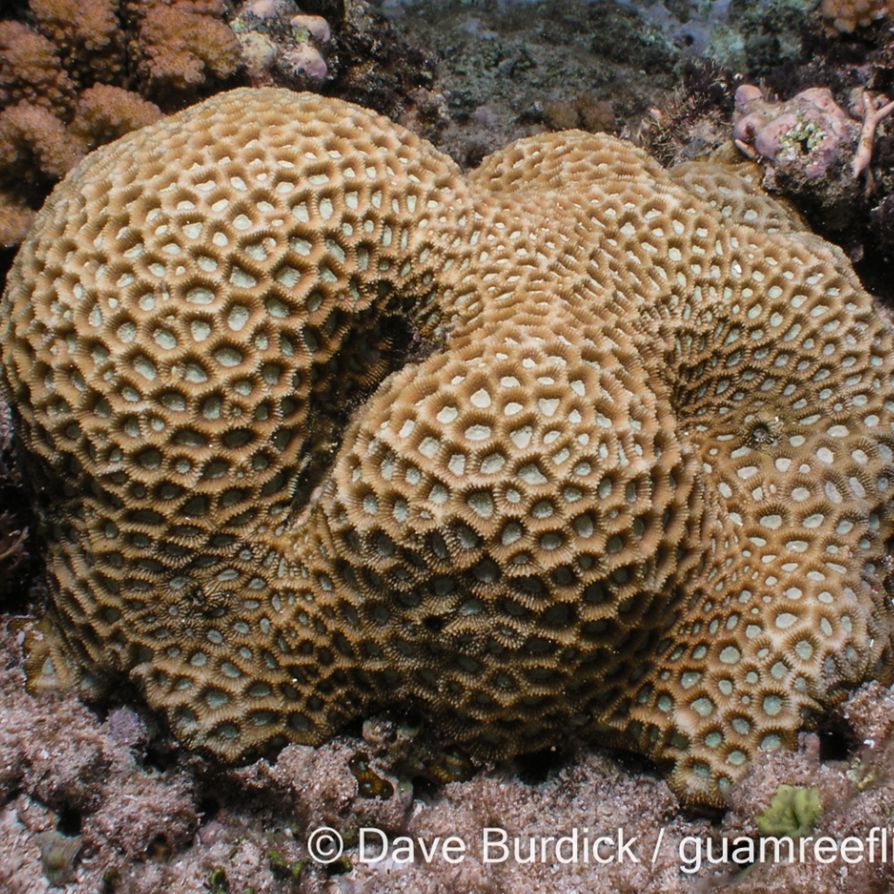
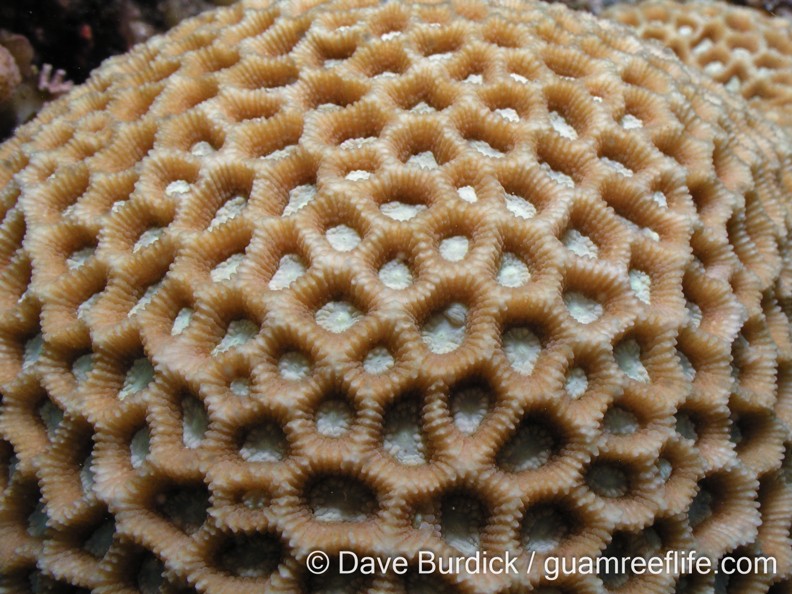
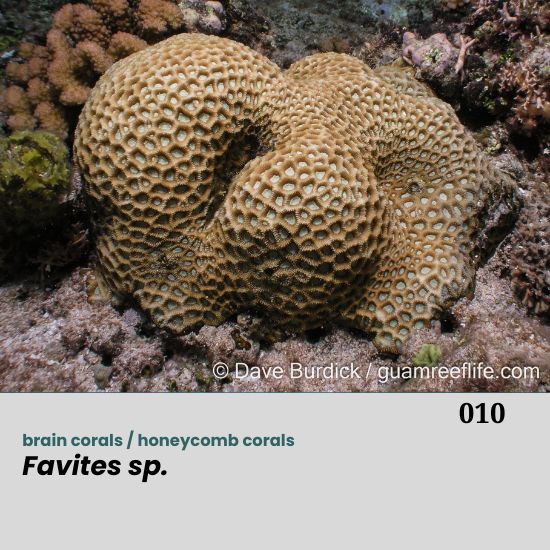
Favites spp., commonly referred to as brain corals or honeycomb corals, belong to the family Merulinidae and are widely distributed across the Indo-Pacific coral reef systems. These massive, encrusting, or dome-shaped corals are easily recognized by their distinctive polygonal corallite arrangement, which forms a characteristic honeycomb pattern. Adjacent corallites typically share common walls (cerioid formation), a key diagnostic trait that helps differentiate Favites from similar genera such as Goniastrea, where the walls are often less fused.
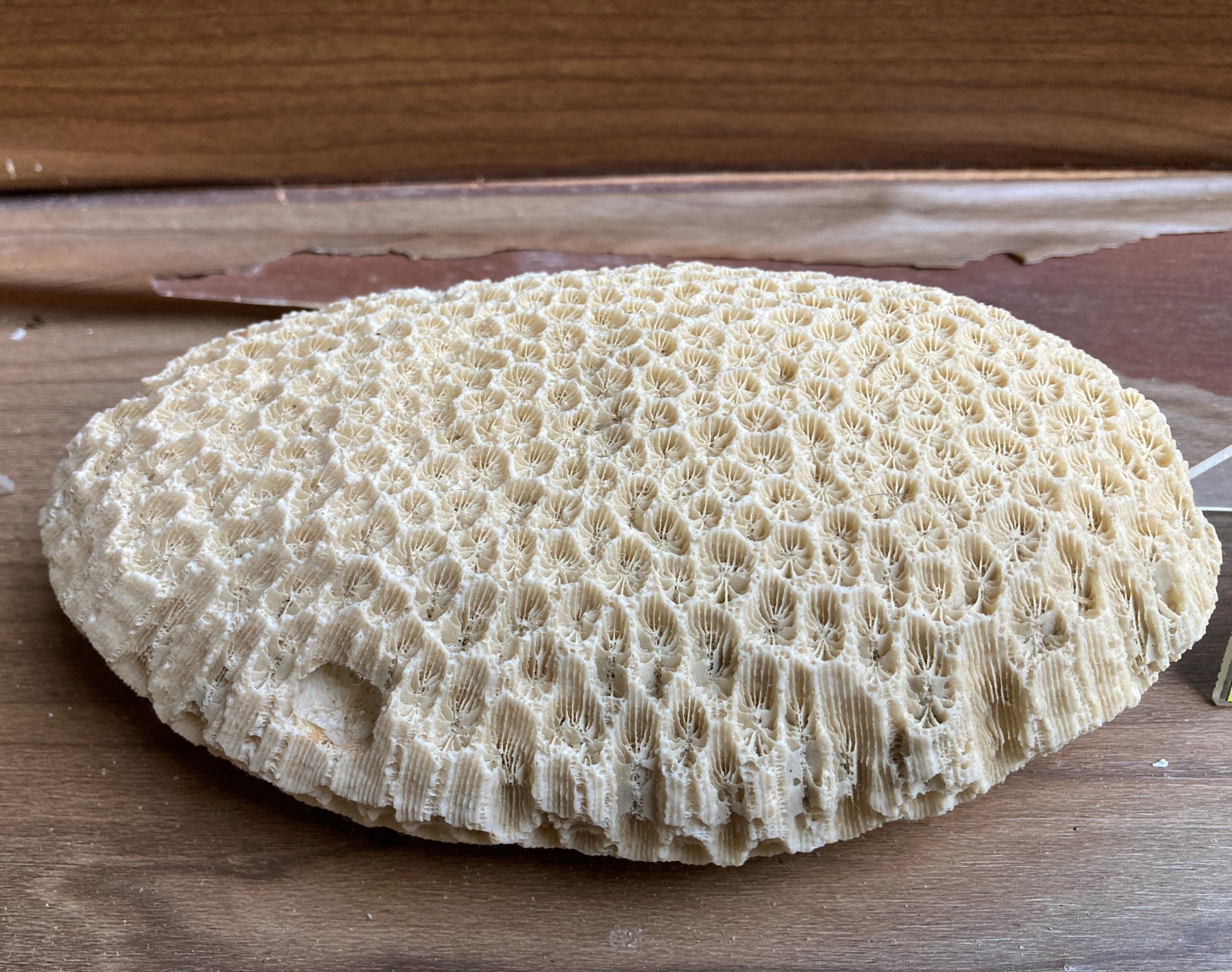
The corallites of Favites are generally rounded to angular, with moderately deep calices and well-developed septa and costae. The skeletal structure is robust, with thick walls and clearly defined ridges. Colony coloration varies widely—often brown, green, yellow, or cream—and may show fluorescent highlights under blue light. Colony morphology can vary with habitat conditions, but Favites species are generally more stable in shape than many branching coral genera.
Accurate species-level identification within Favites can be challenging due to overlapping morphological features among species, often requiring corallite measurements, skeletal microstructure analysis, and occasionally molecular confirmation. As slow-growing but resilient reef builders, Favites spp. play a significant ecological role by contributing to reef consolidation and habitat complexity.